


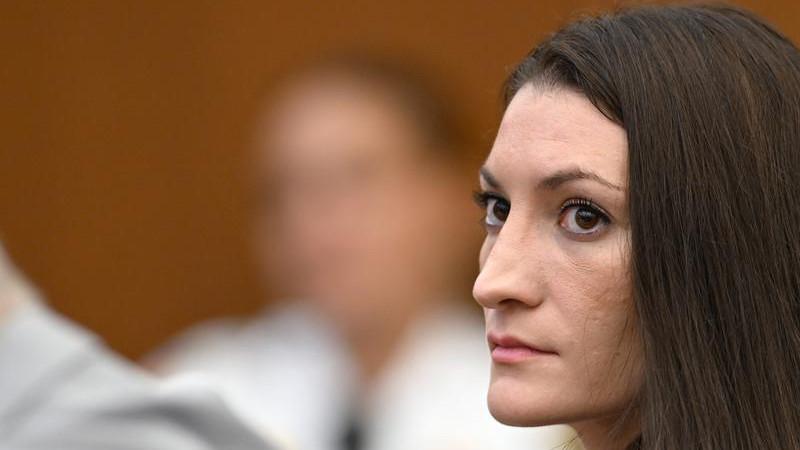
A mistrial has been declared in Lindsay Clancy’s murder trial after a jury failed to reach a unanimous verdict over whether the Massachusetts mother was criminally responsible for the deaths of her three children.
Judge William Sullivan announced the decision at Plymouth Superior Court on Friday, after jurors reported for a third time that they remained deadlocked following seven days of deliberations.
However, the judge granted Clancy’s defence lawyer, Kevin Reddington, one hour to seek an emergency intervention from the Massachusetts Supreme Judicial Court in an attempt to keep the jury deliberating.
Reddington is challenging the decision not to remove a juror who had been identified by the foreperson as refusing to apply the court’s instructions on reasonable doubt. Judge Sullivan questioned the jurors individually on Thursday but declined to dismiss the alleged holdout.
The jury had spent about 36 hours considering the case before the mistrial was announced. If the higher court does not intervene, the mistrial will stand and prosecutors will have to decide whether to pursue a retrial.
Clancy, 36, has pleaded not guilty by reason of lack of criminal responsibility to the murders of Cora, five, Dawson, three, and eight-month-old Callan in January 2023.
Her defence has acknowledged that she killed the children but argued that she was suffering from severe postpartum psychosis and was unable to understand the nature of her actions. Prosecutors maintain that she knew what she was doing and should be held criminally responsible.
The children were found in the basement of the family’s home in Duxbury, Massachusetts. An official investigation said Cora and Dawson died from asphyxia, while Callan died from complications related to asphyxia.
After the killings, Patrick Clancy found his wife seriously injured in the garden after she had jumped from a second-storey window. She was left paralysed from the waist down and now uses a wheelchair.
The latest development follows mounting tension in court over the jury’s inability to agree, with the judge repeatedly directing members to continue deliberating and reminding them that the prosecution bore the burden of proving guilt beyond reasonable doubt.
