


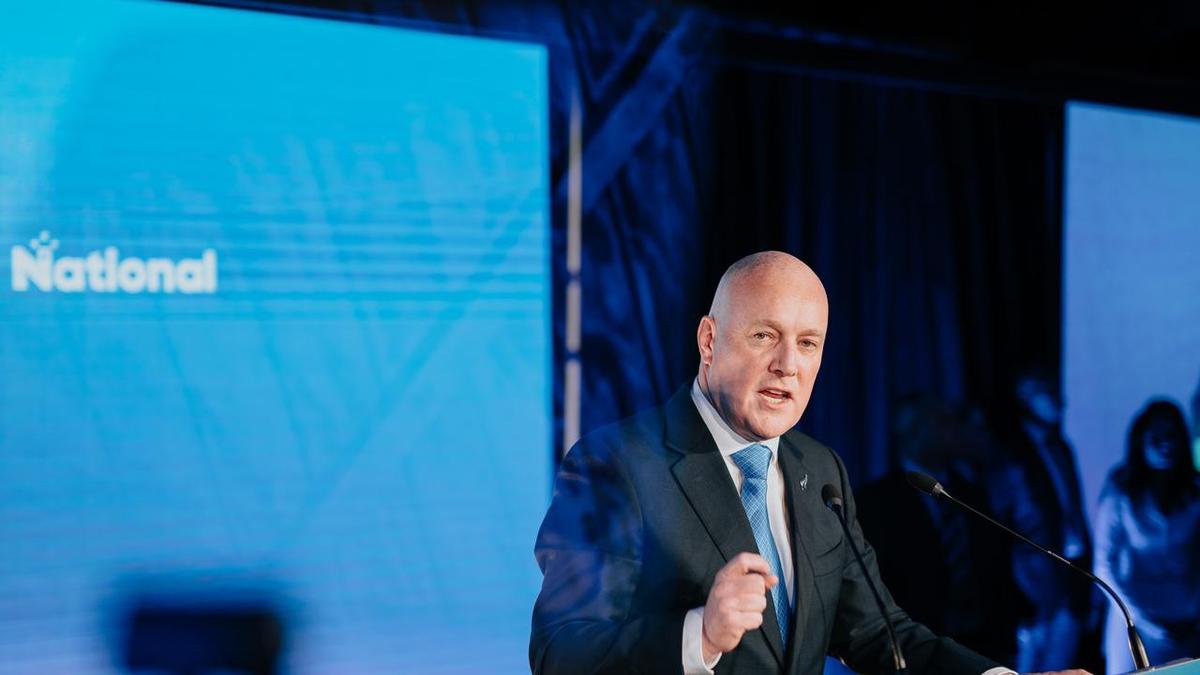
New Zealand’s election campaign has opened with the governing National Party and Labour launching rival bids in Auckland as a tightening contest raises fears of unrest after the November 7 poll.
Prime Minister Chris Luxon’s coalition is fighting to avoid becoming the country’s first one-term government in half a century, with Labour leader Chris Hipkins seeking to return his party to office.
The race is close not only between the two major parties but also between the broader left and right blocs. The increasingly tense campaign has prompted a warning that the result could trigger unrest, particularly if coalition negotiations prove unpopular.
National has centred its campaign on the slogan “No New Taxes”, targeting Labour’s promise to introduce a capital gains tax. Mr Luxon has also claimed that a Labour-led government, including its potential coalition partners, would bring in nine new taxes.
Mr Hipkins rejected the allegation at Labour’s campaign launch, calling it “bullshit” and accusing Mr Luxon of resorting to “outright lies”.
Ben Thomas, a right-aligned political commentator, said National’s attacks appeared to be damaging Labour’s support. Speaking to Radio NZ, he said: “The attacks are working.”
He said Labour’s polling had fallen sharply from a peak in the high 30s in March and was now broadly level with National, adding that he could not see how the attacks on tax “hasn’t had an effect”.
Labour has so far pursued a policy-light, small-target strategy while directing sustained criticism at Mr Luxon, who is 56 and has survived two leadership challenges during the current term.
Mr Hipkins has portrayed the former executive as out of touch and used his campaign launch to attack the Government’s record.
“Christopher Luxon seems to stand for blame, excuses, slogans, no real answers, and New Zealand going backwards,” he said. “Ask yourself this – after three years of National, are you better off?”
Cost of living dominates New Zealand election
The economy and the cost of living remain the central issues in the contest. Mr Luxon says conditions are improving, with forecasts pointing to a return to stronger growth after the post-pandemic slowdown.
Labour has instead highlighted unemployment at its highest level in a decade and the financial pressures of the past three years. National has blamed Labour’s Covid-era spending for contributing to those difficulties.
The two major parties are polling at their lowest combined level in New Zealand’s history, with support shifting towards smaller parties on both sides of politics.
On the right, NZ First and ACT are attracting more backing, while the Greens are gaining support on the left. The left-wing Maori Party has suffered a collapse linked to internal problems.
A new potential Labour partner, Opportunity, appears likely to enter Parliament and could seek to work with the left. Mr Luxon has ruled out working with the party.
The campaign has also been shaped by protests over the Government’s reduced role for Maori. The issue follows the previous Labour-led governments of Jacinda Ardern, which embraced Maori understanding of the Treaty of Waitangi and faced criticism that contributed to their defeat at the 2023 election.
Mr Thomas said the closeness of the contest, the social tensions surrounding it and the possibility of difficult coalition talks could produce a volatile aftermath.
“There’s a lot of scope here … for some unrest after the election,” he said. “We have struggled, in terms of social cohesion, in terms of people buying into democracy, recently.”
He added: “You would have these claims of an illegitimate government from at least some quarters.”
