


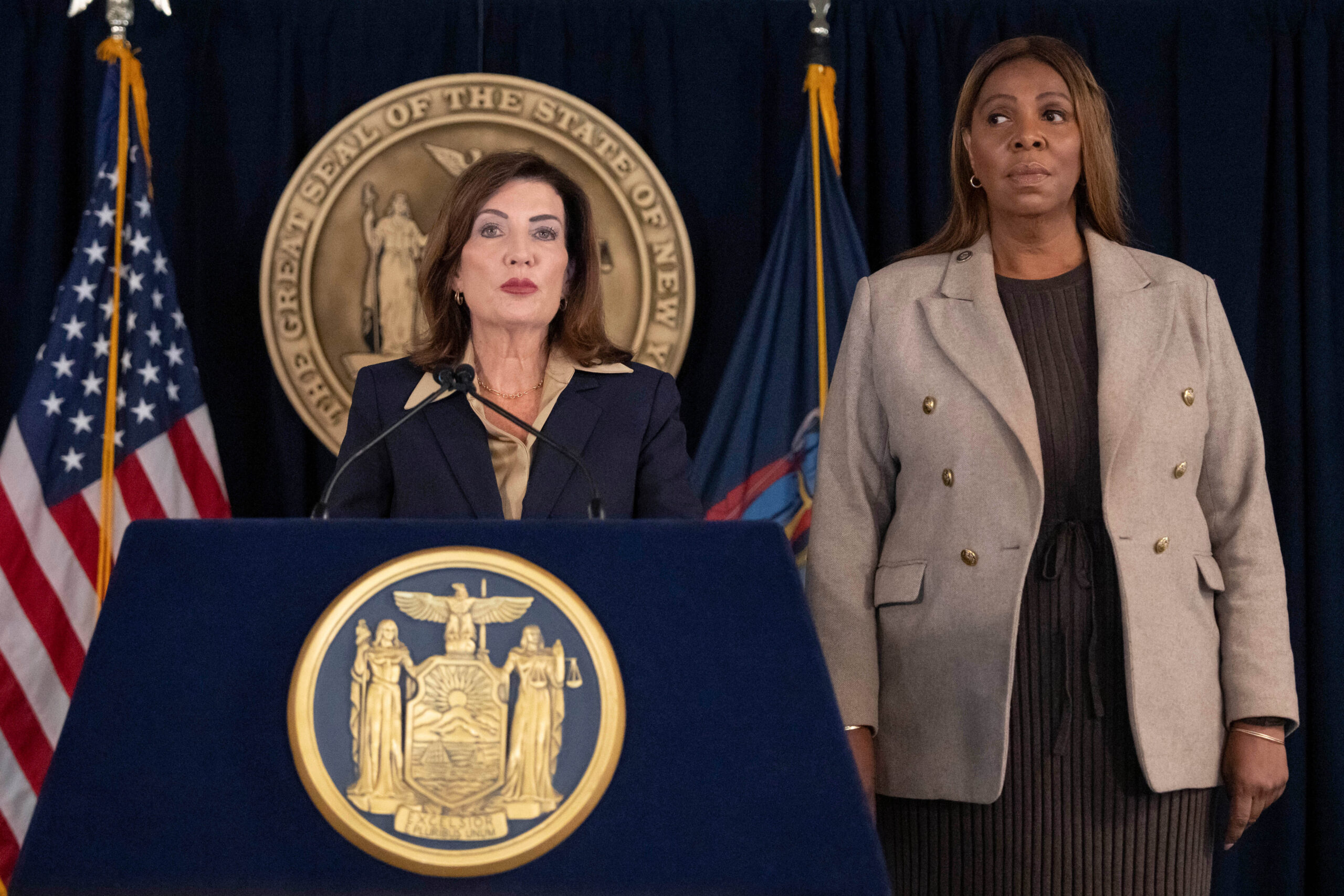
New York Governor Kathy Hochul has pledged to change the state’s rape law after criticising the handling of an alleged gang rape involving a former Cornell University student.
She said she would work with lawmakers early in the new year to close a legal loophole that can make it difficult to prove sexual assault when a victim has voluntarily consumed alcohol or drugs.
Under the current law, a person cannot consent if they are “mentally disabled or mentally incapacitated”, a provision generally applied when drugs or alcohol were consumed involuntarily. Hochul said voluntary intoxication should not prevent a prosecution.
“Voluntary intoxication is not a license for sexual assault or gang rape,” she told reporters. “Period. I support closing this loophole and will work with the New York State Legislature to accomplish this.”
The state Senate has repeatedly backed legislation to change the law, but the Assembly has not brought the measure to a vote.
Investigation into Cornell police handling
Hochul has appointed New York Attorney General Letitia James as special prosecutor in the case, while Cornell president Michael Kotlikoff has agreed to an independent review of the university’s handling of the allegations.
The former student, identified in court papers as Jane Doe, alleges that several men raped her at the Chi Phi fraternity house after coercing her to take drugs. She told Cornell campus police that she was “100 percent confident that she had been raped”, according to a transcript of her conversation with investigators.
Hochul said that statement was omitted from the material Cornell police passed to Tompkins County district attorney Matthew Van Houten. He declined to pursue charges without first interviewing the woman.
“In what world would the police learn from the victim that she had been literally gang-raped while intoxicated by five men in a fraternity house and not elevate those allegations to the district attorney?” Hochul said.
She also questioned why the district attorney did not interview the woman or other people involved, or request the full transcript. James expressed solidarity with Jane Doe earlier this week but declined to comment when asked about her decision to affirm the allegation.
Rebecca Valli, a Cornell spokesperson, said the university supported the governor’s decision and efforts to amend the law, as well as an independent external review of how the case had been handled.
Van Houten said in a statement that his office had not been given “the full picture by the university”.
