


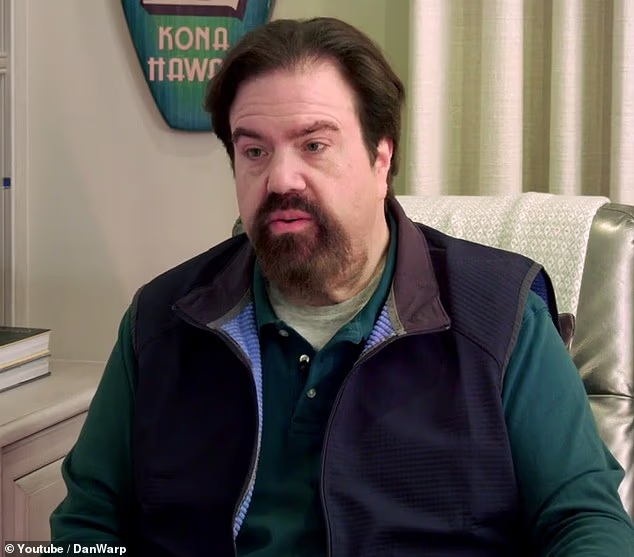
Dan Schneider’s defamation lawsuit against Warner Bros Discovery over the documentary series Quiet on Set: The Dark Side of Kids TV has been dismissed by a California appeals court.
The Second District Court of Appeal overturned a November 2024 ruling that had allowed the former Nickelodeon producer’s case to proceed, finding that he had not shown a likelihood of succeeding with his claims.
Schneider sued in 2024, arguing that the documentary falsely implied he had been involved in the sexual abuse of child actors who appeared in programmes he oversaw. Warner Bros Discovery, Sony and producers Mary Robertson and Emma Schwartz denied the allegations and challenged the case under California’s anti-SLAPP law, which is designed to protect speech on matters of public interest.
A three-judge panel ruled that the series distinguished between allegations of gender discrimination, harassment, toxic workplace conduct and inappropriate sexual innuendo attributed to Schneider, and cases of child sexual abuse explicitly linked to named offenders.
The judges also noted that the documentary referred to an investigation by Nickelodeon which found no evidence of child sexual abuse by Schneider. They rejected his argument that the editing and use of archive footage created a defamatory implication by placing him alongside discussions of convicted sex offenders.
The case centred partly on the story of former child actor Drake Bell, who has spoken publicly about being sexually abused by acting coach Brian Peck. Peck was convicted in 2004 in connection with the abuse.
Schneider later said he had not hired Peck and had been devastated when Bell told him what had happened. He maintained that Quiet on Set nevertheless created a false impression by linking him to the abuse cases examined in the series.
The appeals court said it would not “find an allegation of child sexual abuse where the only such abuse discussed is explicitly attributed to named perpetrators” and where the documentary states that Nickelodeon’s investigation found no evidence of abuse by Schneider.
Robertson and Schwartz welcomed the ruling, saying it protected the constitutional rights of filmmakers and journalists to report on important and difficult issues. They also said the documentary had continued to have an impact, including being cited in bipartisan legislation introduced in Congress concerning protections for child actors.
Schneider’s lawyer, Gerry Silver, said his client’s legal team was considering options for further review and a possible appeal. He said the court had acknowledged that the documentary presented no evidence Schneider had sexually abused cast members, while maintaining that any such allegation would be false.
