


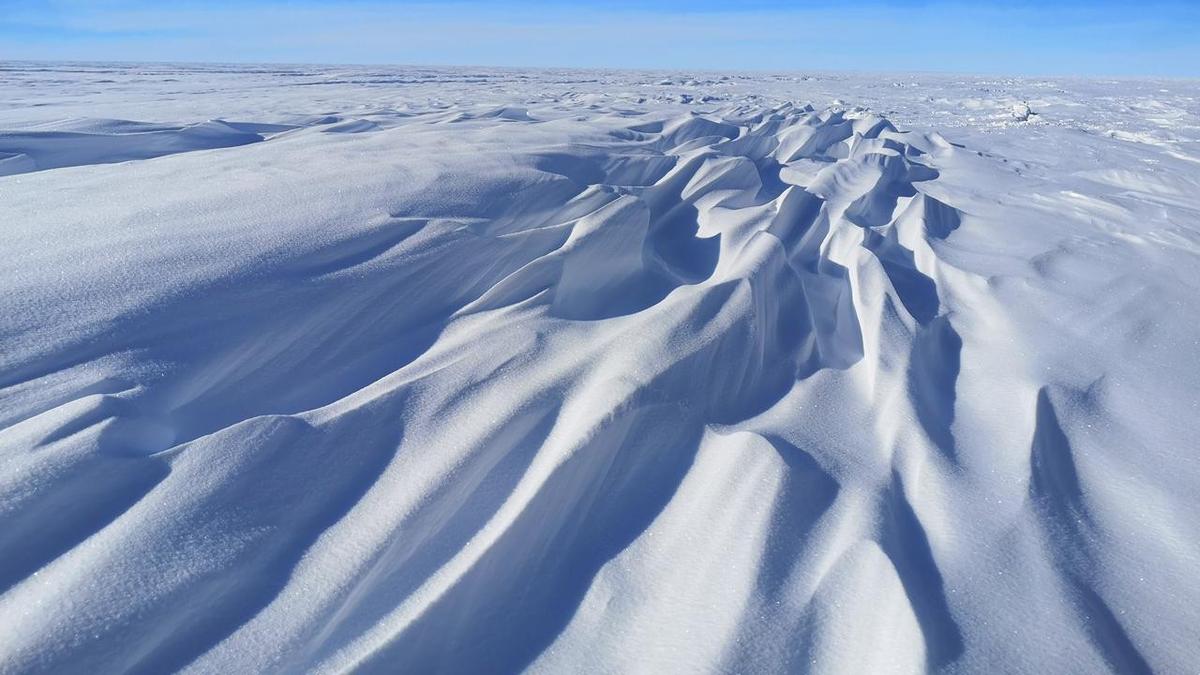
Australian scientists are urging a multimillion-dollar international effort to investigate the Wilkes Subglacial Basin in East Antarctica, an almost uncharted region containing enough ice to raise global sea levels by up to four metres.
Researchers from 14 countries said major gaps in knowledge meant scientists could not reliably predict when substantial ice loss from the basin might occur. They said Australia was well placed to lead the work, but the scale of the challenge meant it could not be undertaken by one nation alone.
The review, led by the Australian Centre for Excellence in Antarctic Science and published in Nature Reviews Earth and Environment, examined an ice basin stretching about 1,400 kilometres in length and 400 kilometres across.
In parts, the ice rests on bedrock more than 2,000 metres below sea level, leaving it vulnerable to incursions of warmer ocean water. However, researchers said little was known about the sea floor and the conditions beneath the ice.
Wilkes Subglacial Basin research faces major access challenges
Professor Matt King, the review’s lead author from the University of Tasmania, described the basin as “arguably the last unexplored place in Antarctica”.
“What makes it tricky to get to is the extensive and persistent sea ice that surrounds it — that’s the frozen ocean,” he said. “That means that no ship has ever come within 150 kilometres of the Cook Glacier.”
Geological records indicate the basin retreated during earlier warm periods and may have contributed to sea-level rises in the past. But scientists said the available evidence was insufficient to establish how it might respond in the future.
Monash University Professor Andrew Mackintosh said a proper investigation would require two icebreakers and a multi-year programme involving aircraft, land teams and ships.
Researchers would need to drill through the ice sheet to collect bedrock and sediment samples, while aircraft and satellites monitored changes across the region.
“We can’t do it alone,” Professor Mackintosh said. “There’s so much vulnerability in a single nation taking this on and so much opportunity that comes from multinational collaboration.”
Professor King said Australia could take the lead because most of the basin lies within its Antarctic territory, but New Zealand, South Korea, France and the United States would be among the countries needed to share the cost and speed up the research.
“By the time you operate icebreakers and you get people into the field, you’ll be talking in the many tens of millions of dollars but distributed across multiple nations I think that’s affordable given the risks that are out there,” he said.
The call comes weeks after a Climate Council study found that more than 267,000 Australian properties could be at risk from rising seas and coastal flooding by 2100, with the trend potentially costing $855 billion.
