


More than 60 million American children have been automatically enrolled in Trump Accounts, taking the total number of accounts to nearly 70 million, although parents and guardians must still claim them before they can be managed or receive certain contributions.
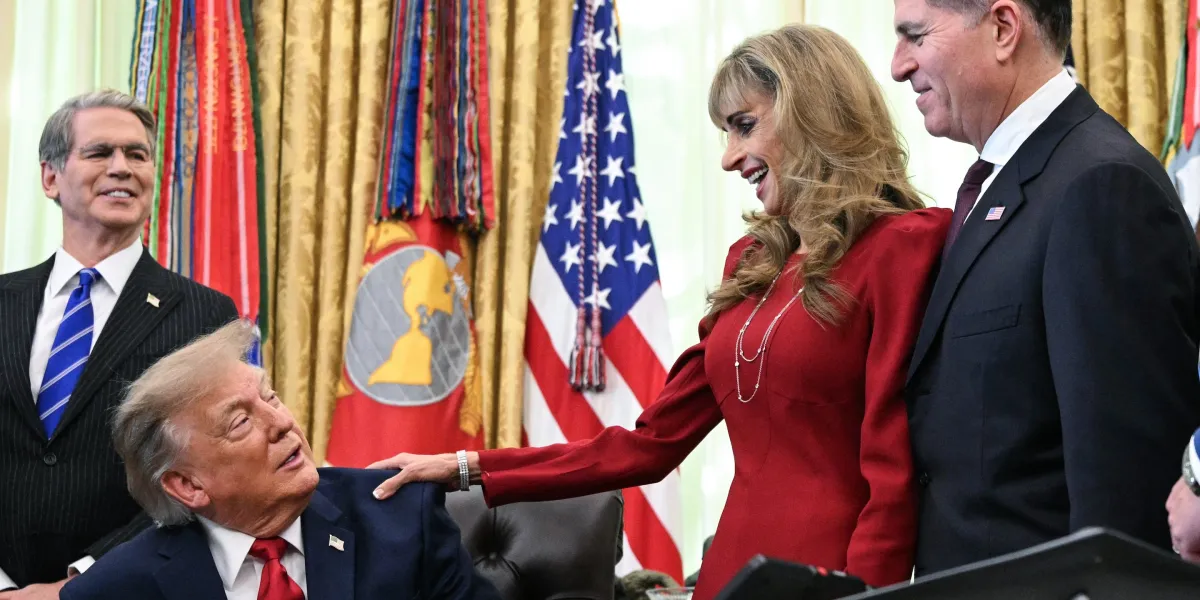
The Treasury Department completed the automatic enrolment of eligible children on 1 October. President Donald Trump said at an Oval Office event that “every single eligible minor child in America has now been automatically enrolled in a Trump Account”.
Claiming an account through the official Trump Accounts app is required before families can accept contributions from relatives and friends or receive the government’s $1,000 seed payment, where the child qualifies.
The automatic process followed a slow initial take-up. Treasury had processed about 5.6 million applications before the change, compared with an estimated 73.4 million eligible children. Some families who applied early were still waiting for their promised seed payment.
How much money is in Trump Accounts?
More than $4.5 billion has been deposited into Trump Accounts since the scheme began on 4 July, according to the White House. That includes $1.3 billion in government seed contributions, more than $600 million from family and friends, and $2.6 billion in philanthropic donations.
Across nearly 70 million accounts, the total works out at about $64 per child on average.
A large share of the philanthropic funding comes from a $6.25 billion pledge by Michael and Susan Dell. The money provides $250 for up to 25 million children aged 10 and under who live in areas with median household incomes below $150,000.
More than 70 companies have also committed to contributing to accounts belonging to employees’ children, following early pledges from firms including JPMorgan Chase and Bank of America.
The administration has promoted the accounts as a way to build substantial long-term wealth. Its calculator projects that a single $1,000 contribution could grow to $243,000 by the time a child reaches 55, while annual contributions of the $5,000 maximum could produce $13 million.
Those projections assume the S&P 500 delivers returns of more than 10% a year for 55 years. More conservative estimates based on a 7% return put the value of a fully funded account at about $1.5 million to $2 million by age 55.
Eligibility and investment rules
Every child under 18 with a valid Social Security number now has an account. The one-off $1,000 government contribution is restricted to US citizen children born between 1 January 2025 and 31 December 2028, and the account must be claimed before the payment can be made.
Once claimed, family and friends can contribute up to $5,000 a year in total. Employers can add up to $2,500 annually, while the government seed payment and certain contributions from state and local authorities and non-profit organisations do not count towards the $5,000 limit.
Most funds are invested in low-cost index funds. Treasury has also established a process for large philanthropic donations of publicly traded shares, which must be distributed among at least 5,000 accounts in an eligible area.
The shares must be held for at least five years before they can be sold. SpaceX president Gwynne Shotwell is among the first to use the arrangement, pledging one share to more than two million children’s accounts.
Single-company share donations can give children an interest in corporate growth but may also leave their portfolios heavily concentrated in one business.
Critics have argued that the greatest benefits will go to families able to contribute thousands of dollars each year. The White House says about 80% of Trump Accounts are connected to families earning less than $200,000 annually.
At 18, an account broadly becomes a traditional individual retirement account. Withdrawals are taxed as ordinary income, and early access may attract penalties unless the money is used for qualifying purposes such as education or buying a first home.
