


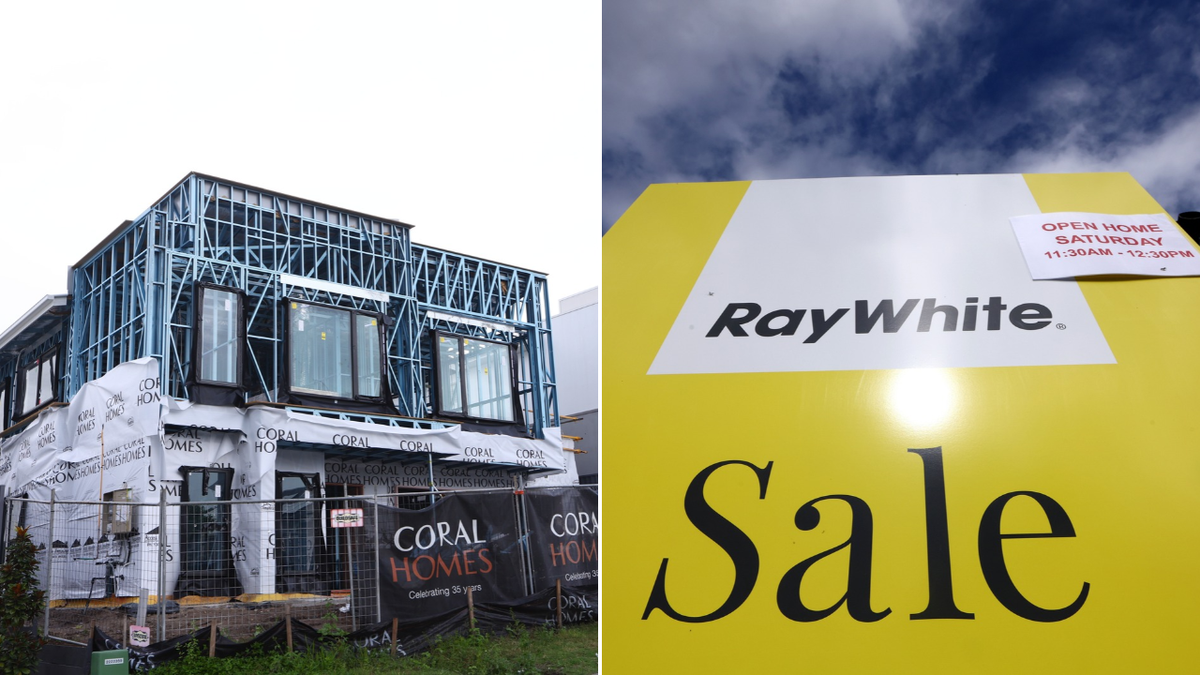
Regional house prices across Australia have fallen more sharply, with dwelling values down 2 per cent over the past three months as cautious investors retreat from the market.
The decline was nearly twice the rate recorded in the previous quarter, according to Cotality’s regional market update. Queensland recorded the steepest fall among the major states, at 2.7 per cent, followed by New South Wales at 2.1 per cent.
Gerard Burg, Cotality’s head of research, said regional markets had so far proved more resilient than capital cities but were now facing similar pressures.
“Regional markets have held up better than the capitals, but they’re not immune to the same pressures,” he said.
Queensland regions lead property price falls
The Gold Coast, Tweed, Bundaberg, Maryborough and Gladstone were among the Queensland areas recording the largest declines. All had previously attracted people moving away from major cities.
Brad Barth, principal at Belle Property in Bundaberg, said the lower end of the market had suffered the biggest falls, while prices for newer homes had remained comparatively steady.
He said the shift represented a significant slowdown after years of intense demand and population growth, when limited supply had pushed prices for different types of homes towards similar levels.
“You’d have a beautiful, neat home getting snapped up in a couple of days and one that was a lot rougher in a different spot,” Mr Barth told the Australian Associated Press.
“Someone who missed out on the neat home … would then pay a similar price for the other home.”
Regional values have nevertheless fallen less than those in metropolitan markets, where prices recorded combined declines of 4.5 per cent.
Investor lending falls as regional markets weaken
Investor lending fell by 30.6 per cent, with the Australian Bureau of Statistics attributing part of the decline to restrictions on negative gearing and changes to Labor’s capital gains tax discount.
Higher interest rates had already been weighing on property values, while investors were leaving the market at a faster rate than owner-occupiers.
In New South Wales, the largest falls were recorded in Ballina in the Northern Rivers, Morisset–Cooranbong and Nelson Bay in the Hunter, and Wollongong south of Sydney.
Busselton on Western Australia’s south coast recorded the sharpest decline among the 50 largest regional centres, falling 4.1 per cent. Kalgoorlie-Boulder, the state’s mining hub, recorded the strongest quarterly growth, rising 3.4 per cent.
Regional South Australia and the Northern Territory were the only regional markets to record quarterly growth, increasing by 0.1 per cent and 2.2 per cent respectively. Victoria recorded a more modest decline of 1.5 per cent.
The report said local employment conditions and economic confidence would help determine which regional markets proved more resilient.
Mr Barth said Bundaberg remained an affordable option, with lower costs helping offset slightly lower wages for some professions.
“You’ve got beaches close by, you can buy 10-acre properties, go from the beach to cane fields, to the middle of Bundaberg,” he said. “It’s a pretty good place to live.”
