


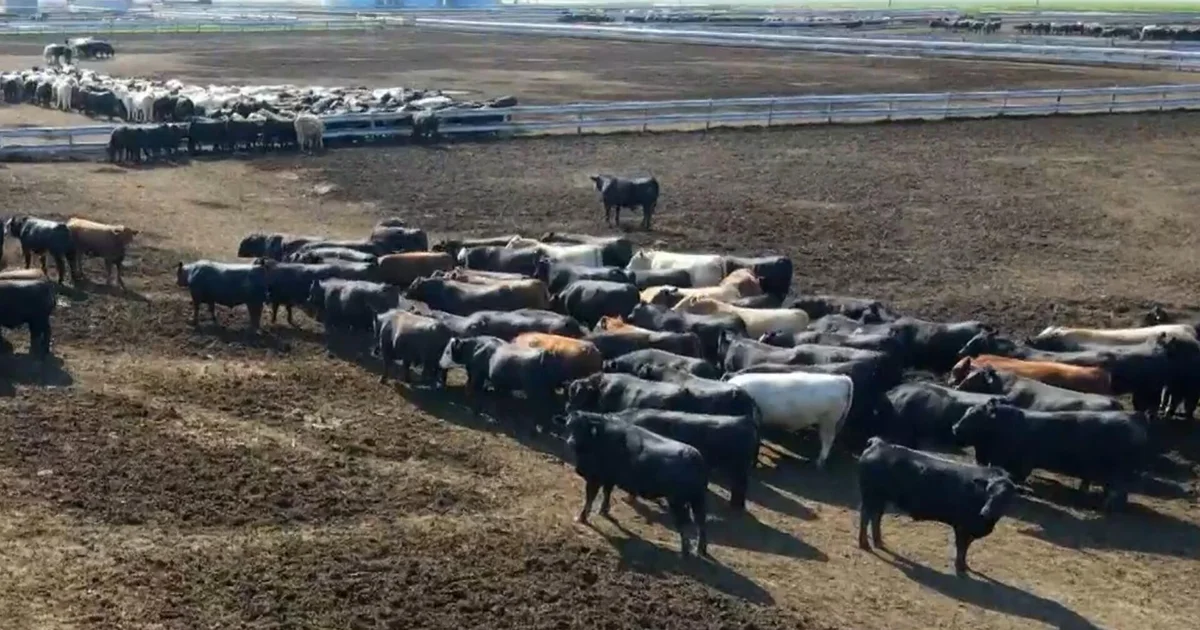
American farmers are selling cattle herds as drought and high feed costs make it increasingly difficult to keep livestock, with some producers forced to reduce their operations to survive.
Dry conditions have reduced the availability of pasture and forage, leaving farmers facing the choice of paying more for feed or sending animals to market. For some, selling part or all of a herd has become the only way to limit mounting losses.
The pressure is being felt across the US cattle industry. Figures from the US Department of Agriculture show that the number of beef cows stood at 28.5 million on 1 July 2026, down 1% from a year earlier, while the national calf crop was estimated to have fallen by 2%.
USDA research has found that feed and forage account for about one-third of the costs faced by cow-calf producers. During droughts, declining pasture conditions can push those costs higher and accelerate the liquidation of herds.
Federal support is available through the Livestock Forage Disaster Programme, which provides assistance to eligible producers suffering grazing losses caused by qualifying drought or fire conditions. Additional aid can help cover above-normal costs for transporting water and feed or moving animals to alternative grazing land.
But such measures may not prevent every farm from cutting back. Once cattle numbers fall, rebuilding a herd can take years, leaving producers exposed to continuing drought, volatile feed prices and the financial strain of trying to maintain a business on increasingly marginal returns.
