


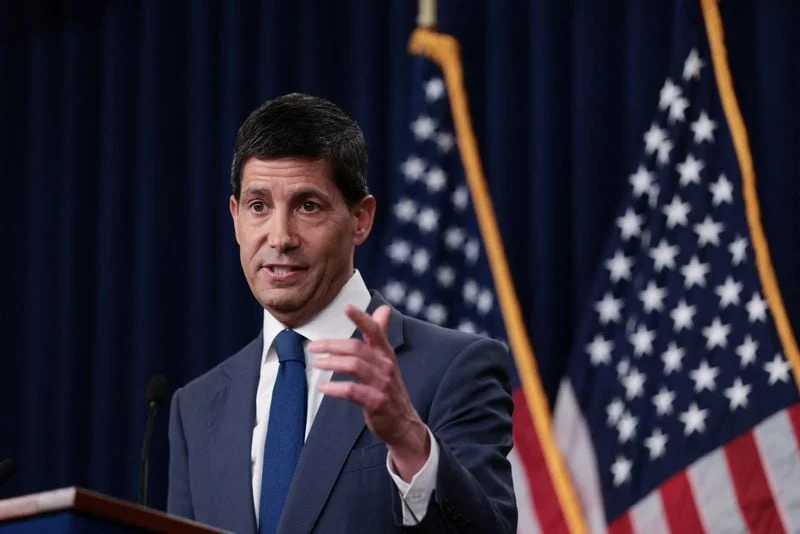
UBS expects the Federal Reserve to raise interest rates twice before the end of 2026, as Chair Kevin Warsh’s warnings over persistent inflation combine with stronger-than-expected employment data.
The bank’s economists, including Jonathan Pingle and Abigail Watt, are forecasting quarter-point increases at the Fed’s September and December meetings. They stressed, however, that the call was not a high-conviction prediction and could change if incoming economic figures weaken.
Warsh used a speech at the Federal Reserve Bank of Kansas City’s annual Jackson Hole symposium to underline the central bank’s 2 per cent inflation target. He said policymakers must be confident that underlying inflation was moving towards the goal “clearly and at sufficient speed” — otherwise, he added, “we have work to do”.
The Fed chairman also described short-term interest rates as the main tool for achieving the central bank’s dual mandate of price stability and maximum employment. UBS analysts said the remarks pointed towards a more forceful response if inflation failed to ease.
“[Warsh] threw down the gauntlet. Now, with his credibility on the line, we expect he has little choice but to put his monetary policy where his mouth is,” the analysts said.
Fresh labour-market figures have strengthened the case for keeping borrowing costs high. The US economy added 162,000 jobs in August, according to the Bureau of Labor Statistics, while the unemployment rate held at 4.1 per cent.
The increase was well above the average monthly gain of 31,000 recorded over the previous year. Employment grew notably in food services and local government education, although the information sector shed 23,000 jobs.
Financial markets were pricing in roughly a 60 per cent chance of a 25-basis-point increase at the September meeting. UBS described that decision as a close call, with Warsh expected to weigh the latest data, market conditions and the views of fellow policymakers.
The next major test will come with the August consumer price index, due to be published on September 11. UBS said a downside surprise in the figures could overturn its forecast for two rate increases.
Consumer prices rose 3.4 per cent in the year to July, according to the latest available figures, remaining above the Federal Reserve’s long-term target and keeping pressure on policymakers to guard against inflation becoming entrenched.
