


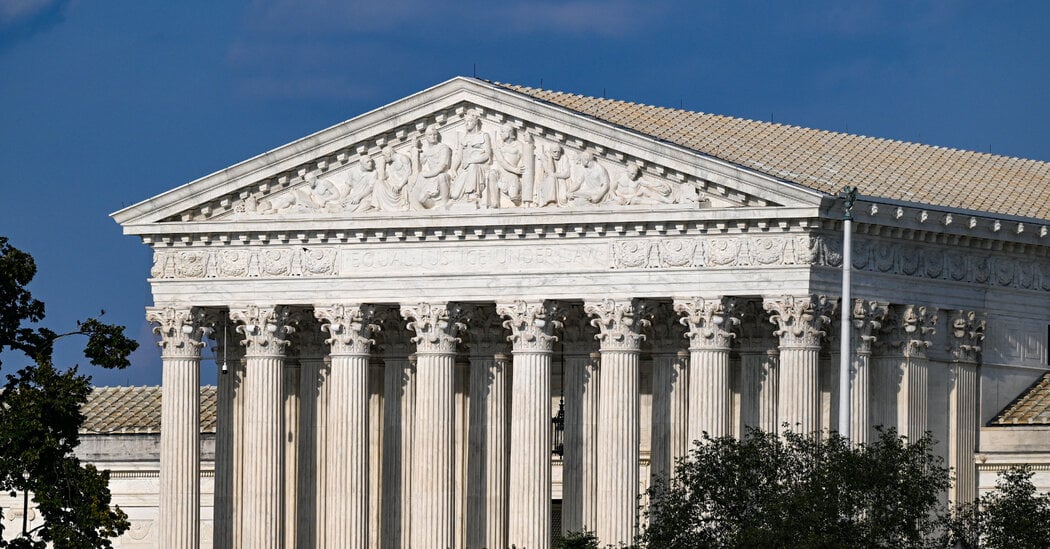
The Trump administration has asked the US Supreme Court to clear the way for new restrictions on mail-in voting ahead of November’s midterm elections, in what is likely to be the final legal test of President Donald Trump’s plans.
The emergency application seeks permission for the US Postal Service (USPS) to implement rules governing the design and processing of federal election mail. The measures remain blocked while legal challenges brought by Democratic-led states and voting rights organisations proceed.
Solicitor General D. John Sauer urged the justices to act quickly, arguing that the rules impose “reasonable preparation requirements for certain election-related mail” rather than taking control of state-run elections.
The filing came after US District Judge Indira Talwani, sitting in Boston, extended an order preventing the Postal Service from enforcing the requirements during the 2026 election. She found that the challengers were likely to succeed in arguing that the USPS had exceeded its constitutional authority.
Justice Ketanji Brown Jackson, who handles emergency applications from the region where the case began, ordered the groups challenging the rules to respond by 4pm on Wednesday. She did not grant the administration’s request for the rules to take effect immediately, leaving the restrictions on hold for now.
Mail-in voting restrictions face a race against time
The administration has already asked the Supreme Court to intervene in the dispute on two previous occasions. The justices allowed an earlier stage of the policy to proceed, but did not decide whether the underlying measures were lawful.
Mr Sauer said the delay was becoming increasingly serious as states began preparing and distributing ballots. He said North Carolina had already started mailing ballots, while Alabama was due to begin on September 9 and at least five other states were expected to start during the week of September 13.
The final USPS rule, published on August 26, requires states using the postal system for federal ballots to comply with specified envelope standards and provide information through a new federal portal. The administration says the measures would improve security and accountability, while opponents warn that errors or delays could prevent valid ballots from entering the mail.
Judge Talwani rejected the government’s contention that the rule was merely an internal postal regulation. She said it effectively required state and local election officials to obtain USPS approval for ballot envelopes and submit voter information before using the federal mail system.
She also wrote that Congress had never delegated its constitutional power over elections to the Postal Service, and that the rule intruded on powers belonging to both Congress and the states.
Mr Sauer disputed that assessment, arguing that the USPS was entitled to make rules necessary to carry out its functions. He compared the proposed ballot requirements with postal preparation rules for items including cremated remains and replica explosives.
The Supreme Court’s decision could affect the administration of the midterms, with states already working to meet election deadlines. Nearly one-third of US voters cast ballots by mail, according to the Associated Press, increasing the pressure on the justices to resolve the dispute before the new rules could cause confusion among election officials and voters.
