


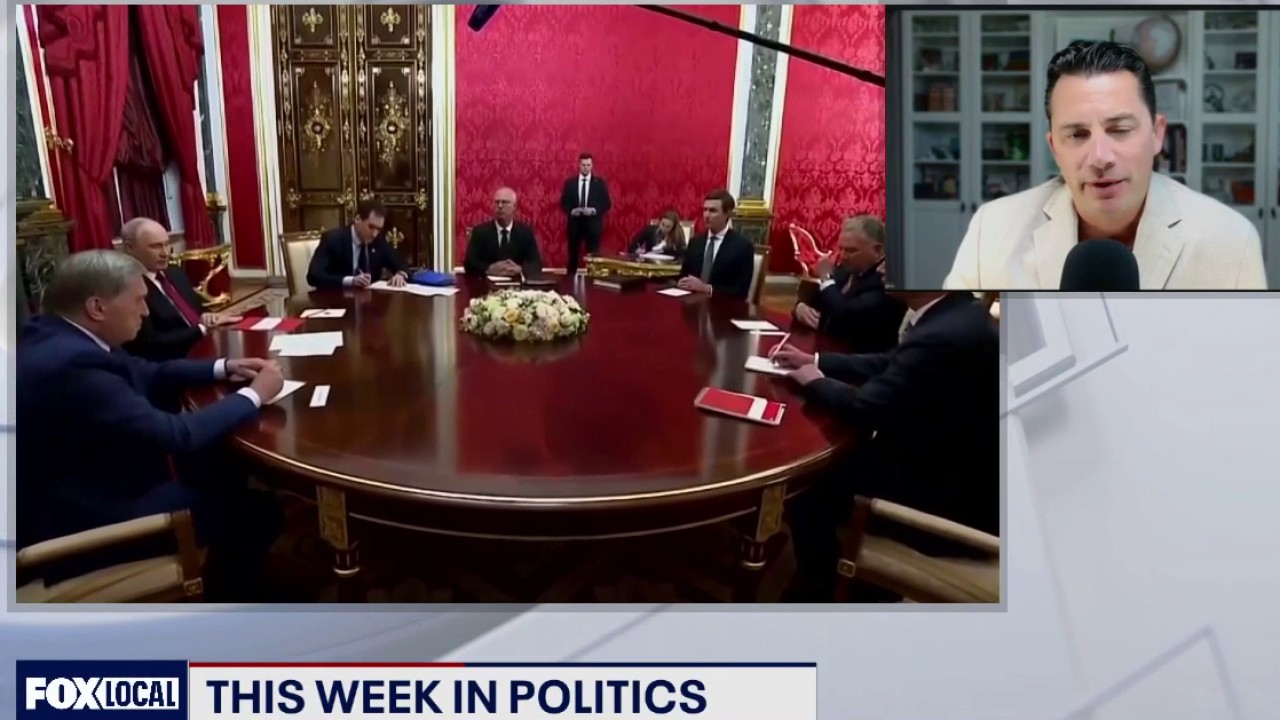
US negotiations with Russia and Ukraine were among the key political issues examined by UC Santa Cruz academic Nolan Higdon in a discussion covering the latest developments in Washington and the wider American political landscape.
The conversation came after US special envoys Steve Witkoff and Jared Kushner met Vladimir Putin in Moscow in an effort to revive peace talks over the war in Ukraine. The meeting was followed by plans for Witkoff to travel to Kyiv, as the Trump administration attempts to bring both sides back towards negotiations.
Higdon also discussed the political significance of Gavin Newsom’s tour of the Deep South. The California governor has visited Alabama, South Carolina and North Carolina as part of a campaign to support Democratic candidates ahead of the November midterm elections.
Newsom’s appearances have attracted attention beyond the immediate contests, as he is widely regarded as a possible contender for the Democratic presidential nomination in 2028. His visit to South Carolina, in particular, has been viewed as an effort to build relationships in a state expected to play an important role in the party’s next nominating process.
The discussion also addressed Donald Trump’s efforts to tighten rules governing mail-in voting. The administration has asked the US Supreme Court to allow restrictions linked to the president’s executive order, after a federal judge blocked the United States Postal Service from enforcing the changes.
The legal dispute is unfolding as states begin preparing and sending ballots for the midterm elections. The administration argues that the measures would strengthen election security, while Democratic-led states and voting rights organisations have warned that changing the system at short notice could create confusion for voters and election officials.
Higdon, a lecturer at the University of California, Santa Cruz, is a specialist in media, politics and critical news literacy. His discussion brought together the international consequences of the administration’s Ukraine policy and the increasingly divisive domestic battles over elections and Democratic strategy.
