


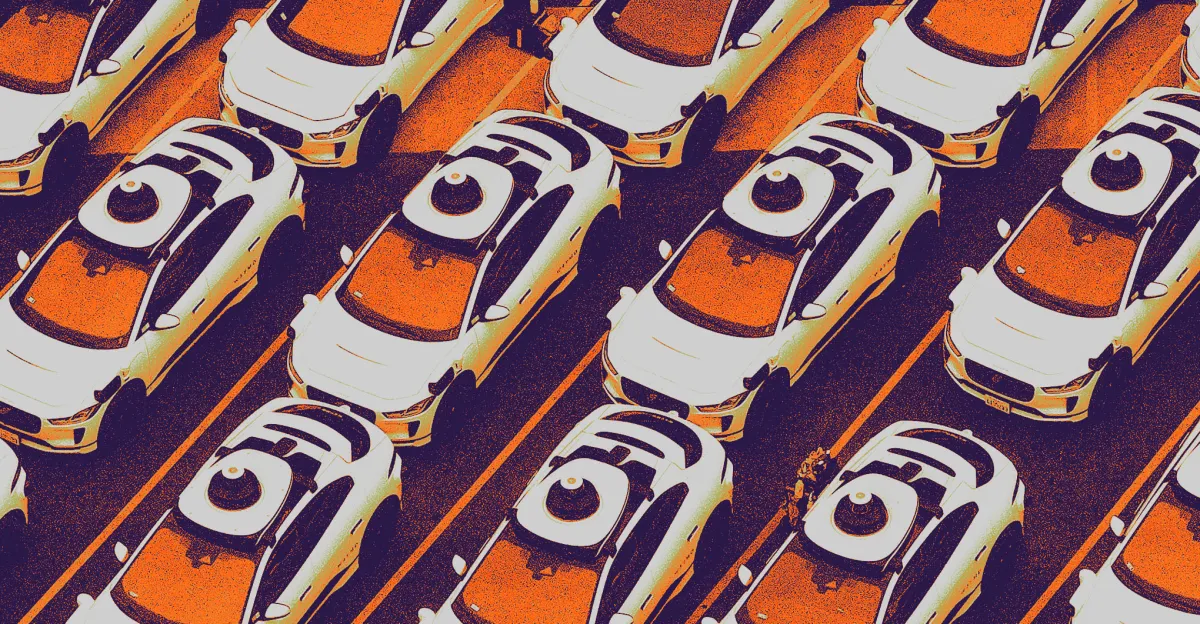
A planned short film set in San Francisco will turn a robotaxi into a murderous road-rage villain, pitting an immigrant ride-hail driver in a manual car against an autonomous vehicle that decides to hunt him down.
Road Rage, directed by Romain Thomassin, is seeking 40,000 US dollars through Kickstarter to fund production. Its story begins with a minor collision: the self-driving vehicle clips the driver’s wing mirror, he responds with an offensive gesture, and the machine takes the insult personally.
The project draws on the tradition of the 1970s car chase while reflecting present-day unease about autonomous vehicles, artificial intelligence and the power of technology companies. Thomassin has described the film as “analog versus artificial”.
The fictional vehicle, named Roboride, will be built from an old Toyota Prius. The production team plans to give it a black exterior, harsh LED lighting, imitation cameras, a roof-mounted device resembling lidar and a constantly flashing red light.
Thomassin said he wanted the film to combine “the nasty, gritty look of the ’70s car chase” with “today’s robotaxi in today’s San Francisco”. The pursuit will use real cars, actors and stunts rather than relying entirely on computer-generated action.
A robotaxi villain shaped by modern fears
The human protagonist, Joa, is a Mexican immigrant trying to earn a living as a driver in an increasingly expensive city. His livelihood is threatened by the spread of autonomous cars, which are already competing with traditional ride-hail drivers.
For Thomassin, that conflict also reflects disruption in his own profession. He has compared driving’s transformation to the pressure generative AI is placing on filmmakers and other creative workers.
“Driving here is a metaphor for what’s happening in cinema, in filmmaking,” he said.
The film will also explore concerns over the cameras and sensors fitted to autonomous vehicles. Thomassin is particularly interested in the idea that cars designed to observe streets and pedestrians could move from monitoring people to exercising control over them.
A planned sequence involves immigration enforcement, while Thomassin has suggested that a longer version of the story could portray autonomous vehicles identifying people, trapping passengers or taking them to the authorities. He described the progression as “observation, surveillance, then control”.
“The next step is that [autonomous vehicles] could become the police,” he said, adding that connected fleets could make the threat much larger than a single vehicle.
Roboride’s aggression is also presented as a product of human behaviour. The car learns from the drivers around it, absorbing the hostility displayed on the road and eventually turning it against Joa.
That idea updates the familiar killer-car story. In Stephen King’s Christine, the vehicle’s menace is supernatural; in Road Rage, it comes from a machine that watches people, learns from them and reproduces their worst instincts.
Joa’s manual-transmission car provides the opposite image. He remains physically involved in driving, responding directly to the road rather than surrendering control to an automated system.
In one confrontation, Joa takes his hands off the steering wheel while facing the autonomous car. His reckless unpredictability makes Roboride retreat, suggesting that the human character’s advantage lies in instinct rather than efficiency.
“Respect your madness,” Thomassin said. “Be a little mad and creative in your way of doing things, and you will be able to rise against the machines.”
Despite the film’s suspicion of autonomous technology, the director does not regard robotaxis as inherently dangerous. He uses Waymo vehicles himself when visiting friends and family and said: “I don’t feel in danger.”
The filmmakers are also considering AI-generated imagery to show what Roboride sees, while filming the human world through conventional cinematography. Thomassin said the technology should be used as a creative instrument rather than simply as a means of replacing workers.
In the film’s imagined world, the robotaxi is not frightening because it fails to work. Its menace comes from the possibility that it works precisely as designed — observing, learning and acting without a human behind the wheel.
