


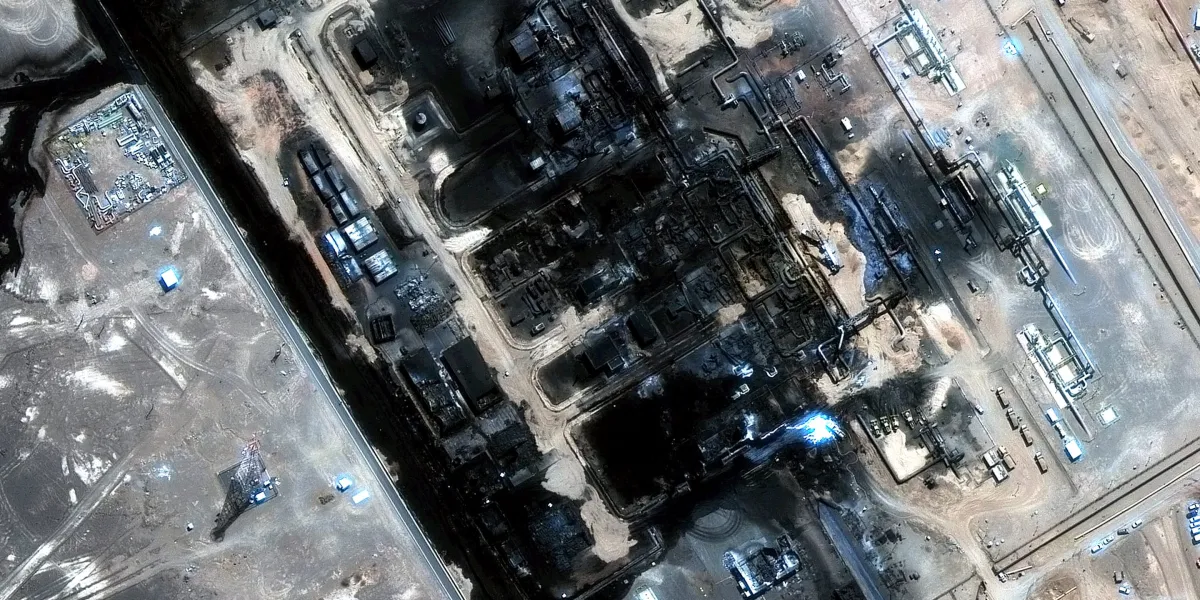
Saudi Arabia’s closure of its East-West oil pipeline after an attack has intensified fears of further shortages and higher prices as the war with Iran disrupts energy routes across the Middle East.
Saudi authorities blamed the attack on drones operated by Iranian-backed militias in Iraq. Two regional officials said repairs to the 1,200-kilometre pipeline could take between three and five weeks.
The route carries crude from processing facilities near the Persian Gulf across Saudi Arabia to the Red Sea, allowing tankers to avoid the Strait of Hormuz. Oil can then be shipped towards Europe through the Suez Canal or south towards Asia via the Bab el-Mandeb Strait.
Saudi Arabia’s East-West pipeline closure puts millions of barrels at risk
The pipeline was built in the 1980s amid fears that Iran could disrupt shipping through Hormuz during the Iran-Iraq war. It has played a crucial role during the current conflict, helping maintain some oil exports while most tanker traffic through the strait was halted.
Rystad Energy said between 2.6 million and four million barrels of oil a day had moved through the pipeline to the Red Sea port of Yanbu since late August. That supply was now at risk of “disappearing from the market”, the firm said.
The upper estimate represents about 4 per cent of global oil supply, according to the International Energy Agency. Saudi Arabia produced almost 10 million barrels a day in September last year, although output had fallen to six million barrels a day in August, the agency said.
Janiv Shah, Rystad’s vice-president of oil markets, said the rise in Brent crude showed that markets were already reacting to a significant loss of supply. Saudi inventories could support exports in the short term, he said, but that position could change quickly.
Brent, the international benchmark, was trading above 105 US dollars a barrel on Monday.
Hormuz and Red Sea routes remain under pressure
The Strait of Hormuz remains a key potential route for Saudi exports. Before the war, about 20 million barrels of oil passed through the waterway each day.
Some tankers have resumed crossing, but traffic is still below previous levels. Lloyd’s List Intelligence recorded 90 transits during the first week of September, compared with roughly 130 ships a day before the war.
Shipping through the Bab el-Mandeb Strait has also come under growing pressure from Yemen’s Iran-backed Houthi rebels, who have seized islands along important Red Sea routes. Melius Research estimated that about three million barrels of oil a day were moving through the strait in early September, but said on Monday that the flow was probably now zero.
Houthi attacks had already led most Saudi shipments from Yanbu to travel north towards the Mediterranean, either through the Suez Canal or via Egypt’s SUMED pipeline. The group has since begun targeting Saudi shipping in the northern part of the route as well.
Salvatore Mercogliano, a professor of maritime history at Campbell University in North Carolina, said the partial reopening of Hormuz meant the pipeline closure was not necessarily catastrophic for Saudi Arabia.
“If this (East-West pipeline) was the only method for Saudi Arabia to get their oil out it would be absolutely cataclysmic,” he said. “But since the Hormuz route has opened back up — not completely but opened up some — it’s not the death knell for Saudi Arabia. They’re getting oil out.”
Fuel and household costs continue to rise
The supply disruptions have already pushed up fuel prices around the world, with analysts warning that the latest shock could add to pressure on households over the coming weeks and months.
Countries in Asia and Africa that depend heavily on Middle Eastern imports have experienced some of the sharpest increases. In Nigeria, diesel prices were 92 per cent higher than in late February, while petrol had risen by nearly 61 per cent.
Indonesia recorded increases of 87 per cent for diesel and 38 per cent for petrol, while Lebanon saw diesel rise by 80 per cent and petrol by 46 per cent.
In the United States, the average price of regular petrol reached nearly 4.32 US dollars a gallon on Monday, up almost 45 per cent from 2.98 dollars before the war. Diesel reached a further record of 6.23 dollars a gallon, excluding inflation, marking a rise of nearly 66 per cent since the conflict began.
Higher diesel costs can feed through into the price of other goods because the fuel is used by long-distance lorries, delivery networks and farming equipment.
Melius Research analysts warned that an inflationary spillover was likely, citing pressure on essentials including fertiliser as well as energy. They added that the diesel squeeze was coming ahead of the US harvest and heating season.
