


Seattle Public Schools is to block student access to Gemini, Minecraft and generative AI tools from Monday, while younger pupils will lose access to YouTube as the district tightens its approach to classroom technology.
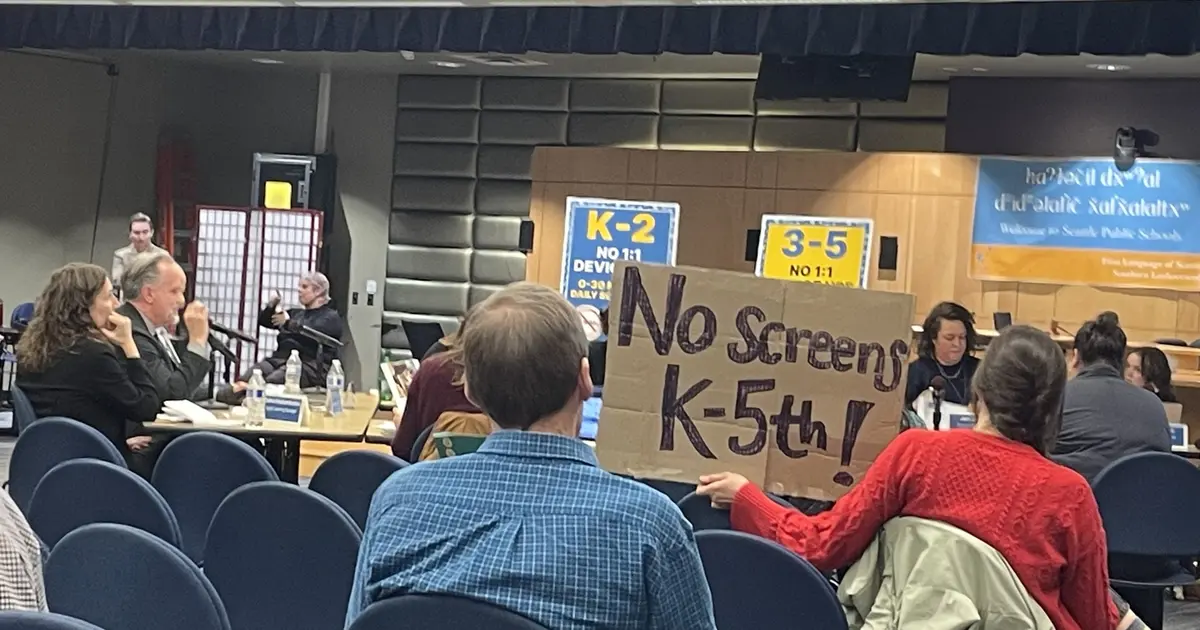
The changes were announced at a school board meeting on Wednesday, 4 November, as parents and campaigners rallied outside the district’s administration building calling for stronger safeguards around artificial intelligence and digital learning.
Under the new restrictions, access to Gemini, generative AI tools and Google Search’s AI summaries will be blocked for pupils from kindergarten through to Year 12. Minecraft will also be unavailable unless it is being used as part of a teacher-led lesson.
YouTube will be blocked for pupils in kindergarten through Year 5. Seattle Public Schools has also said technology should be used for teaching rather than as an incentive or reward.
The district is reducing individual device use in primary schools. Children in kindergarten through Year 2 will no longer be assigned their own iPad, while pupils in Years 3 to 5 will move away from a one-device-per-child model and are more likely to share classroom computers.
Screen time for kindergarten to Year 2 pupils will generally be limited to between zero and 30 minutes a day. For Years 3 to 5, the stated range is zero to 60 minutes, with the amount depending on the lesson and the needs of pupils.
Seattle Public Schools said the changes were intended to ensure technology complemented, rather than replaced, teacher instruction, reading, writing, discussion and hands-on learning. Its existing guidance says artificial intelligence may be used where it supports learning, but not when an assignment is intended to develop original thinking, critical analysis or in-depth understanding.
Parents demand stronger AI safeguards
Members of Seattle Families for Intentional Tech said the new restrictions were a step in the right direction but did not go far enough. The group has called for a pause on student-facing generative AI until products have been assessed for safety, legality and educational value for children.
Ashley Worobec, a Seattle Public Schools parent, said: “I send my kid to school to learn and for his brain to develop. I’m also really concerned about the dangers of it from young kids feeling like they can converse with AI and then being led down dangerous paths.”
Danica Novle, another parent, said children could be exposed to “misinformation or false information and sometimes even dangerous information” without clear safeguards.
Erica Shutes-David, of Seattle Families for Intentional Tech, said parents were concerned that excessive reliance on technology could deprive children of opportunities to think and create independently.
Families have also urged the district to publish a full list of digital platforms used in classrooms, explain how pupil data is handled and offer paper-based alternatives where parents request them.
Superintendent Ben Shuldiner said the district had previously been “overwhelmed by technology” but was now taking a more considered approach.
“Getting rid of YouTube K-5 I’m thrilled with, and certainly no Minecraft K-12 unless it’s actually part of a classroom with a teacher, then we feel really comfortable with this,” he said.
The district’s wider changes for the youngest pupils are due to begin on 4 January 2027. Seattle Public Schools said iPads would remain available in classrooms for approved lessons, assessments and accessibility support, even though children would no longer have individual devices assigned to them.
Officials said they were continuing to review the use of artificial intelligence and other technology in middle schools, while staff and pupils are being trained on the new guidance.
