


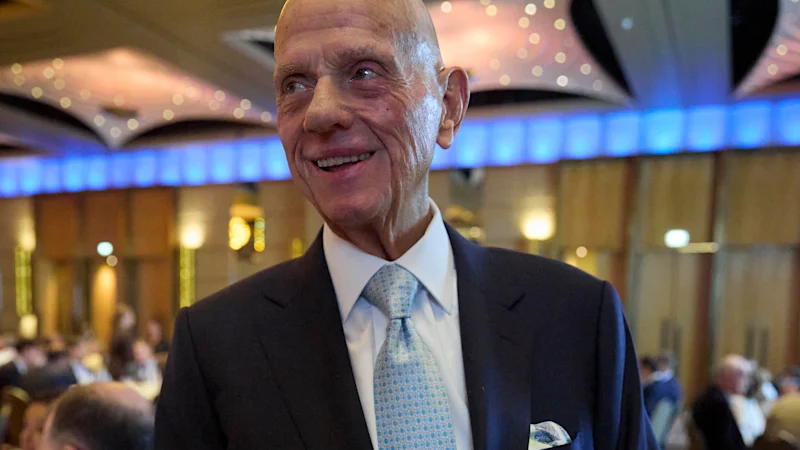
The collapse of David Jones is giving rival Myer and its billionaire backer Solomon Lew more room to revive the department store chain, with Myer shares rising sharply as investors assess the potential gains from its troubled competitor’s retreat.
Myer shares climbed as much as 9.8 per cent on Thursday and have risen by almost 50 per cent from their September low, when it became clear that David Jones’ former private equity owner, Anchorage Capital, was running out of options.
Lew, 81, is Myer’s largest shareholder, with a stake of more than 25 per cent. The failure of Anchorage’s strategy has shifted attention to whether Myer can capture sales and customers from a reduced David Jones network.
Retail analysts at MST Marquee, led by Craig Woolford, estimate that Myer could take up to half of the sales lost if David Jones stores close, potentially delivering an uplift of as much as $180 million.
Myer faces short-term pressure from David Jones discounts
Myer is expected to face some immediate pressure as the administrators handling David Jones seek to raise cash through heavy discounting of available stock. The most significant benefit, however, could go to shopping centres that house both retailers if nearby David Jones stores shut.
David Jones’ financial problems have also affected suppliers and concession operators, whose brands provide stock, staff and floor space inside its stores. The department store processes the transactions and takes a fee, while the brands bear the cost of operating their concessions.
Some concession operators are reported not to have been paid during the week. They now face the prospect of ranking as unsecured creditors for those sales while remaining responsible for their operating costs.
The retailer had already extended payment terms to suppliers, effectively using money owed to them for longer before settling its bills. The strain has damaged the loyalty and exclusivity that had supported David Jones’ position as an upmarket department store, while a number of brands have moved to Myer.
The crisis became particularly acute when David Jones lacked the cash to buy essential Christmas stock. Lenders provided further funding this month, after previously losing appetite as the cost of a $250 million revamp reached its peak.
Uncertainty over the future of David Jones
A deal with its landlords became the final barrier between David Jones and financial collapse. The retailer’s largest landlord, Scentre, was not prepared to absorb the losses associated with Anchorage’s ownership, according to the report.
The immediate questions are how many stores will close, whether the remaining outlets will trade through the Christmas sales period and how many staff could lose their jobs before the festive season.
There is also uncertainty over whether a buyer will emerge for the restructured business, which is expected to have fewer stores and employees and lower rents. Anchorage is interested in bidding for that business, raising the prospect that the private equity firm could seek to profit from a significantly reduced operation.
