


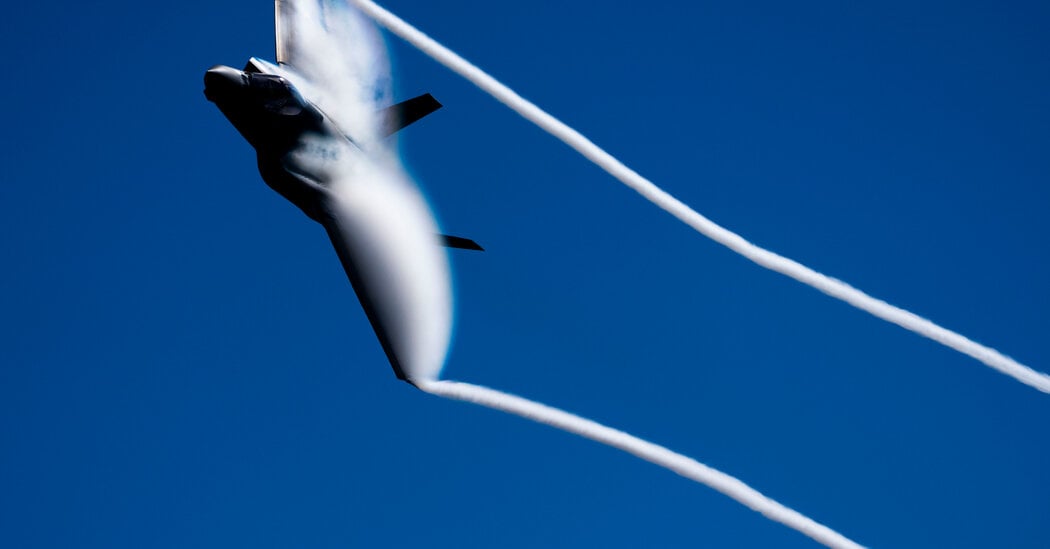
The Trump administration is proceeding with the proposed sale of 48 F-35 fighter jets to Saudi Arabia despite US intelligence concerns that China could gain access to the aircraft’s sensitive technology.
The State Department valued the package, which includes a spare engine, at $24.3 billion. It said the deal would strengthen Saudi Arabia’s ability to deter present and future threats and improve its homeland defence.
Formal notification of the sale was sent to Congress on Thursday. If the aircraft are ultimately produced and delivered, a process expected to take years, Saudi Arabia would become only the second country in the Middle East to operate F-35s after Israel.
The announcement came shortly after reports that intelligence agencies had questioned whether the technology could be adequately protected. A detailed assessment by the Pentagon’s Defence Intelligence Agency raised concerns about security at Saudi sites and the access Chinese military personnel have to the kingdom’s bases.
It also pointed to Saudi Arabia’s widespread use of Chinese technology in telecommunications infrastructure and defence installations. Another internal assessment examined the growing military relationship between China and Saudi Arabia, including Chinese assistance with ballistic missiles.
Donald Trump announced the proposed sale last November, shortly before Crown Prince Mohammed bin Salman, Saudi Arabia’s de facto leader, visited Washington. The crown prince has sought F-35 aircraft for years as part of efforts to expand the Saudi military.
The State Department sent details of the package to two congressional committees in June in an effort to secure informal approval. US officials said all four senior lawmakers on those committees did not give their agreement until the middle of this week.
Some members of Congress criticised the decision after the administration announced that it was moving ahead. Representative Raja Krishnamoorthi, an Illinois Democrat who sits on the House Intelligence Committee, said the sale could put advanced American military technology within reach of China.
“The Trump administration should not move forward with its proposed sale of F-35 fighter jets to Saudi Arabia when our own intelligence community is warning that it could put the crown jewels of American military technology within reach of the Chinese Communist Party,” he said.
Congress has 30 days to review the deal and could introduce a joint resolution opposing it. However, such a measure would require the backing of two-thirds of both the House of Representatives and the Senate to overcome a possible presidential veto. The House is in recess until November and the Senate is due to begin its own recess, making passage of any resolution introduced now highly unlikely.
The State Department said defence sales and transfers were subject to laws and policy guidance covering “a broad range of political and economic considerations, including protecting the U.S. military’s technological edge.”
The transaction has also prompted concern in Israel, where some officials fear it could weaken the country’s military advantage over neighbouring Arab states. US policy has sought to preserve Israel’s “qualitative military edge” in the region since the 1973 Arab-Israeli war, as required by Congress.
The sale could face difficulties before the jets are produced or delivered. A previous proposal to sell F-35s to the United Arab Emirates, announced by Mr Trump in 2020, was later halted by the Biden administration after US intelligence agencies raised concerns about the Emirates’ close links with China.
