


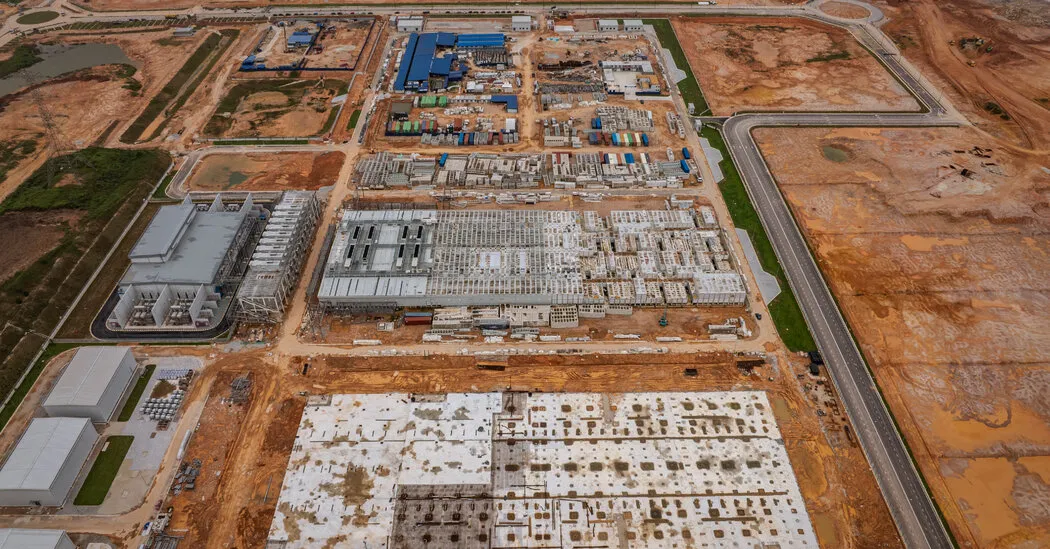
The Trump administration is moving to restrict China’s access to advanced American AI chips through overseas data centres, targeting a loophole that has allowed Chinese companies to rent computing power beyond the country’s borders.
The proposed rules would apply to data centres supplying “significant volumes of computing power” to companies headquartered in countries classed as high risk, including China, Russia and Iran. Operators would also have to carry out due diligence on those customers.
The Commerce Department said the measures were “designed to ensure that existing restrictions on access to sensitive American technology cannot be circumvented through remote computing arrangements involving data centers in third countries”.
The restrictions come days before President Donald Trump is due to travel to China for an economic summit and meet the Chinese leader, Xi Jinping. He is expected to arrive on Wednesday for talks covering trade, nuclear non-proliferation and the war in Iran.
The rule would also require a licence for advanced chip exports to companies headquartered in Indonesia, Malaysia, Singapore, Thailand or Brazil, which the administration considers to carry a higher-than-normal risk of smuggling.
Washington has already barred Chinese firms from directly buying the most advanced AI chips made by companies including Nvidia. But Chinese businesses can access similar technology by renting it from data centres in South-east Asia and elsewhere, where the arrangements are legal.
The issue has drawn increased attention following revelations involving Megaspeed, a Singaporean data-centre company accused of smuggling chips to China. US authorities have deemed its founder, Alice Huang, an asset for Chinese intelligence services and are investigating the company.
Nvidia and its supporters have argued that overseas sales support jobs in the United States and help ensure that companies worldwide remain dependent on American technology. Some officials in the Trump administration and in Congress, however, believe remote access has weakened US export controls and helped China’s artificial intelligence industry develop, with potential economic and military consequences.
The announcement said the new rule had been written under the direction of the Treasury Department and the National Security Council. Both have pushed for tougher restrictions, while Commerce Secretary Howard Lutnick has backed a narrower approach that would place less of a burden on Nvidia and foreign data-centre operators.
The Biden administration introduced global rules on chip sales shortly before leaving office, including restrictions on Chinese firms remotely accessing data centres. Trump officials stopped enforcing those provisions after he won a second term, and they were formally withdrawn in May 2025.
Several replacement proposals have since advanced within the administration before being rejected. Treasury Secretary Scott Bessent, Secretary of State Marco Rubio and US trade representative Jamieson Greer have supported restoring broad limits on overseas data-centre access.
It is not yet clear whether the latest measures will prompt a response from Beijing. A senior administration official said the White House did not expect Chinese countermeasures, while another said the Nvidia issue would have no bearing on Mr Trump’s trip and that export controls were national security matters not open to negotiation.
