


The Trump administration is due to announce new US fuel economy standards that would ease requirements on carmakers to improve the efficiency of petrol-powered cars and light trucks.
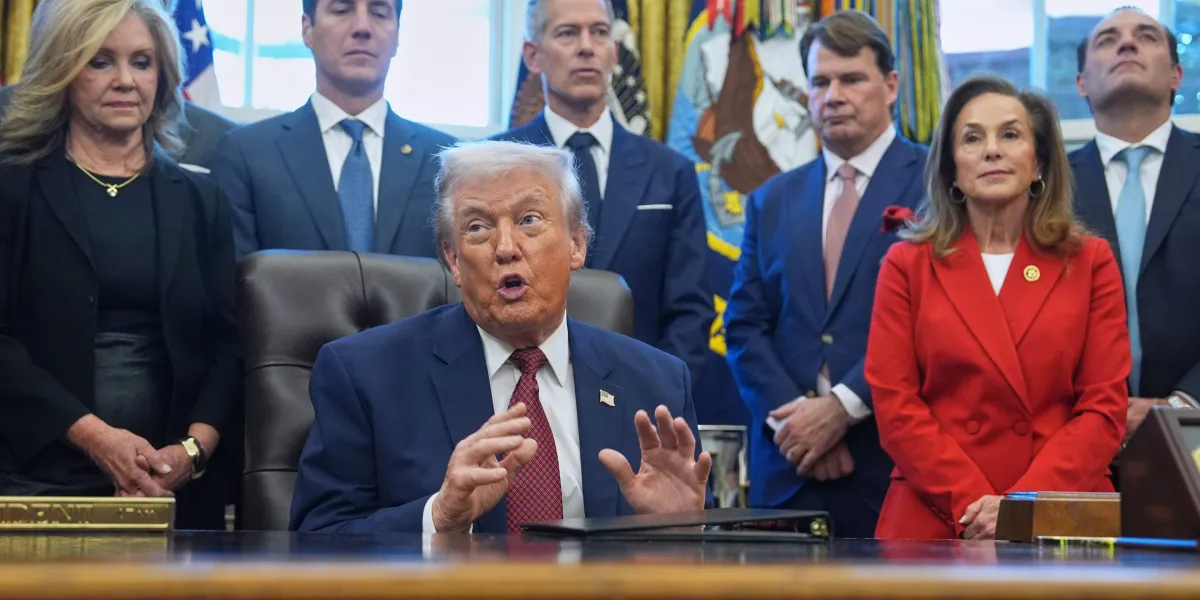
President Donald Trump said the less stringent rules would “take the waste out of building cars in America” and save families “thousands on a new, beautiful and safe car”, while helping to increase domestic vehicle production.
The National Highway Traffic Safety Administration has projected that the new standards would set the industry-wide average for light-duty vehicles at about 34.5 miles per gallon in the 2031 model year. That compares with 50.4 miles per gallon under rules introduced by Joe Biden’s administration.
Transportation Secretary Sean Duffy said on Saturday that the changes would be announced on Monday. The White House, the Department of Transportation and NHTSA did not immediately provide details of the new standards.
Fuel economy rules determine how far new vehicles must travel on a gallon of petrol. The proposed changes would advance Mr Trump’s pledge to remove policies that encouraged or incentivised the production of electric vehicles.
Since returning to office, Mr Trump has eased vehicle tailpipe emissions rules, scrapped fines for manufacturers that fail to meet federal mileage requirements and ended consumer credits of up to $7,500 for electric vehicle purchases.
General Motors, Stellantis and Ford, which makes America’s best-selling F-150 pickup truck, also did not immediately comment. The administration and carmakers have said looser rules would give Americans greater access to petrol vehicles they need and can afford.
The move comes as the cost of buying and running a car rises. The average new car sold in the US cost $50,089 in August, passing the $50,000 mark for the first time since December, while the national average petrol price reached $4.47 a gallon on Sunday, up from $4.09 a month earlier.
Mr Trump has repeatedly promised to end what he calls an electric vehicle “mandate”. The claim refers to a Biden administration target for electric vehicles to account for half of all new vehicle sales by 2030, but no federal policy required manufacturers to sell electric vehicles.
Electric vehicles accounted for 6.5 per cent of new vehicle sales in February, according to Edmunds, down from 7.4 per cent across 2025.
Environmental groups condemn fuel economy changes
Environmental groups immediately criticised the planned revision, arguing that less efficient vehicles would increase fuel use and pollution.
Dan Becker, director of the Center for Biological Diversity’s Safe Climate Transport Campaign, said the final rule “ignores the feasibility of clean technology and the millions of fuel-efficient cars already on the road”.
“Trump is tanking sensible mile per gallon standards at the worst possible time for consumers, who are getting hit with sky-high prices at the pump,” Mr Becker said. “Consumers will pay the price for these reckless rollbacks while Trump’s Big Oil and Big Auto buddies reap the short-term profits.”
Katherine García, director of the Sierra Club’s Clean Transportation for All campaign, said the group would challenge the rule and warned that loosening fuel standards would “make driving more expensive too”.
“Less fuel-efficient cars mean more gas burned, spending more at the pump, and dirtier air in our communities,” Ms García said.
When the 2024 standards took effect, NHTSA estimated that they would prevent 14 billion gallons of petrol from being burned by 2050. The agency said higher upfront costs for more efficient cars and trucks would be outweighed by fuel savings over their lifetimes.
It also estimated that without the standards, vehicles could produce an additional 22,111 tons of carbon dioxide a year by 2035, along with 90 tons of soot particles and 4,870 tons of smog-forming pollutants including nitrogen oxides and volatile organic compounds.
Corporate average fuel economy rules, known as CAFE, have been in place since the energy crisis of the 1970s, with manufacturers gradually improving the average efficiency of their vehicles over time.
