


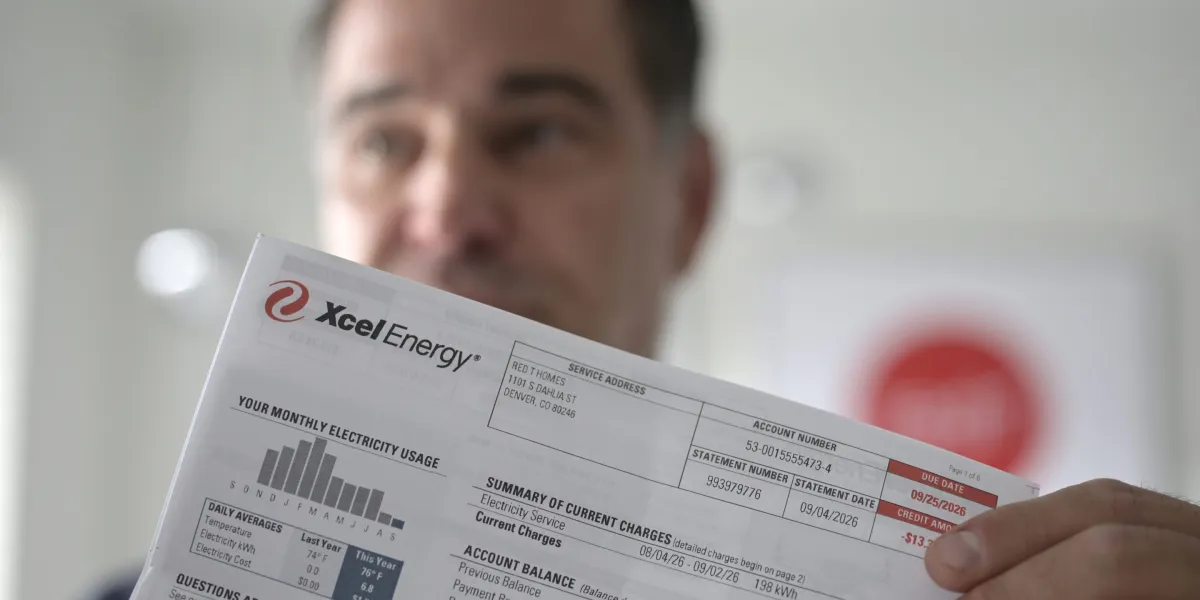
Record fuel prices have dominated the run-up to November’s US midterm elections, but rising electricity and natural gas bills, alongside the expansion of AI data centres, are also emerging as decisive issues for voters and candidates.
Charles Hua, executive director of PowerLines, a non-profit focused on modernising utility regulation, said the cost of electricity was influencing contests for public utility commissioner, governor and US senator, as well as the balance of power in Congress.
“This is no longer a boring, sleepy energy story,” Mr Hua said. “I cannot think of another election cycle prior to this 2026 midterm cycle where electricity and utility bills were on the ballot.”
US electricity prices have risen by about 40% on average over the past five years. During the first three quarters of 2026, utilities requested a further $23.1 billion in rate increases, putting them on course to approach the record of almost $31 billion set in 2025.
The previous year’s figure was nearly twice the earlier record. Investor-owned utilities have also increased planned capital spending by more than 27%, to at least $1.4 trillion through 2030, up from $1.1 trillion a year earlier, according to PowerLines.
Much of the spending has been linked to ageing infrastructure, more extreme weather and fluctuating fuel costs. Increasingly, however, utilities are seeking investment in new power generation to meet demand from the data centre boom.
Data centre operators can build power facilities for their own use or contribute towards the costs of new infrastructure, although the arrangements vary between projects and regions. Some states have imposed moratoriums on data centre construction, while others have rejected or reduced proposed rate rises.
The White House has also promoted a non-binding “Ratepayer Protection Pledge” with major cloud and technology companies, aimed at limiting the effect on consumers.
“Data centers are putting significant pressure on the grid and whether or not, in any given electricity market or state, data centers are actually driving up electricity rates is a very nuanced conversation,” Mr Hua said. “Regardless of the reality, there certainly is a perception in most, if not all states at this point, that data centers could be driving up utility bills.”
Fuel and utility costs rise together
Petrol and diesel prices have reached new highs this year, although they are not expected to rise substantially further. Utility costs could continue increasing as pending rate applications are decided, while a harsh winter could bring additional pressure.
Heating oil was 74% more expensive in September than a year earlier, according to the latest consumer price index, as households began preparing for the colder months.
Jamie Van Nostrand, policy director of the Future of Heat Initiative, said a typical oil-heated home used between 500 and 700 gallons a year. At current prices, that amounted to $3,000 to $4,000, or 50% to 75% more than at the same time last year, he said.
As of Friday, regular petrol averaged $4.33 a gallon, up 42% in 12 months and the first time the average price had exceeded $4 in October. Diesel averaged $6.33 a gallon, a 73% annual increase, having never previously topped $6 on average until this year.
“People do notice when their gasoline prices are high. There’s just a general feeling of malaise and frustration that bills are going up, that they can’t afford it, and part of what’s new is just the degree to which energy costs are now the greatest in magnitude drivers upwards of prices,” Mr Hua said.
Consumers have limited ability to influence fuel prices, but utility rates can be challenged through elected officials and public utility commissions, which generally decide whether increases are approved. Almost half of the $4.5 billion in rate-rise requests made during the third quarter came from southern states, while Jersey Central Power & Light submitted the largest individual request, seeking a $700 million increase.
Regulators and states are also examining ways to make better use of existing electricity networks, including utility-scale batteries and virtual power plants that automatically reduce consumption during periods of peak demand. Such measures could include cutting usage by data centres.
“Electricity politics are ratcheting up in terms of the pressure point. What was once a boring, sleepy issue where the PUC made decisions more or less in a vacuum is no longer the case. This is now a political issue,” Mr Hua said.
