


US-Iran negotiations remain locked in a cycle of mistrust, with both sides insisting that the other must act first before making any concession. The impasse has narrowed the differences over a possible settlement, but deepened the distrust created by decades of confrontation, according to an analysis of the failed diplomatic initiatives.
Several attempts have been made since the start of the war. Only one, a memorandum of understanding signed in Islamabad on June 18, was concluded, and it collapsed within days.
The central problem is no longer simply the substance of a potential agreement. Instead, it is the order in which measures should be taken, with Washington seeking proof of Iranian compliance before offering relief and Tehran demanding guarantees before changing its conduct.
Why US-Iran negotiations keep stalling
The pattern has its roots in two opposing political memories. In the United States, the seizure of the embassy in Tehran in 1979 created a lasting belief that Iran cannot be trusted to honour its commitments.
In Iran, distrust of Washington has been shaped by the history of US hostility, including the withdrawal from the nuclear agreement in 2018 despite confirmation from the International Atomic Energy Agency that Tehran was complying with it.
The rupture between the two countries can be traced further back to August 1953, when US and British intelligence agencies helped overthrow the nationalist government of Mohammad Mosaddegh after it nationalised Iran’s oil industry in 1951.
That episode entrenched a perception in Iran that Washington would not accept an independent government in Tehran and was prepared to undermine it when its interests were threatened.
When the United States allowed Shah Reza Pahlavi, who had been overthrown by the revolution, to enter the country for medical treatment in October 1979, revolutionary leaders interpreted the decision as a possible prelude to another coup.
Iranian students seized the US embassy on November 4 that year and held 52 Americans for 444 days. Diplomatic relations were severed and have not been restored.
In Washington, the crisis established an image of Iran as a country that disregards international norms and whose promises should not be rewarded without proof. That has produced an informal rule in American decision-making: Tehran must make the first concession, and it must be verified before the United States responds.
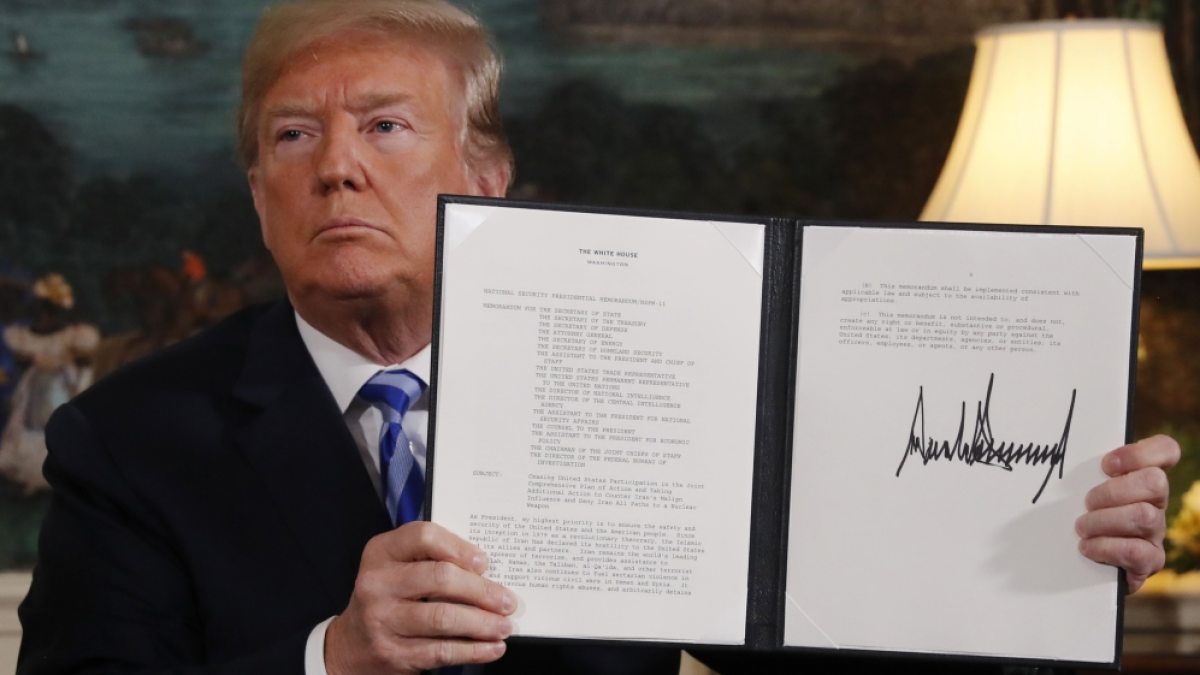
Iran’s own position hardened after Donald Trump withdrew from the Joint Comprehensive Plan of Action, or JCPOA, in May 2018. Two weeks later, then secretary of state Mike Pompeo set out 12 demands for a new agreement, only four of which concerned the nuclear programme.
The remaining demands involved Iran’s regional activities in Lebanon, Palestine, Iraq, Yemen, Syria, Afghanistan and the Gulf. Tehran therefore saw Washington not only abandon an existing agreement, but raise the conditions for any replacement.
The distrust intensified in June 2025, when the United States took part in the Twelve-Day War and struck nuclear facilities at Fordow, Natanz and Isfahan while a new round of indirect talks had been scheduled in Muscat. It deepened further with American participation alongside Israel in the current war.
That history has left Tehran convinced that an American signature offers no lasting protection, that an agreement could be overturned by a future administration and that negotiations might be used as a cover for military action.
Competing demands over sequencing
The opposing assumptions can be seen in the proposals put forward by both countries. A 15-point American plan in March called for the dismantling of the Natanz, Isfahan and Fordow facilities, an end to uranium enrichment, the suspension of Iran’s missile programme and the abandonment of its allies in return for promises that sanctions would later be lifted.
A draft prepared in May by White House envoys Steve Witkoff and Jared Kushner linked the release of Iran’s frozen funds to the suspension of enrichment first. The American response in September also required enrichment to be frozen and inspectors to be allowed access throughout the negotiations.
Across the US initiatives, the sequence remained consistent: Iranian action, followed by verification, followed by an American concession.
Iranian proposals followed the opposite logic. A five-point response in late March sought guarantees that the war would not resume. Ten points presented in April called for a binding United Nations Security Council resolution to prevent any agreement being overturned, while a 14-point proposal in May sought a non-aggression pledge that included Israel.
Tehran’s seven-day plan last month demanded that sanctions and the US naval blockade be lifted before the Strait of Hormuz was opened on the sixth day and nuclear negotiations began on the seventh.
For Iran, the sequence was therefore pressure relief and guarantees first, followed by concessions. Each side has drafted its proposals to guard against a repeat of its own historical experience, rather than to build confidence through reciprocal steps.
The result is a narrowing of the substantive gap alongside an enduring gulf in trust.
The Islamabad memorandum
The Islamabad memorandum came closest to addressing both concerns. It required Iran to dilute its stockpile of enriched uranium, while making the lifting of sanctions and the unfreezing of funds conditional on Tehran carrying out its commitments.
At the same time, it offered measures aimed at reassuring Iran, including an end to hostilities, respect for mutual sovereignty, a mechanism to monitor implementation and approval of the final agreement by the UN Security Council. Ballistic missiles were not included in the text.
But the arrangement failed to survive. Tehran suspended participation in the Geneva talks because there was no ceasefire in Lebanon, a demand that had featured consistently in its proposals since March.
From the Iranian perspective, Washington’s inability to restrain Israel confirmed that an American commitment alone was insufficient. The distrust surrounding the JCPOA withdrawal returned, and the negotiations went back to the starting point.
By late September, the dispute appeared to centre almost entirely on sequencing rather than on the final substance of a deal. The stated objective had become a strengthened version of the June memorandum, but the two sides remained divided over the first move.
Washington wanted the Strait of Hormuz opened and enrichment frozen before taking further steps. Tehran wanted the naval blockade lifted first because it did not trust the United States to honour a reciprocal commitment.
There has nevertheless been movement in the demands themselves. Compared with Pompeo’s conditions in 2018, the American position has shifted away from attempting to redefine Iran’s regional role and towards the nuclear programme and the Strait of Hormuz.
Iran’s demands have also moved from seeking direct compensation from Washington to proposing a conditional investment fund financed by other parties.
The substantive differences are therefore considerably smaller than they were eight years ago. Yet the two distrustful political outlooks have been reinforced by the war, with each side’s fears validating those of the other.
Any new timetable for reciprocal measures is unlikely to break the deadlock unless it deals with both concerns simultaneously. That would require a third party capable of guaranteeing both the initial action and the response that follows it.
