


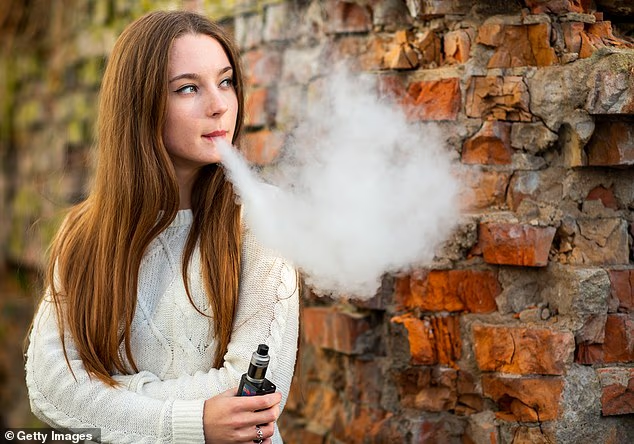
Vaping-related illness in children is leaving some young people with chronic breathing problems, doctors have warned, as NHS figures show that 164 under-19s were hospitalised with vaping-related conditions over the past five years.
Among those admitted were 46 children aged nine or younger. The number of under-19s in England treated in hospital for vaping-related issues rose from 11 in 2021 to 46 in 2024.
The warnings come as vaping becomes increasingly common among teenagers. More than 1.1 million young people in the UK are estimated to have used an e-cigarette, while one in ten say they vape frequently – a figure that has tripled in three years.
Although e-cigarettes are illegal to sell to under-18s, teachers report pupils becoming so dependent on nicotine that some leave lessons every 20 minutes. Schools have responded with measures including metal-detector wands, the removal of hedges used as hiding places and sensors in toilets.
One secondary school in Greater Manchester installed specialist vaping detectors. Its headteacher said the alarms were triggered more than 100 times on their first day.
Doctors warn of lasting lung damage
Research has associated vaping with inflammation in the lungs, more frequent infections and an increased risk of chronic obstructive pulmonary disease, or COPD. The condition can lead to organ failure.
Doctors have also begun using the term EVALI – e-cigarette or vaping product use-associated injury – for a range of serious lung conditions linked to e-cigarette use.
Cases can involve fluid in the lungs or permanent scarring, sometimes referred to as popcorn lung. More than half of patients diagnosed with EVALI are admitted to intensive care, and the condition can be fatal.
Dr Aran Singanayagam, a consultant in respiratory medicine at Guy’s and St Thomas’, said: “We definitely know that inhaling any noxious substance or toxin into the lungs is likely to induce harm.”
He said there was growing evidence that vaping caused “unique harm to the immune system of the lungs”, which could leave users vulnerable to repeated viral or bacterial infections.
Children are considered particularly vulnerable because their lungs are still developing. Dr Singanayagam said the damage caused by smoking during this stage was linked to a higher risk of conditions including COPD and lung cancer, adding: “And the likelihood is that the same is true for vaping.”
Professor Will Carroll, a consultant paediatrician at Staffordshire Children’s Hospital at Royal Stoke, said e-cigarettes had been found to contain heavy metals, toxic chemicals and microplastics.
“We don’t know the long-term consequences of regularly inhaling a heated concoction of these into the lungs from childhood,” he said. But, he added, the substances were known to cause inflammation, suppress the immune system and be carcinogenic, as well as being addictive.
“We’re seeing the same tactics that occurred with the tobacco industry repeated – just wait 30 years until something terrible happens,” Professor Carroll said. “Do we really want to repeat that experiment?”
Teenager describes hospital admission
Freddie Janman, an 18-year-old musician from Woking, began vaping at 12 after being introduced to e-cigarettes by school friends. He said disposable devices were easy to conceal from his parents and that, at one stage, “you were the weird one if you didn’t vape”.
He eventually found himself needing to vape as soon as he woke up. After six years of daily use, he estimates that he spent thousands of pounds on the habit.
At 18, Freddie suffered a severe asthma attack and was taken to A&E with dangerously low oxygen levels. He remained in hospital for two weeks.
“Looking back, I was often breathless, and suffered so many chest infections over the years,” he said. “I just didn’t connect it with the vaping.”
Freddie has not used a vape since leaving hospital and now uses his music, under the name FredStar, to warn other young people about the risks. “I thought vaping wouldn’t affect me,” he said. “But it’s quite upsetting that people were knowingly selling them to children like me.”
Concerns over nicotine and mental health
The possible effects of vaping extend beyond the respiratory system, experts say. Nicotine can interfere with adolescent brain development, while young people who vape have been found to be more likely to develop depression, panic disorder and anxiety.
A report from the Royal College of Paediatrics and Child Health found that young e-cigarette users were nearly twice as likely as non-users to report suicidal thoughts. Professor Carroll, who led the research team compiling the report, said the finding was “very concerning”.
Nicotine briefly increases dopamine, the brain chemical associated with pleasure, before levels fall below normal. It also prompts the release of stress hormones, while the effects of vaping on heart rate, blood pressure and alertness can disrupt sleep and worsen existing mental-health problems.
The report also found a strong association between vaping among children who had never smoked and later cigarette use. Teenage e-cigarette users were between two and 12 times more likely than non-users to begin smoking conventional cigarettes.
Professor Carroll said: “Vaping is a gateway into nicotine addiction.” He added that some patients with severe asthma continued to use liquid vapes despite the effect on their condition because “once you start it’s very hard to stop”.
Smoking rates among young people had been falling for years, but more than one in five children aged 11 to 17 reported smoking a cigarette in 2025 – the highest proportion in more than a decade, according to the figures cited in the report.
Calls for tighter controls
Experts have questioned how safe vaping is compared with smoking. While e-cigarettes are considered less harmful than tobacco, which is the leading cause of lung cancer, doctors say the evidence does not support treating vaping as risk-free.
Professor Maja-Lisa Lochen, a Norwegian cardiologist, has warned that vaping can increase heart rate and constrict blood vessels. Over time, she said, this could contribute to high blood pressure and raise the risk of an irregular heart rhythm, stroke and heart attack.
There are also concerns about what devices contain. A study by the University of Bristol found that one in eight disposable vapes tested contained cannabis, while testing of devices confiscated from students at the University of Worcestershire in 2023 found dangerous levels of lead, nickel and chromium.
“We don’t have enough control over what’s going into these things,” Professor Carroll said. “It’s not like medication – it’s a market that needs more regulation.”
Disposable vapes were banned in the UK last year, following concerns that their low cost, bright colours and ease of use made them particularly attractive to children. The Tobacco and Vapes Act has also introduced a tax on e-cigarettes, while plans for retail licensing are intended to make it easier to remove licences from sellers who supply underage customers.
Dr Nicholas Hopkinson, professor of respiratory medicine at Imperial College London, said the legislation should improve enforcement. He said young people should be angry that “a multi-billion-pound industry tried to get them hooked as children on an addictive product”.
