


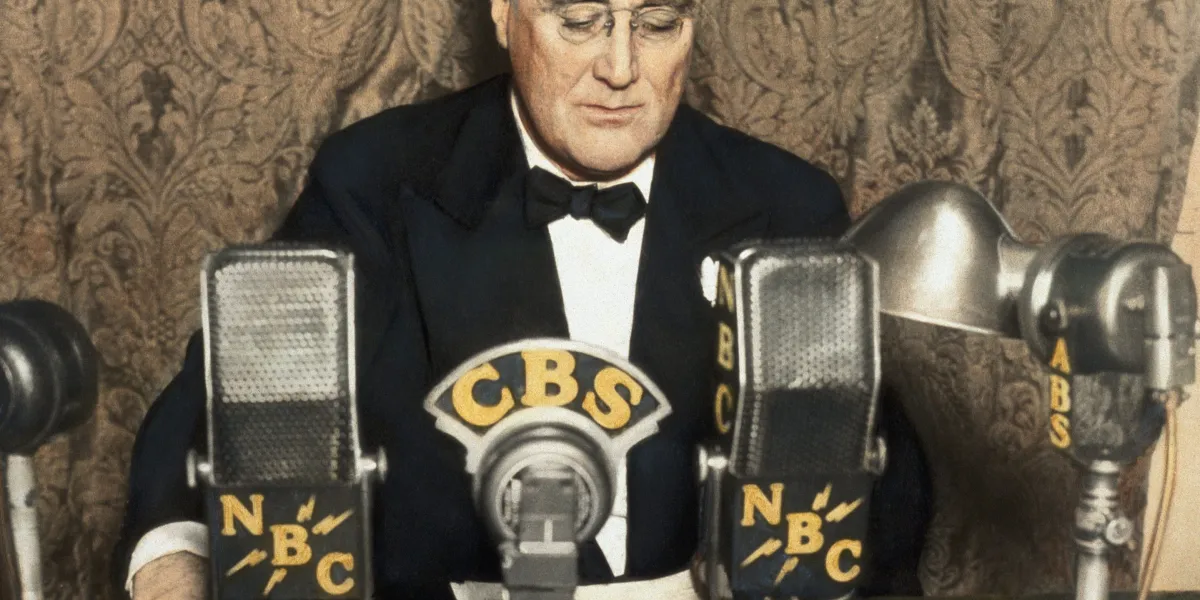
Self-regulation for AI companies, modelled on the framework created under Franklin D Roosevelt, has been proposed as an alternative to both minimal oversight and direct government control of the industry.
The argument draws on Roosevelt’s response to the financial crisis of the 1930s. Although the president was sharply critical of the banking industry, he rejected calls to nationalise the financial system and instead backed a structure combining public supervision with private-sector expertise.
The Securities Exchange Act of 1934 established a framework for self-regulatory organisations. These bodies took the lead in setting standards, monitoring conduct, enforcing rules and penalising wrongdoing, while the Securities and Exchange Commission retained approval powers and overall oversight.
The model was based on the view that government agencies were not necessarily best placed to manage the complex, day-to-day workings of financial markets. Industry participants could draw on their practical knowledge, while official supervision provided a safeguard against abuse.
A possible model for AI regulation
The best-known example today is the Financial Industry Regulatory Authority, or FINRA, created in 2007 through the consolidation of the National Association of Securities Dealers and the New York Stock Exchange’s member-regulation operations.
Supporters of the approach say FINRA has helped protect investors while allowing innovation to make investing more accessible and affordable. They contrast the US experience with Europe, where more centralised regulation is said to have weighed on capital markets.
The same framework, it is argued, could be adapted for artificial intelligence. The industry remains largely unregulated, fuelling concerns about potential harm, while calls for significantly greater government control are growing.
One prominent proposal came from Senator Bernie Sanders in June, when he called for the public to receive a 50 per cent ownership stake in the largest AI companies. Supporters of stronger state control argue that the industry’s potential risks justify a far more interventionist approach.
Critics of that route say placing the federal government in charge of AI would suppress competition and innovation, potentially allowing Communist China to gain an unassailable lead. They also argue that simply expanding existing bureaucracies could entrench the largest technology companies, which support government-led regulation because it may make it harder for new rivals to enter the market.
Under a new self-regulatory system, AI companies would be required to work together on industry-wide standards, with legislation providing firm safeguards against anti-competitive behaviour or the creation of cartels.
Such an organisation could set rules, oversee compliance and take action against companies that breached them, while remaining subject to government approval and supervision. Its standards could also provide consumers and businesses with greater confidence that AI products meet agreed requirements.
The proposal reflects Roosevelt’s rejection of both unchecked financial markets and full nationalisation. Its supporters say a similar balance could allow AI to develop while ensuring that the industry operates in the public interest.
