


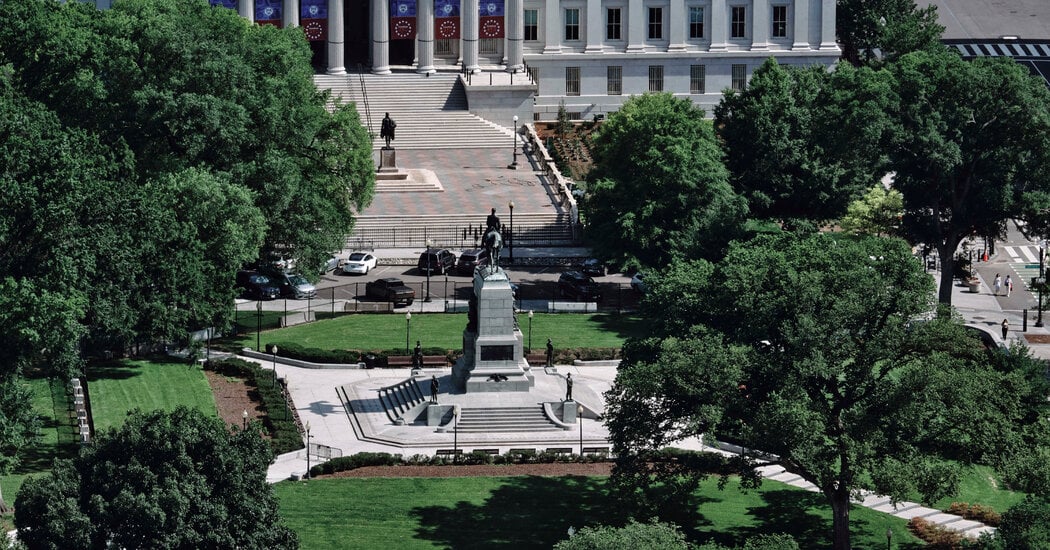
Donald Trump’s plan for a 33,000-square-foot White House visitor screening facility has received unanimous preliminary approval from the National Capital Planning Commission in Washington.
The commission must still hold a final vote on the project, which is intended to replace the temporary tents and trailers currently used by the US Secret Service to screen visitors, staff and contractors entering the White House complex.
The mostly underground facility will be built near Sherman Park, to the south-east of the White House, with an entrance plaza at ground level. Revised plans moved the site towards the western edge of the park to avoid underground utility infrastructure, while the screening area will include seven lanes. ([ncpc.gov](https://www.ncpc.gov/review/project/8763/))
The administration hopes to have the facility open by July 2028. The project is designed to accommodate people attending public tours and large events, as well as those working at the White House. ([apnews.com](https://apnews.com/article/af8c3915b27a1076276dc44ff2296468))
Mark Paoletta, who chaired his first meeting after being appointed by Mr Trump last month, said a permanent building was needed to improve security and remove temporary structures that he claimed detracted from the appearance of the presidential residence.
“It is evident that a more permanent, thoughtfully designed facility is much needed to welcome visitors,” Mr Paoletta said.
Commissioners nevertheless raised practical questions about the proposal, including whether solar panels could be installed on the roof and how visitors would be dropped off. The panel also asked the Secret Service to develop a wider security and landscaping plan for the White House complex and Sherman Park. ([ncpc.gov](https://www.ncpc.gov/review/project/8763/))
The vote came as the commission considered a separate proposal to install permanent fencing, between eight and 10 feet high, around Lafayette Park immediately north of the White House. No decision was taken on that plan, which has prompted concern because the park is a long-standing gathering place for tourists, demonstrators and political groups. ([apnews.com](https://apnews.com/article/af8c3915b27a1076276dc44ff2296468))
Richard H Macauley, chief of the Secret Service’s Uniformed Division, said temporary fencing had kept Lafayette Park closed for at least six months because of construction and heightened security threats. He cited a shooting near the White House in May and the protests of 2020 in support of a permanent barrier.
Pam Fessler, a Washington resident, told the commission that a permanent fence could make it easier for officials to close the park before protests and public gatherings.
“What we are really doing is putting another barrier between Americans and their government,” she said.
Mr Paoletta rejected the suggestion that fencing would threaten constitutional rights, saying: “This idea that if there’s a fence up, we’re losing our First Amendment rights, I don’t accept.”
The National Capital Planning Commission is a 12-member federal body responsible for reviewing development projects affecting Washington and the surrounding region. Mr Paoletta’s appointment followed the departure of Will Scharf, who became White House counsel. ([ncpc.gov](https://www.ncpc.gov/review/project/8763/))
