


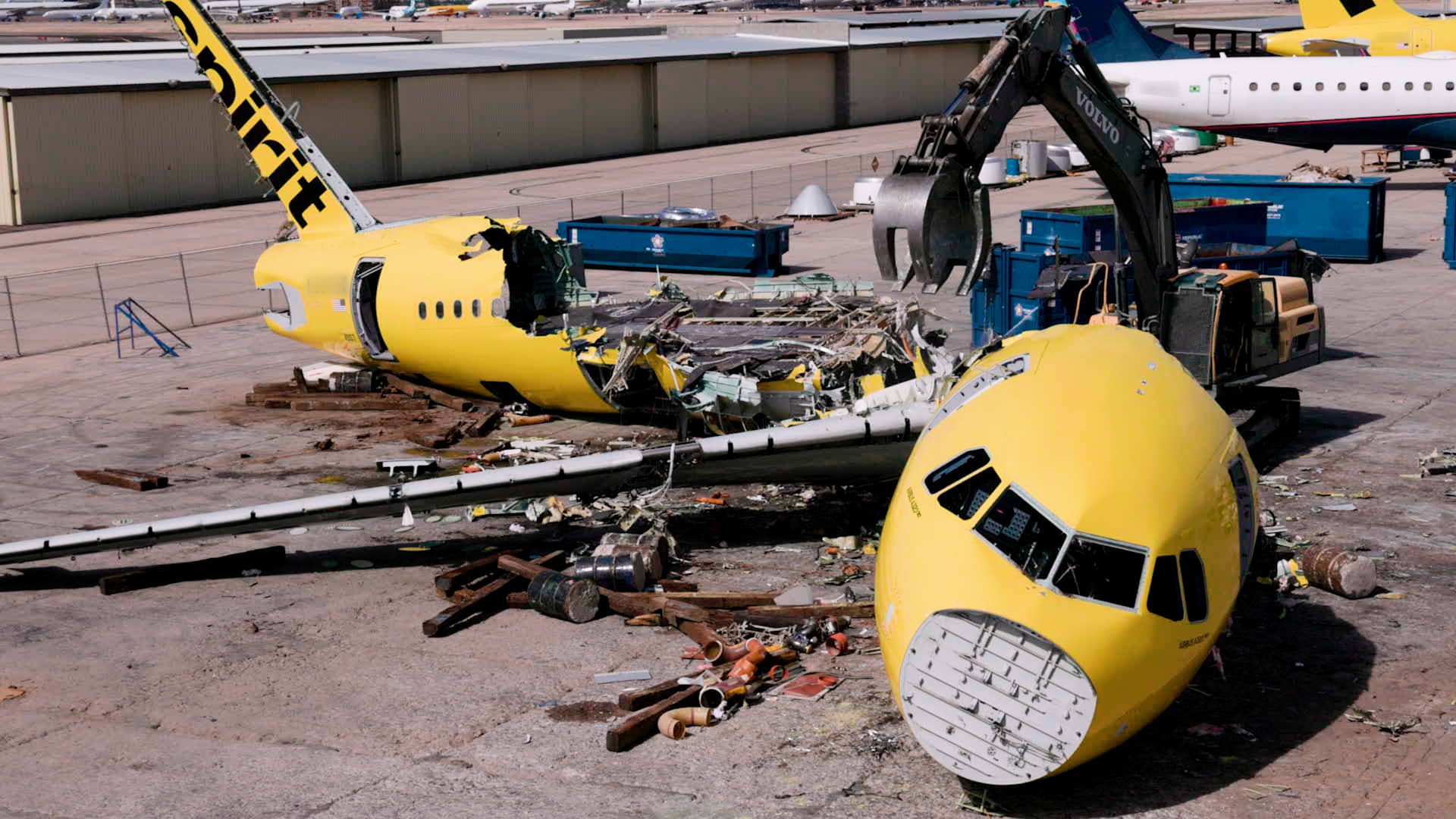
Young aircraft are being scrapped years ahead of schedule as a shortage of jet engines and spare parts pushes up repair, storage and leasing costs. A four-year-old Airbus A320neo formerly operated by Spirit Airlines was among the latest planes dismantled at a facility near Phoenix, Arizona.
The aircraft, delivered from Airbus’s factory in Alabama in July 2022, was placed in storage after an engine recall. By May this year, it had been stripped for parts and crushed, despite having been built to fly for decades.
Bill Thompson, who leads aircraft and engine acquisition in the Americas for aviation asset firm EirTrade Aviation, said it was the first time in his career that he had bought an aircraft less than five years after it was manufactured.
EirTrade paid “single-digit” millions of dollars for the A320neo and another aircraft of a similar age. It expects to recover its investment by selling more than 1,000 components removed from the planes, ranging from landing gear to antennae.
“I don’t know if you’re going to sell the coffee makers but you never know. Sometimes you do,” Mr Thompson said.
Young aircraft being scrapped as engine market tightens
Twenty-one new-generation aircraft were dismantled between June last year and August, according to aviation data and advisory firm IBA Group. They had an average age of 6.4 years, compared with 21.7 years for narrow-body aircraft when they are typically retired.
Most of the aircraft were Airbus models, although Boeing planes were also included. Industry executives said owners were increasingly choosing to dismantle younger aircraft rather than wait years for replacement engines or repairs.
Simon Goodson, chief executive of AerFin, which buys, sells, repairs and leases aircraft and components, said investors considered other options whenever aircraft or engine availability weakened.
“We always say to our aircraft and engine traders, ‘Please don’t fall in love with the metal,’” he said.
The pressure has been intensified by newer engines designed to use less fuel and operate at higher temperatures. They have required maintenance earlier than airlines expected, leaving repair and overhaul facilities operated by major manufacturers and independent companies facing lengthy backlogs.
Parts have consequently become highly valuable. An engine fan blade can cost $50,000 or more than $100,000 for larger aircraft, while an engine disc can cost between $1 million and $2 million. Some Airbus A320neo engines have 20 fan blades.
A recall issued in 2023 by Pratt & Whitney, after contaminated powdered metal was found in the manufacture of some components, grounded hundreds of Airbus aircraft around the world. The engines involved were worth up to nearly $17 million this year, according to IBA, about 60% more than the upper end of the range in 2019.
Airlines and leasing companies have been removing engines from retired aircraft to keep other planes in service while they wait for units to return from maintenance.
“So you’re just playing Legos and moving engines on and off aircraft,” said Mike Stengel, a partner at aerospace consultancy AeroDynamic Advisory.
Monthly rentals for some of the affected engines have reached between $160,000 and $180,000. Comparable CFM International engines, made by a joint venture between GE Aerospace and France’s Safran, have also been renting for between $130,000 and $180,000 a month.
Spirit Airlines aircraft face uncertain future
Spirit Airlines’ financial collapse has brought more of its Airbus fleet on to the market, leaving owners to decide whether to pay for storage and wait for engines or sell the aircraft for parts.
Dozens of the airline’s yellow-liveried planes were being stored at AerSale’s facility in Goodyear, Arizona, less than two months after Spirit’s demise. Some could eventually return to service with other airlines, potentially after their closely spaced 28-inch seats are replaced.
Others may remain in storage. Desert sites are used because the dry climate helps protect aircraft from corrosion, but owners must continue paying storage fees while planes are grounded.
Dave Querio, chief executive of aircraft services company Ascent Aviation Services, said he had not previously seen so many younger aircraft being dismantled.
“A year might not sound that long, but does three or four years?” he said. “That’s the issue for the aircraft that came in in ’23, ’24 and ’25.”
Once valuable equipment has been removed, the remaining fuselage can be crushed and sold for recycling. “After you get rid of all the valuable equipment and sell it back into the aftermarket, what’s really left is just a metal carcass,” Mr Stengel said.
Mr Querio said the process could be difficult to watch, but added: “Sometimes, it’s kind of a thrill to … see how fast an aircraft can be crunched up and sent off to the smelter.”
