


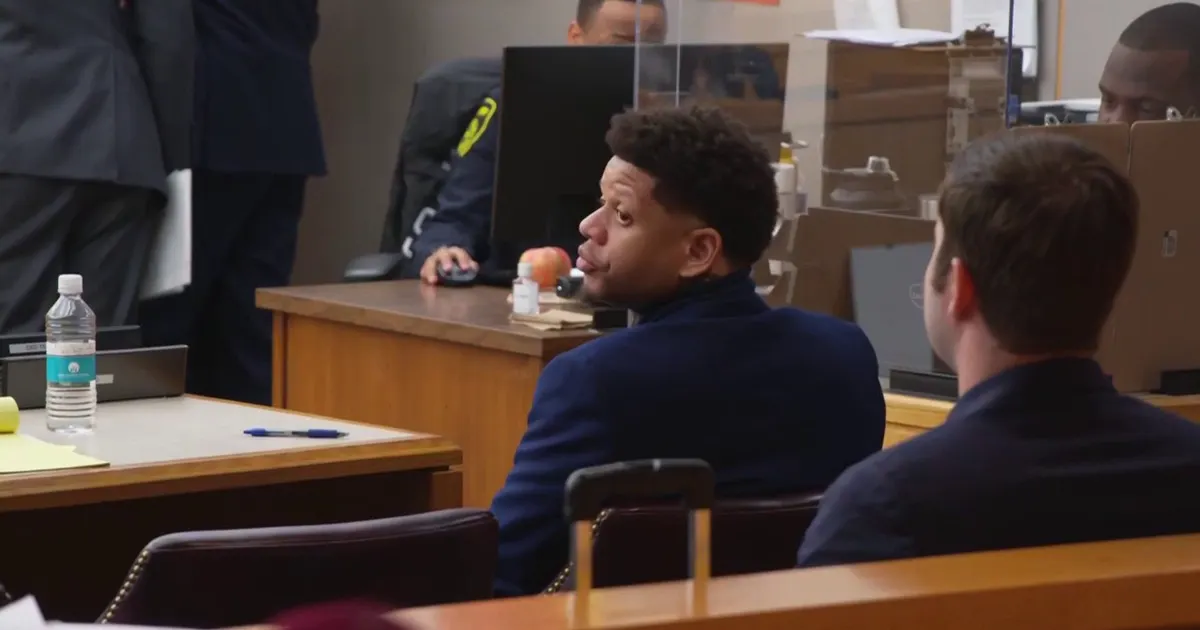
A key witness and the lead detective in the alleged murder-for-hire plot against Dallas rapper MO3 gave evidence on Wednesday as Yella Beezy’s capital murder trial entered its second week.
Yella Beezy, whose real name is Markies Conway, is accused of paying Kewon White to kill MO3, or Melvin Noble, during an ambush on Interstate 35 in Dallas on 11 November 2020.
Conway has pleaded not guilty and denies any involvement. White has already been convicted of capital murder, while Devin Brown is also charged in connection with Noble’s death.
Witness faces challenge over credibility
Cedric Bradley, a childhood friend of White who is now in federal custody, told jurors that White confessed to the killing.
Bradley said White described firing at Noble from a vehicle before chasing him on foot and shooting him in the back. White allegedly told him he was angry because he had not received the money promised for the killing.
Bradley is facing up to 30 years in federal prison after pleading guilty to drug conspiracy and possession of machine guns.
Defence lawyers questioned whether he had changed his account in the hope of receiving leniency. They highlighted a September 2024 meeting with Dallas police detective Eric Barnes, during which Bradley reportedly said he knew nothing about Noble’s murder.
The defence also pointed to Bradley’s original 17-count federal indictment, which involved drugs and 36 firearms, including three machine guns. Prosecutors later dismissed a weapons charge carrying a mandatory five-year sentence as part of his plea agreement.
Bradley rejected suggestions that officials had asked him to lie. Prosecutors also introduced his federal plea agreement, which was filed on 25 June 2026, before he met state prosecutors about the case.
He told the court that his account of where Noble had been shot came from White, rather than from medical examiner evidence.
Bank records examined in MO3 murder trial
Jurors also heard evidence about Conway’s finances from Deanna Davenport, a fraud examiner and forensic financial analyst with the Dallas County District Attorney’s Office.
Davenport said Conway received more than $1.44 million across four JPMorgan Chase accounts in 2020 and spent about $863,000. More than $290,000 of that spending involved cash withdrawals made at bank branches.
Prosecutors focused on two $40,000 withdrawals made at a Frisco branch. The second took place on 20 November 2020, nine days after Noble was shot, and was not followed by a corresponding cash deposit.
Davenport said her analysis could show how money moved through the accounts but could not establish what the cash was ultimately used for.
Under cross-examination, she accepted that Conway regularly dealt with substantial sums as a successful recording artist and that she did not know whether the money had been used for family or other personal expenses.
Prosecutors responded that they could not rule out the cash being used to pay for a killing, arguing that the November withdrawal did not follow the usual pattern of income seen in earlier months.
Lead detective recounts early investigation
Barnes, a Dallas police homicide detective and ATF task force officer, told the court he became involved because of his previous work on investigations involving the longstanding dispute between Noble and Conway.
After learning that Noble had been attacked on I-35, Barnes went to hospital to confirm his identity. He said staff were asked not to publicly confirm the death immediately, giving police time to try to prevent possible retaliation.
The detective questioned members of Noble’s entourage, including bodyguard Sean Griffin, who had been driving a dark Camaro matching the description of the suspected gunman’s vehicle. Barnes said Griffin was later cleared as a suspect.
A tip led him to interview Jocylynn Jackson, Noble’s girlfriend at the time, and her mother. Barnes said the investigation then identified Brown, also known as Chicago, as a primary suspect.
The prosecution presented phone logs and mobile tower data before the court adjourned. Evidence is due to resume at 9am on Thursday.
Earlier in the trial, jurors heard that White’s phone was placed near the scene of the fatal shooting and that calls between White and Brown increased sharply after the attack. Investigators also traced a device believed to belong to Jerry Johnson between areas linked to Conway and the other suspects.
There was no direct mobile-phone contact recorded between Conway and either White or Brown, according to evidence previously presented to the court.
