


At least 15 commercial flights across Europe were hit by bomb threats on Thursday, causing diversions, emergency landings and temporary disruption at airports. No explosives or suspicious devices were found, but the incidents added to more than 20 affected journeys this week and raised concerns about a coordinated campaign.
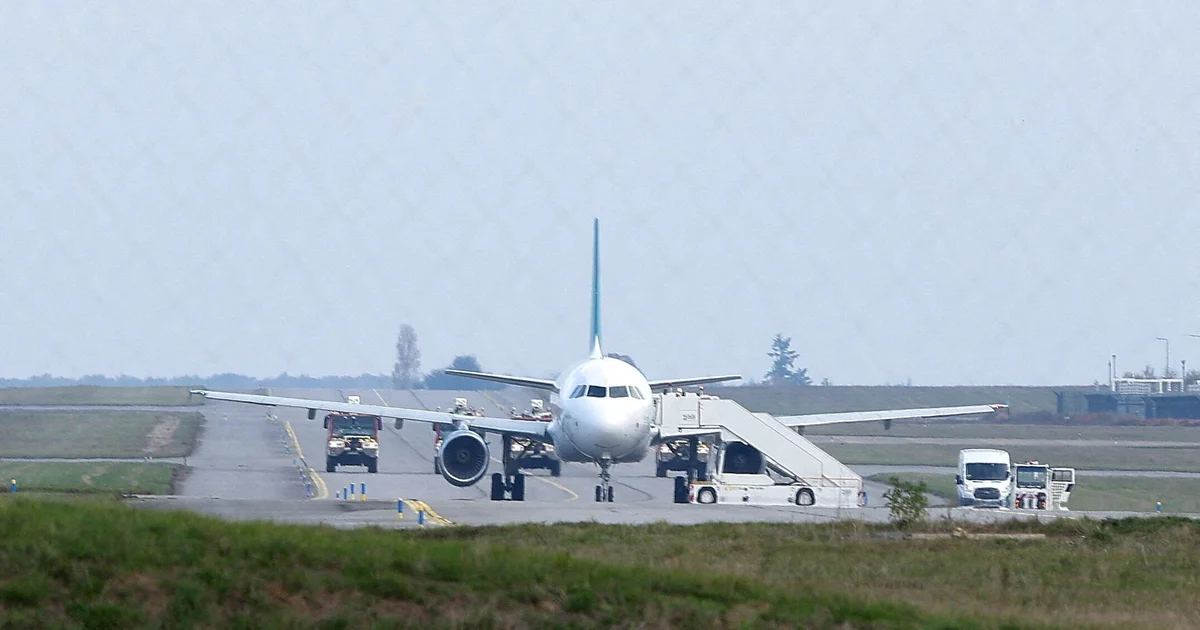
One Aer Lingus flight from Dublin to Rome was diverted to the French military air base at Evreux after a threat was received. The Airbus A320 landed safely, and all 151 passengers and six crew members left the aircraft while military bomb-disposal teams examined it.
Flight-tracking data showed the plane turning sharply from its route as it approached France before circling several times and heading towards Evreux, in western France.
A Finnair service from Helsinki to Rome was escorted into the Italian capital by a fighter jet and checked by bomb-disposal experts. Flights at Rome’s Leonardo da Vinci Airport were halted for about 30 minutes.
Another Finnair flight from Helsinki, operated by Jettime, landed normally in Vienna. A Wizz Air service travelling from Milan Malpensa to Warsaw was rerouted to Vienna after receiving a threat, while another Wizz Air flight bound for Bucharest landed safely.
A LOT Polish Airlines flight from Warsaw to Brussels also arrived without incident. Authorities searched the aircraft after landing and found “no hazardous or suspicious items”, the airline said.
Three Ryanair flights bound for Sofia made emergency landings in Bulgaria. Services from Madrid and Copenhagen landed at Vasil Levski Airport in the capital, while a flight from London Stansted was diverted to Plovdiv.
Bulgarian authorities said no explosives or suspicious items were found on any of the aircraft.
Four flights travelling to Prague were also subject to threats. Czech police said all four planes landed and were checked, with no explosives or suspicious devices discovered.
Two further services arriving at Milan Malpensa received bomb alerts but were not diverted. They were an Aegean Airlines flight from Thessaloniki and a Ryanair service from Porto, both of which landed safely and were being inspected by explosives technicians.
Bomb threats described as hoaxes
The latest incidents followed at least seven threats to flights elsewhere in Europe earlier in the week, leading to aircraft searches, diversions and, in one case, a fighter-jet escort.
Some threats were sent to airlines by email, although the nature of every message has not been confirmed. British authorities described the threats affecting about seven flights earlier this week as hoaxes.
Paul Mason, an air transport security expert, said threats against passenger aircraft were not frequent and that the scale of the incidents was unusual.
“It sounds like they’ve been made in a credible manner across a broad range of airlines,” he said. “That would suggest to me that it’s been a very deliberate act by a typical actor rather than a load of coincidental, malicious calls.”
Mr Mason said airline crews and ground staff had “a lot of processes” to assess the credibility of threats before deciding how to respond.
No individual or organisation has claimed responsibility, and no government or security official has publicly attributed the incidents to a particular group.
The threats come amid wider European concern about alleged state-backed sabotage operations, particularly involving Russia and Iran. Recent warnings from Britain’s security services have highlighted the use of criminal proxies and low-level attacks intended to undermine security while remaining below the threshold of open conflict.
