


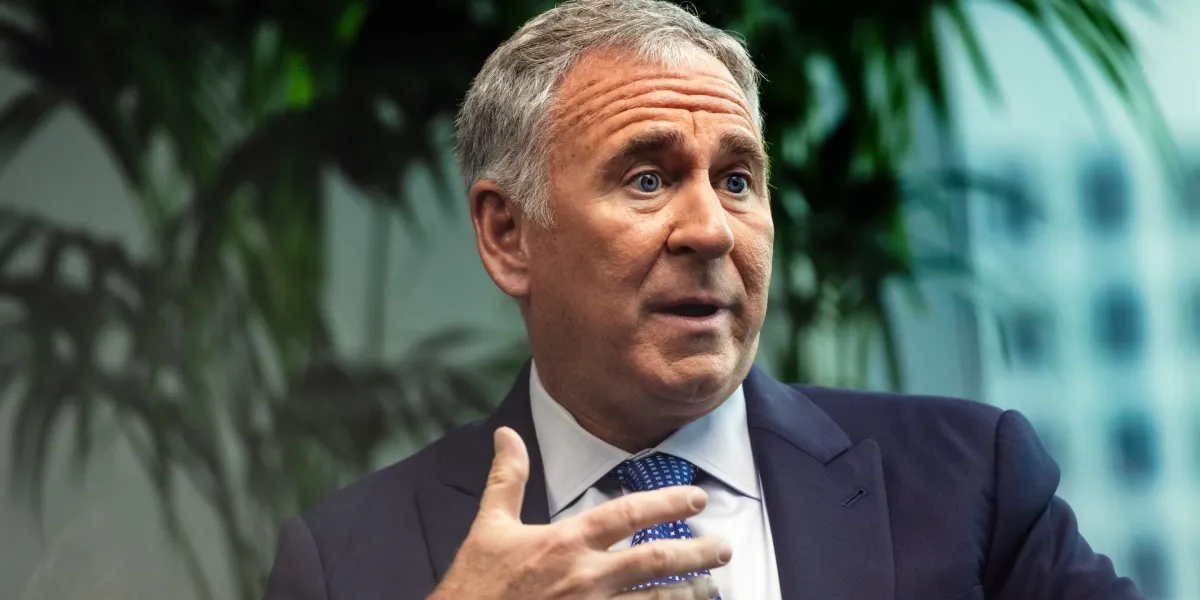
Florida voters have approved a property tax overhaul that will provide meaningful relief for many ordinary homeowners but make little difference to billionaires such as Ken Griffin and Jeff Bezos.
Amendment 3 passed with 62% of the vote. It will increase the homestead exemption on non-school property taxes from $50,000 to $150,000 in 2027, before rising to $250,000 in 2028.
The exemption is a flat sum, meaning its value does not increase with the price of a property. That limits its impact on the owners of the multimillion-dollar homes that have helped turn South Florida into one of America’s wealthiest enclaves.
Griffin, the chief executive of Citadel, moved his firm from Chicago to Miami. Bezos, Amazon’s founder, relocated to Miami in 2023 and has bought a $237 million compound on Indian Creek, known as “Billionaire Bunker”. He is also reportedly buying a $69.5 million oceanfront estate in nearby Golden Beach.
Raul Gastesi, a real estate attorney and co-founder of Miami law firm Gastesi Lopez Mestre & Cobiella, calculated that the expanded exemption would eventually save a homestead owner about $2,085 a year at the average non-school tax rate.
For a home assessed at $350,000, the local services property tax bill would fall from about $3,135 to roughly $1,050. A $50 million homestead, by contrast, would see its bill drop from approximately $524,000 to about $522,000.
“For the typical family it is real money,” Mr Gastesi said. “For the mansion owner, it is a rounding error.”
Michael Ligon, a strategic capital investor with The Ligon Group in Miami, said the relief was concentrated in the middle of the housing market. By 2028, the owner of a $400,000 home would see much of the property tax funding cities, counties and local services removed, he said.
“Proportionally, this is middle-class relief wearing a luxury headline,” Mr Ligon said.
The measure could have a greater effect on wealthy Floridians who own several properties. Amendment 3 will cut the annual limit on increases in the taxable value of second homes, rental properties and other non-primary residences from 10% to 5%.
In a market where values rise by 8% a year, Mr Gastesi estimated that the change would save the owner of a $50 million second home about $15,750 in the first year and roughly $280,000 over five years.
Michael Martirena, a South Florida luxury property adviser, said the change was not influencing his clients’ decisions to buy. “Someone buying a $20 million or $50 million home in Miami is coming for no state income tax, the lifestyle, and the business climate,” he said.
“A few thousand dollars a year, and a five-year wait for the full exemption does not change that math. Where it does register is with clients who hold several properties.”
Anyone who is not a permanent Florida resident by December 31 will initially receive the existing $50,000 exemption and will not qualify for the full amount until their fifth year. Mr Gastesi estimated that the lost savings during that period would amount to about $8,400.
“Amendment 3 may influence timing, but likely not destination,” said Abigail Hall, an economics professor at the University of Tampa.
Florida property tax changes could put pressure on local budgets
The tax reductions will leave cities, counties and special districts facing an estimated eventual loss of $11.86 billion a year, with no new state funding provided to replace the money. Miami-Dade County alone has estimated that it could lose about $385 million in the first year.
“There is not a reasonable way for local and municipal governments to fully close these gaps,” Ms Hall said.
If local authorities increase tax rates, the savings could quickly be reduced or erased. Mr Gastesi calculated that a rise of just $1 for every $1,000 of taxable value would cost the owner of a $50 million homestead about $49,750 a year.
“Homeowners should read their tax bills closely next year, because the savings on one line may come back on another,” Mr Gastesi said.
