


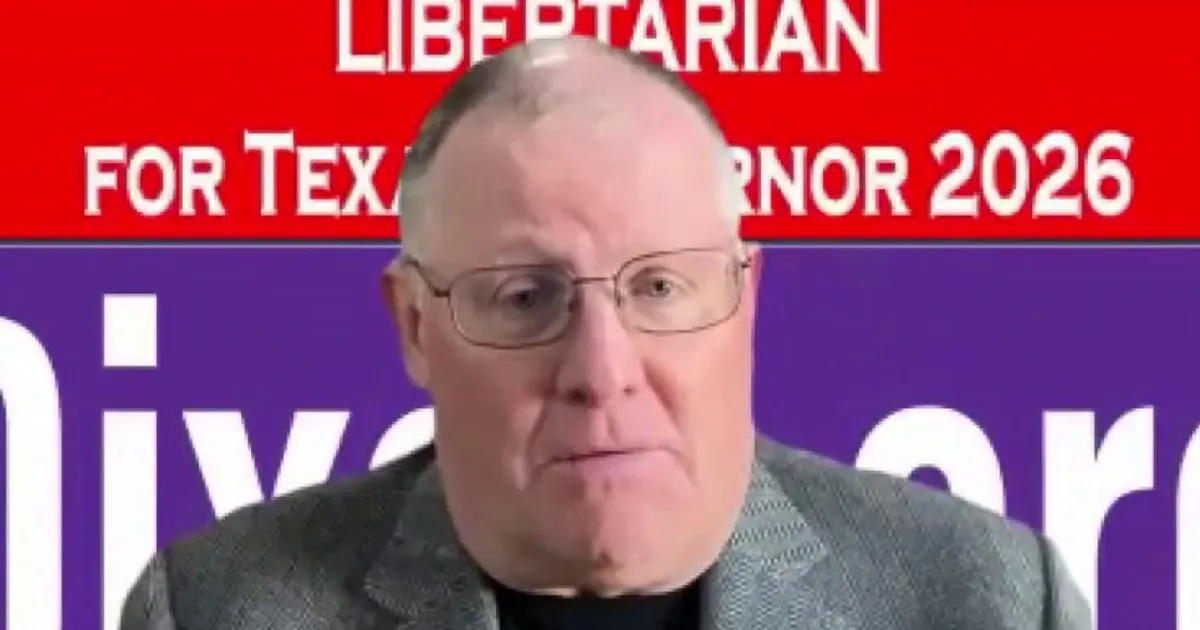
Pat Dixon is presenting his campaign for governor of Texas as a long-term attempt to widen voter choice, rather than a protest bid, as early voting gathers pace ahead of the November 3 election.
The Libertarian candidate is challenging Republican incumbent Greg Abbott and Democrat Gina Hinojosa in a race where the two major parties remain firmly in control of the political landscape. In a recent University of Houston poll, Dixon received 2% support among likely voters. ([campusnet.uh.edu](https://campusnet.uh.edu/hobby/texas2026/index.php?utm_source=openai))
Texas began in-person early voting on October 19, with voters able to cast ballots until October 30. The state’s general election will take place on November 3. ([sos.texas.gov](https://www.sos.texas.gov/elections/candidates/guide/2026/dates2026.shtml?utm_source=openai))
Pat Dixon argues third-party campaign is about choice
Dixon rejects the idea that his candidacy is primarily intended to take votes from either of the leading contenders.
“I think it is important for voters to have choice. So, I don’t think we’re spoiling anything. We’re offering choice, which is what should happen in a democratic process,” he said.
His campaign website describes the contest as a chance to give Texans more than two options, while the Libertarian Party of Texas lists him as its statewide candidate for governor. Dixon previously served as a city council member in Lago Vista and held leadership positions within the state and national Libertarian organisations. ([lptexas.org](https://www.lptexas.org/candidates?utm_source=openai))
Former Libertarian presidential candidate Ron Paul has also endorsed Dixon, although the campaign faces a steep financial disadvantage against the established party machines.
Dixon said Abbott began the race with about $106 million available to his campaign. He acknowledged that the scale of the difference made a direct challenge difficult, but argued that building support for the Libertarian Party was itself a central objective.
“I know what resources my opponents have,” Dixon said. “But we can build the Libertarian Party so that, going forward, we can offer more choices to voters.”
Texas third parties face major barriers
Supporters of a stronger third-party movement say it could offer an alternative to the increasingly polarised positions of the Republican and Democratic parties. Critics of the idea point to the practical obstacles facing any new organisation seeking to compete across Texas.
Political commentators Greg Groogan of FOX 26 Houston and Steven Dial of FOX 4 Dallas said the state’s political system remains dominated by the two major parties. Groogan argued that the financial and organisational requirements for creating a viable third party had become prohibitive, while Dial said he could not see another force breaking into the contest in the near future.
Independent candidates also face demanding ballot-access requirements in Texas, making it difficult for alternative movements to secure a place before voters. The state has previously seen parties including the Whigs, Know Nothings, People’s Party, Greenbacks, Texas Regulars, Greens, Socialists and Communists, as well as splinter movements such as the Dixiecrats and Shivercrats.
For Dixon, however, the immediate result may be less important than establishing a platform for future elections. His campaign is arguing that even a small share of the vote can help create a more durable Libertarian presence in Texas politics.
