


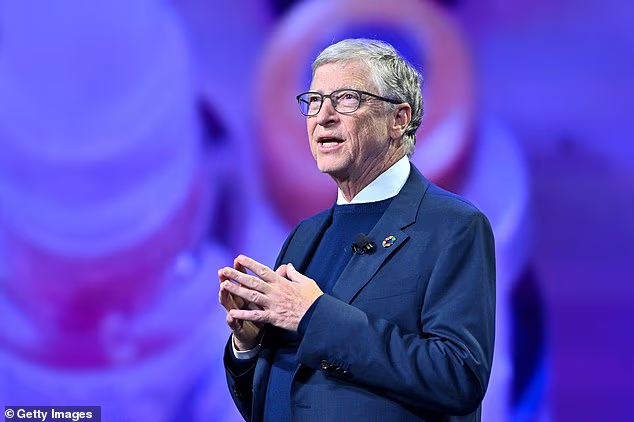
Bill Gates has warned that the continued development of artificial intelligence and robots could cause widespread job losses, putting both office-based professions and physical work at risk.
The Microsoft founder said businesses were likely to prioritise profits by replacing employees with machines. “It’s hire the robot, fire the human and don’t look back,” he said.
Mr Gates told The Observer that automation could eventually affect the “skills of invention”, white-collar work and, with the development of humanoid robots, the “skills of physical human labour”.
He said construction and factory jobs could be vulnerable as robots become more common, while artificial intelligence is already being used to automate repetitive office tasks.
AI job losses could hit junior workers
Entry-level positions are feared to be particularly exposed because they often involve the routine and menial duties that current technology can perform.
Barclays announced last week that it would cut 5,000 jobs by the end of the year as part of an effort to reduce costs and replace some staff with AI. The reduction represents 5 per cent of the bank’s global workforce.
The head of the International Monetary Fund has described AI as a “slow-moving tsunami” which could eliminate jobs worldwide and reduce opportunities for young people.
Mr Gates said governments would need to prepare for mass unemployment by investing in education and retraining. Although the technology could create greater prosperity, he warned that states might have less money available to manage the consequences of large-scale job losses.
He said governments would face the challenge while also dealing with competing priorities and rising geopolitical tensions. “You could say this isn’t the best time to say, hey, rich countries, let’s do the hardest thing you’ve ever done,” he said.
The billionaire also predicted that artificial intelligence could be operating beyond human control by the end of the 2020s, raising the possibility that it could act against human interests.
Those concerns have been echoed by Jacob Coxon, a British researcher who left Anthropic in September after helping train its latest AI systems. He warned that the technology could be “out of control” and “kill us all” if it became super-intelligent.
Mr Coxon, who previously worked for OpenAI, said neither company was acting responsibly on AI safety. Superintelligence refers to a point at which an artificial system becomes more powerful than any individual, company or nation.
In the UK, Chancellor John Healey is expected to announce funding in next week’s Budget aimed at protecting against AI risks while using the technology to support economic growth.
Mr Healey has said AI could transform daily life and benefit businesses, communities, hospitals and schools. He has also acknowledged concerns over jobs, promising a “distinctively British approach to AI” that would not leave workers behind.
Plans include an AI Centre of Excellence in Manchester and investment in areas including Edinburgh. The Government will also provide £300 million for an AI Biosecurity Lab, backed through a public-private partnership involving OpenAI and Anthropic.
