


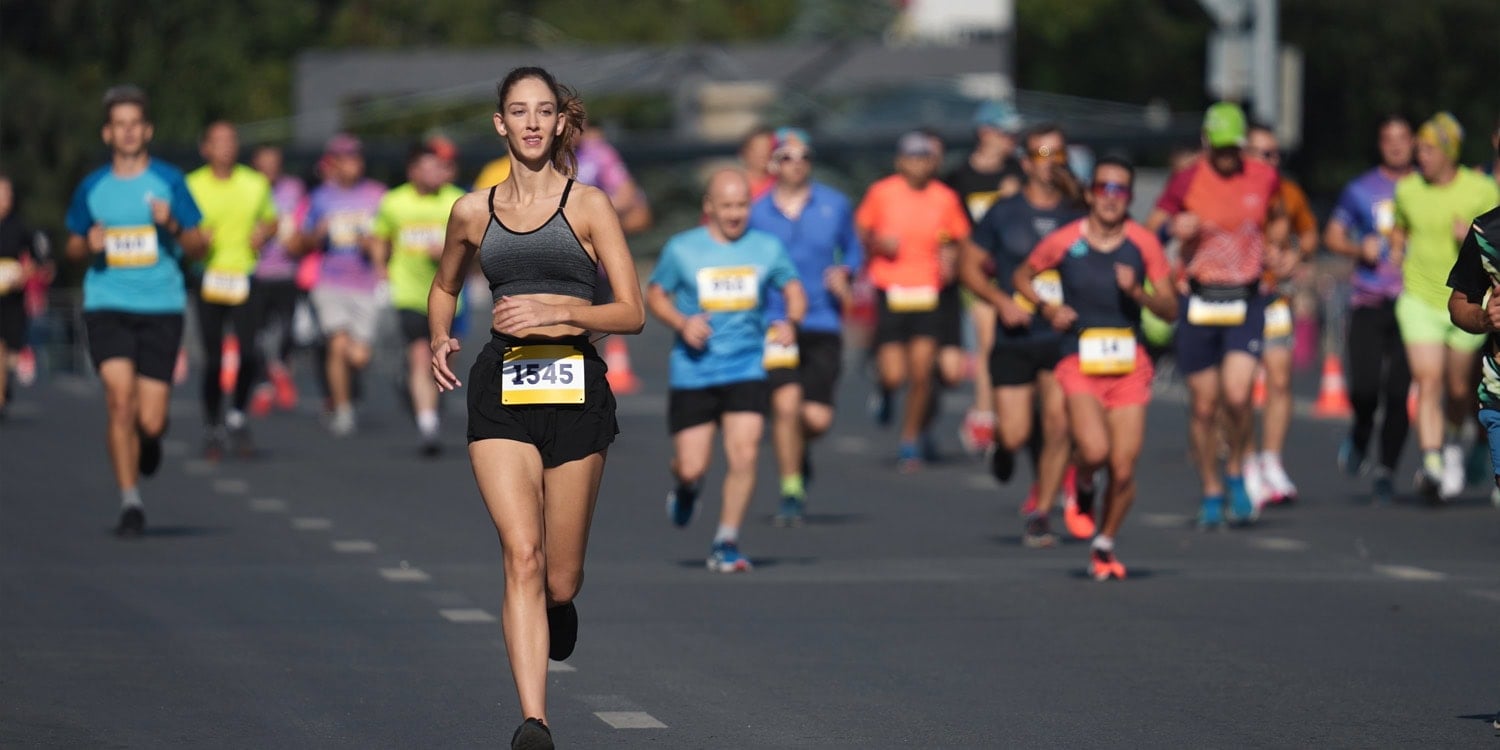
New field studies into the body’s own cannabis-like chemistry have found that endocannabinoids rise during long-distance running and stay lifted well after a finish, with the effects tracking across both marathon and ultramarathon distances. The research, led by Michael Siebers and colleagues in Germany, shows the compound anandamide not only climbs steadily during a marathon but remains elevated 45 minutes after the end, while ultramarathons of up to 230 kilometres produce similar, even stronger, shifts.
The work adds to a growing body of evidence that endocannabinoids—small, fat-soluble molecules produced on demand—may contribute to the so‑called runner’s high. Unlike endorphins, which are large molecules thought not to cross the blood-brain barrier effectively, endocannabinoids can traverse that barrier and act on the same receptors as the psychoactive component of cannabis, THC. The two best studied in humans are anandamide and 2-arachidonoylglycerol (2-AG).
Laboratory and early human studies had already suggested a link between exercise and endocannabinoids, notably in animal work led by Fuss in 2015 and a 2021 clinical trial where participants showed calm and euphoria even when opioid receptors were blocked. A 2022 systematic review found endocannabinoid rises after many workouts, but most research looked at sessions under an hour, leaving questions about longer endurance events. “Humans are capable of running for many hours, sometimes even days, and we wanted to understand what happens to the endocannabinoid system during such extraordinary endurance efforts,” said lead author Siebers, a psychiatrist at LVR University Hospital Essen.
To explore these processes under real-world conditions, the researchers conducted two field studies with trained endurance athletes. The first followed 19 experienced runners—seven women and 12 men—on a marathon course formed by three 14-kilometre loops around Lake Baldeney in Essen, Germany. Each runner then completed an identical-duration walking session along the same route for comparison. Blood samples were taken at the start, 14 kilometres, 28 kilometres, immediately after finishing a roughly 43-kilometre course, and 45 minutes later, with mood ratings recorded alongside.
The second study tracked 36 ultramarathon athletes—16 women and 23 men—across the TorTour de Ruhr, a non-stop race covering 100, 160 or 230 kilometres. These runners provided blood samples and mood ratings before the race and soon after crossing the finish line. In both studies, researchers measured levels of several lipids, including anandamide and 2-AG.
In the marathon cohort, anandamide rose progressively across the run and was higher during running than walking by the mid-race mark. It remained elevated 45 minutes into the recovery period. Runners averaged roughly 83 percent of their estimated maximum heart rate during the marathon, versus about 58 percent while walking. 2-AG showed a different trajectory, dipping early during the run before climbing in the final kilometres and staying elevated during early recovery.
Among ultramarathon participants, both anandamide and 2-AG were higher after the race across all distances compared with pre-race baselines. An exploratory comparison suggested post-race anandamide levels after the marathon were nearly double those seen after ultramarathons (32.4 versus 17.1 in the study’s measurements), potentially reflecting the higher intensity of the shorter event.
Mood shifts accompanied the biochemical changes. Marathon runners reported higher euphoria while running than while walking at several points, though by the 28-kilometre mark euphoria was no longer different from walking. Anxiety levels fell toward the end of the run, while pain ratings rose after 28 kilometres. In the ultramarathon group, anxiety decreased after the race—more so at 100 and 160 kilometres than at 230 kilometres—while pain rose and euphoria did not change in a statistically significant way.
Readouts of the runners’ experience varied. Only 3 of the 19 marathoners reported a runner’s high during the marathon, while 8 said they had not and 8 were unsure; among ultramarathoners, 12 said they had experienced the high, while 19 said they had not. The findings align with earlier PsyPost reporting that acute exercise boosts endocannabinoids, particularly anandamide, with higher intensity yielding stronger responses.
Commenting on the study, Danielle McCartney, a University of Sydney research affiliate not involved in the work, described the findings as significant for extending what we know about endocannabinoids to longer events. “The key finding is that circulating concentrations of anandamide increased progressively throughout the marathon and were also elevated following ultramarathons of 100, 160 and 230 km,” she noted. “However, most of this research has focused on relatively short bouts of exercise (less than 60 minutes). This study fills an important gap by examining much longer running distances.”
Siebers stressed that the body’s own cannabinoid system remains active even during hours of strenuous effort and suggested these molecules may contribute to the rewarding, calming and possibly pain-modulating effects of running. He added: “They may contribute to the rewarding, calming, and potentially pain-modulating effects of running. From an evolutionary perspective, I find this particularly fascinating.”
He described a common running progression: “At the beginning of a run, everything may feel uncomfortable… But after a while, something can change. Your movements become smoother, running feels increasingly effortless, and you may enter a state of flow. Sometimes this develops into euphoria.”
From a mental-health perspective, Siebers sees potential relevance: “Running can become a valuable tool for coping with stress, improving mood, and supporting mental well-being.” He cautioned, however, that exercise is not a replacement for professional treatment where needed, noting the broader therapeutic value of activity for some people.
The study’s authors stressed that they did not test whether rises in anandamide caused the mood changes. McCartney noted the limitation: “It’s important to recognise that this study doesn’t establish that increases in AEA are responsible for the ‘runner’s high.’ It shows that prolonged running increases blood AEA concentrations and is associated with changes in mood, including increased euphoria and reduced anxiety.”
The TorTour de Ruhr events involved demanding, night-time and often solitary stretches through unfamiliar terrain. Siebers said some participants ran up to 230 kilometres and endured hours of effort with a striking sense of community among ultramarathon runners. “Some runners also reported surprisingly little pain despite covering distances that would seem almost unimaginable to most people,” he observed, adding that these experiences prompt questions about how internal neuromodulatory systems influence endurance, pain and fear.
Nonetheless, pain remained common: 29 of the 36 ultramarathoners reported pain during the race, with five reporting none and eight using pain medication, particularly in the longest distance. The researchers acknowledge several caveats, including that the marathon comparison used walking rather than a seated rest control, self-selected pacing, and variable diets and rest among participants. Blood measures were taken outside ultramarathon periods and the mood scales relied on brief single-item ratings.
Looking ahead, the researchers propose exploring whether blocking cannabinoid receptors could alter the runner’s high, though safety concerns have limited such experiments in humans. They also plan to examine how nutrition might influence the endocannabinoid response during prolonged running and to investigate central nervous system processes more directly, potentially through neuroimaging, to better understand how endurance running affects mood and brain function.
As Siebers put it, the most exciting takeaway is that the body can generate its own cannabis-like substances through physical activity, offering a natural high without external substances. He described running as “a fascinating interaction between our body and brain” and suggested that understanding this relationship may illuminate why humans have evolved to sustain endurance running for so long.
The study, titled Endocannabinoid dynamics across marathon and ultramarathon running: evidence from two field studies, involved a collaboration among researchers at LVR University Hospital Essen, University of Duisburg-Essen, University Hospital Ulm and the German Sport University Cologne, led by Michael Siebers and Johannes Fuss, with further contributions from a team including Dana Huvermann, Christoph Siebers, Deborah Canales-Romero, Alexandra Florea-Ghile, Lina Keite, Lucas John, Moritz Munk, Roman Bizjak, Jens Witzel, Sebastian Schulz, Johannes Kirsten, Laura Bindila, Anke Hinney, Marijke Grau, Daniel A. Bizjak, and Harald Engler.
