


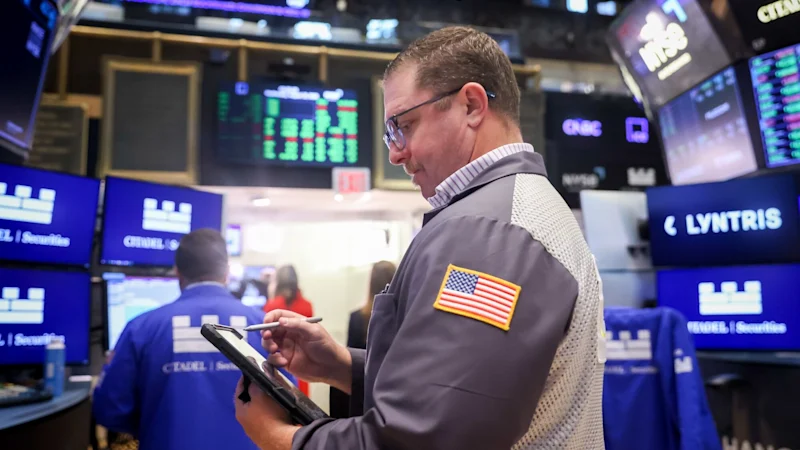
Australian shares slipped on Wednesday as higher oil prices and losses on Wall Street unsettled investors, with Brent crude approaching US$100 a barrel amid renewed conflict in the Middle East.
The S&P/ASX 200 opened higher before turning lower to finish down 9.4 points, or 0.1 per cent, at 8,911.40. Seven of the benchmark’s 11 sectors ended in negative territory, although energy and mining stocks advanced.
The decline followed a 1 per cent fall on Tuesday, when the index hit a six-week low as traders increased their expectations of further interest rate rises to contain inflation fuelled by energy costs. The Australian dollar strengthened 0.3 per cent to US72.36¢.
Brent crude was trading at about US$99 a barrel at the close, having risen more than 60 per cent this year. West Texas Intermediate stood near US$94, while refined products including diesel have risen even more sharply as fighting has spread towards the Red Sea and tensions around the Strait of Hormuz have intensified.
The United States military said it had destroyed five Iranian oil tankers after attacks on US warships, including one near Kharg Island, Iran’s main oil export hub. The latest strikes have added to fears of a deeper disruption to supplies through one of the world’s most important shipping routes.
“With geopolitical tensions and oil prices on the rise, the markets may find it difficult to focus on much beyond the inflation discussion,” said Chris Larkin of E*Trade from Morgan Stanley.
Energy companies benefited from the oil rally. Woodside Energy rose 2.6 per cent, Santos gained 1.3 per cent and fuel refiner Ampol added 1.4 per cent.
Mining stocks also helped limit the broader decline. BHP climbed 3.3 per cent and Rio Tinto rose 1.9 per cent, while Fortescue Metals gained 0.5 per cent. Copper prices, which have surged since the start of last year, recently reached a record above US$14,600 a tonne on the London Metal Exchange.
Gold miners Northern Star Resources and Evolution Mining fell 2 per cent and 1.6 per cent respectively after trading without entitlement to their latest dividends. Healthcare group CSL also traded ex-dividend and dropped 2.1 per cent.
The major banks were weaker, with Commonwealth Bank down 2.2 per cent, National Australia Bank off 1.5 per cent, Westpac losing 0.6 per cent and ANZ easing 0.4 per cent.
Austal was one of the day’s strongest performers, jumping 7.1 per cent after the Australian shipbuilder received a second proposal for its US operations. Wildcat Infrastructure has indicated a potential valuation of between US$1.25 billion and US$1.35 billion, exceeding an earlier approach from South Korean defence group Hanwha. Any transaction would require approval from authorities in Australia and the United States.
On Wall Street, the S&P 500 fell 0.6 per cent when trading resumed after the three-day holiday weekend. The Dow Jones Industrial Average lost 1.2 per cent and the Nasdaq composite slipped 0.3 per cent as investors weighed the impact of rising fuel prices on inflation and economic growth.
Investors are awaiting US inflation figures this week, including the wholesale price report on Thursday and the consumer price index on Friday. The data will be among the final major indicators available before the Federal Reserve’s meeting on September 16.
Higher Treasury yields added to pressure on US equities, with the yield on the 10-year note edging up to 4.79 per cent, close to its highest level since autumn 2023.
In other markets, Japan’s Nikkei 225 fell 1.7 per cent as a stronger yen weighed on major exporters. Hong Kong shares declined 0.4 per cent, while Shanghai’s benchmark rose 0.2 per cent after China reported a 25 per cent annual increase in exports in August, supported by demand for cars and high-tech goods.
