


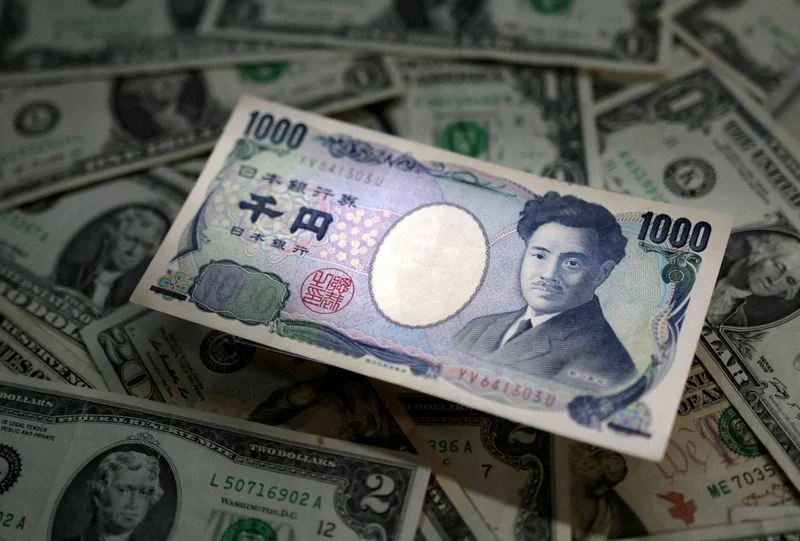
The yen carry trade is coming under pressure as Japan’s currency climbs to a seven-month high and investors brace for the possibility of further interest-rate increases from the Bank of Japan.
The strategy has been a major feature of global markets for years, allowing investors to borrow yen at relatively low cost and put the money into assets denominated in currencies offering higher returns.
How the yen carry trade works
In a typical transaction, an investor borrows yen and exchanges it for a higher-yielding currency such as the US dollar, Mexican peso or New Zealand dollar. The funds may then be used to buy bonds, shares or other financial instruments.
When the trade is closed, the investor converts the proceeds back into yen and repays the original borrowing. The potential profit comes from the gap between interest rates, provided exchange-rate movements do not wipe out the gain.
Dollar-yen carry trades are currently producing annualised returns of about 2.5% to 3.5%, based on the difference between US and Japanese interest rates. That is below the 5% to 6% returns available in 2024.
The yen has traditionally been a favoured funding currency because Japanese interest rates remained extremely low for an extended period. The strategy expanded significantly after 2013, when monetary easing under then-prime minister Shinzo Abe coincided with rising US rates and a weaker yen.
Carry trades grew further in 2022 and 2023, as the Federal Reserve raised borrowing costs to combat inflation while the Bank of Japan maintained negative short-term rates.
Why a stronger yen matters
The strategy becomes less attractive if the yen rises. Investors who have borrowed the currency must buy back more expensive yen to repay their loans, potentially turning an expected interest-rate gain into a loss.
Expectations of faster Bank of Japan rate increases have therefore unsettled the trade. The central bank’s next monetary policy meeting is scheduled for September 17 and 18, and its policy rate is currently around 1%.
Following yen-buying intervention by Tokyo and Washington at the end of July, some investors appear to have shifted towards the Swiss franc as an alternative funding currency.
The precise size of the yen carry trade is difficult to establish because many positions are held through derivatives and may be leveraged. A Jefferies analysis of Bank for International Settlements data estimated that cross-border yen borrowing reached 360 trillion yen, or about 2.34 trillion US dollars, by March.
Figures from the US Commodity Futures Trading Commission also showed that net short positions on the yen stood at 92,227 contracts in the week to September 1. That was the third consecutive weekly increase, although the figure remained below the two-year high of 163,412 contracts recorded in the week to July 1.
Could the carry trade unwind again?
A rapid reversal could affect markets well beyond foreign exchange, particularly if hedge funds and computer-driven investors are forced to sell assets to cover losses and repay yen loans.
That risk was exposed in July 2024, when an unexpected Bank of Japan rate increase helped drive the yen from about 154 to the dollar to around 141 within days. Investors unwound carry positions, contributing to steep falls in global equities and a one-day drop of 12.4% in Japan’s Nikkei index.
Markets have so far responded more calmly this time. Bank of Japan officials have been signalling that another rate increase may be approaching, while recent movements in the yen have been relatively orderly. That suggests investors may already be adjusting their positions ahead of the September meeting rather than being caught by surprise.
