


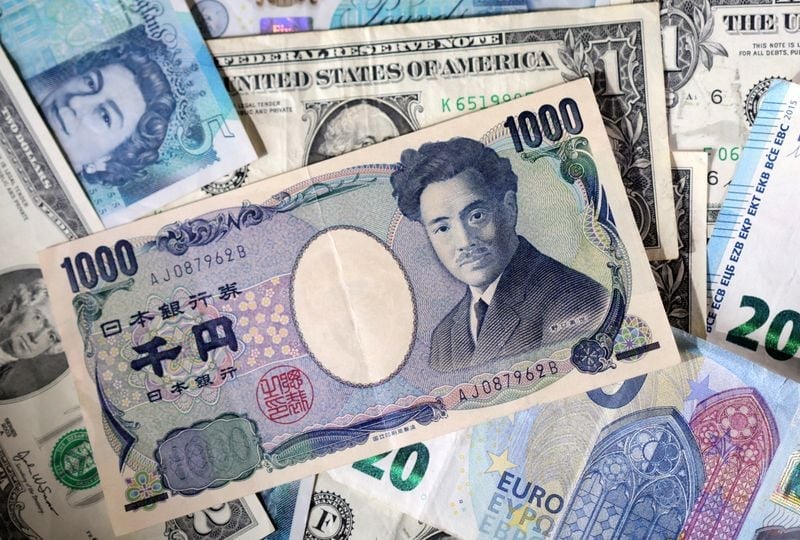
The Japanese yen held near a seven-month high on Wednesday, keeping the dollar under pressure as Brent crude moved towards $100 a barrel and investors assessed the economic risks from an expanding Middle East conflict.
The yen was trading at about 153.33 to the dollar, close to the 152.89 level reached on Tuesday, its strongest point since February. It has gained roughly 4% this month, while the dollar index remained near a two-week low at 98.75.
Brent crude rose by more than 1% to about $99 a barrel after Iran-backed Houthi fighters launched attacks on several Saudi cities. Associated Press reported that the strikes wounded 73 people and sparked fires at oil facilities and utilities in the south of the kingdom, with some operations temporarily suspended.
The latest escalation came as the US said it had destroyed five Iranian oil tankers following attacks on American warships. Iran subsequently launched missiles towards US targets in Jordan, while Jordan’s military said its air defences intercepted 18 ballistic missiles and that there were no reported casualties. ([apnews.com](https://apnews.com/article/4ad9446f0bb8c096750c84b6e1ba86b8))
Higher energy prices have revived concerns that a prolonged disruption to supplies could intensify inflation and complicate decisions by the Federal Reserve and other central banks. Asian shares traded cautiously, while US stocks fell in the previous session as oil prices climbed.
Investors are now looking to the US consumer price index, due on Friday, for evidence of how rising fuel costs may affect the interest-rate outlook. The Bureau of Labor Statistics has scheduled the August inflation figures for September 11 at 8.30am Eastern time. ([apnews.com](https://apnews.com/article/d1284eb72934a3b076c14449bc087fbd))
Market expectations for tighter policy in Japan have helped drive the yen’s advance. Traders are widely anticipating a 25-basis-point increase from the Bank of Japan at its meeting on September 17 and 18, although the currency’s next move may depend on whether Governor Kazuo Ueda adopts a more hawkish tone. The dates are confirmed in the central bank’s official schedule. ([boj.or.jp](https://www.boj.or.jp/en/about/calendar/index.htm))
The yen’s rise has also unsettled the popular carry trade, in which investors borrow cheaply in Japan to buy higher-yielding currencies and assets elsewhere. Gains against the euro, pound, Mexican peso and Turkish lira suggest the move has spread beyond the dollar.
Analysts said the currency’s rally could continue if expectations of faster Bank of Japan tightening build, but warned that strong US economic data, elevated oil prices and concerns over Japan’s public debt could limit its durability.
The euro was little changed at about $1.1631 and sterling was around $1.3546, while the Australian and New Zealand dollars edged higher. China’s yuan remained close to a three-and-a-half-year peak against the dollar as stronger inflation and export data supported the currency.
