


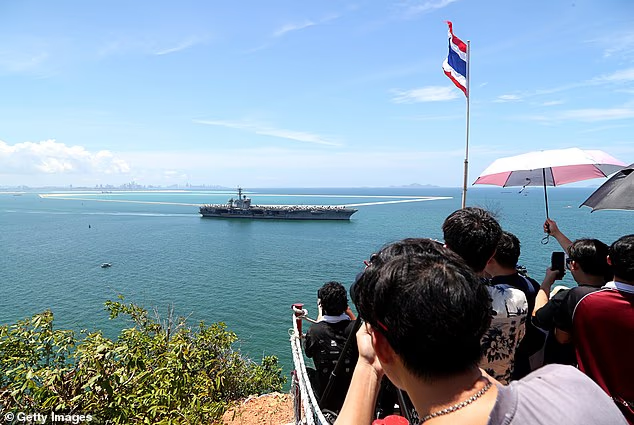
The US Navy is overhauling supplies, recreation and family communications for the next aircraft carrier heading to the Middle East after the USS Abraham Lincoln endured one of the service’s most punishing deployments.
The Lincoln’s crew of about 5,000 sailors and Marines has now reached Thailand after spending 208 consecutive days at sea and roughly 200 days in a combat zone while supporting US operations against Iran.
The carrier docked at Laem Chabang, near Pattaya, last week for a long-awaited period of rest and recreation. It was the crew’s first full port visit in almost nine months.
Senior Navy officials said lessons from the deployment would be applied to the USS Theodore Roosevelt, which is due to leave San Diego in the coming weeks for a mission expected to last more than seven months.
US Navy plans changes after USS Abraham Lincoln deployment
Adm Daryl Caudle, the Chief of Naval Operations, said the Roosevelt would sail with additional food, retail goods and hygiene products, while available spaces would be converted into storage to help the ship remain self-sufficient for longer.
“Roosevelt is maximising its loadout of food, retail products and hygiene items before getting underway,” he said.
Master Chief Petty Officer of the Navy John Perryman said the changes were intended to address the practical pressures of extended deployments, including the difficulty of resupplying ships operating far from port.
The Navy is also preparing additional entertainment equipment for mess decks, more durable fitness machines, replacement cardio equipment and festive materials to be bought before the ship departs.
Officials said they were working to provide families with more reliable and consistent communication throughout the next deployment. The service is also seeking to build a more predictable system for extending missions, after repeated changes to the Lincoln’s return date caused anxiety among relatives.
“Small things matter during a long deployment because taking care of our sailors is part of maintaining combat readiness,” Mr Perryman said.
Theodore Roosevelt is expected to replace the USS George Washington in the region as the United States continues military operations against Iran. Navy leaders said a logistics network had been established to support two carrier strike groups in the Arabian Sea and improve the flow of supplies.
Adm Caudle said the Navy was also examining potential port visits in Africa, India and Singapore, acknowledging that regular breaks ashore had made other long deployments less difficult for their crews.
“It’s not the operations – they’re nearly identical in the combat sortie process that they were conducting,” he said. “It’s really the port calls and the ability to reset and take a knee.”
Families raised concerns over conditions aboard Lincoln
The changes follow complaints from sailors and relatives about the conditions aboard the Abraham Lincoln during its extended mission, which included more than 10,000 operational flights and the interception of more than 200 Iranian drones.
Sailors told US media they had worked 12-hour shifts seven days a week in cramped conditions, with limited sleep and little time away from their duties. Some described shortages of food and drinking water, while reports also alleged problems with showers, toilets, laundry facilities and hot water.
The Navy has said that current reports from the ship show continuous access to clean water, functioning air conditioning and healthy meal options. Acting Secretary of the Navy Hung Cao said meal plans had been adjusted when fresh supplies were unavailable, but that no meal had been missed.
The service has also disputed claims of a wider rise in suicidal behaviour, saying it had not identified an increase in reported suicidal thoughts or suicide attempts aboard the carrier. It said sailors had access to medical staff, chaplains and mental-health professionals.
Nevertheless, families told Navy leaders at meetings in San Diego that the prolonged deployment had taken a serious psychological toll. One sailor went overboard on August 3 and was rescued before being medically evacuated, according to accounts from his wife and charging documents.
The sailor is facing non-judicial disciplinary proceedings over allegations that he deliberately injured himself or feigned illness to avoid duty. His wife said he had repeatedly sought paternity leave to meet his newborn daughter and received treatment only after returning to San Diego.
The Navy has not publicly confirmed the circumstances surrounding the case, but has said that the health and wellbeing of its personnel remain a priority.
As the Lincoln heads towards the United States, its leaders have thanked the crew for completing the mission while acknowledging that the experience exposed weaknesses in how long deployments are supplied and managed.
“You answered the call, you got the job done and just as importantly, the lessons you bring home are helping us better prepare the next team to deploy,” Mr Perryman said.
