


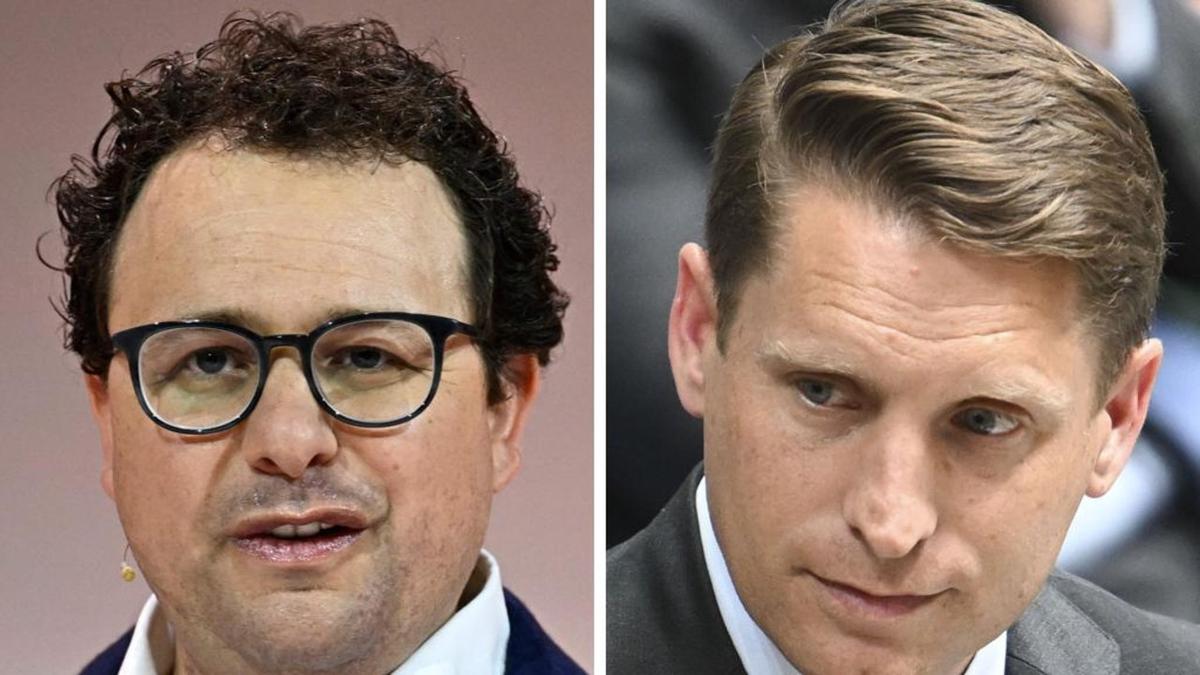
Australia risks becoming a “supplicant state” without a sovereign artificial intelligence model, Liberal frontbencher Andrew Hastie has warned, as OpenAI confirmed it is in negotiations with the Albanese government over copyright rules.
Speaking at the Sydney Dialogue in New South Wales, Mr Hastie said Australia needed a frontier AI model operating at the leading edge of the technology if it was to remain influential.
“Without a frontier AI model, we are going to be a supplicant state, not a sovereign state,” he said.
“This is big stuff here. People think it’s making memes on ChatGPT, (but) we’re talking about the global order being changed and Australia falling behind.
“I want us to stay in front.”
OpenAI vice-president for global policy Ann O’Leary later told the conference that the company was “very eager to have a bigger and broader relationship” with Australia.
“I don’t have to tell any of you how important Australia is from a geopolitical standpoint,” she said.
“We very much recognise that having a diversification of where we train is going to be important as you move forward.”
Prime Minister Anthony Albanese announced Australia’s first nationwide AI plan earlier this year. The Government said it was intended to balance the technology’s potential economic benefits with concerns including environmental damage and the use of Australian copyrighted material to train AI models.
Warnings over AI safety
The debate comes after Dario Amodei, chief executive of AI safety and research company Anthropic, called last week for a slowdown in development so safeguards could catch up.
Donald Trump has rejected the proposal, citing the threat posed by Chinese AI models. An Anthropic researcher has also warned that AI was developing so rapidly there was a greater than 10 per cent chance it “could kill all humans” within the next decade.
Opposition Leader Angus Taylor said the Government had a role to play in responding to the risks, but companies also needed to act responsibly.
“I think absolutely central to this is our cyber defences as a country,” Mr Taylor said.
He argued that Australia needed a close relationship with the United States administration so that its businesses and government could gain early access to AI models for cyber defence purposes.
“But, this has not been on the priority list of the Prime Minister because he’s too busy telling Australians how wonderful the economy is when Australians know they’re getting poorer,” he said.
The US Government ordered Anthropic in June to suspend access to its Fable 5 and Mythic 5 models to foreign nationals. The order was later rescinded.
Calls for mandatory AI safeguards
Greens senator David Shoebridge told the Senate that the warning of a 10 per cent chance of human extinction demanded an immediate response.
“That is why we’re saying ‘act on this now’,” he said.
Senator Shoebridge called on the Albanese Government to introduce mandatory safety testing and transparency requirements for AI systems, rather than relying on the industry to regulate itself.
He also urged Australia to work with other middle powers, including Canada, Japan and South Korea, on a global treaty covering AI regulation.
“We don’t pretend Australia can do this by itself,” Senator Shoebridge said.
“We could lead … we could bring forward legislation to put mandatory guardrails around AI.
“We could set out rules for an IA industry that constrains frontier models, puts them back in the box, and makes sure the checks are done before they’re rolled out and send into the wild.”
Senator Shoebridge sought to suspend standing orders to debate AI regulation, but the motion was defeated without Labor support.
Industry Minister Tim Ayres criticised the move, accusing the Greens of a “desperate cover-up” and saying Senator Shoebridge had given only 10 minutes’ notice of an issue he described as a species risk.
“If there was any seriousness at all, any political seriousness at all, from the Greens political party … then they would not give 10 minutes’ notice of something that they claim is a species risk,” Mr Ayres said.
He said the Government’s approach was straightforward: to ensure AI was developed and used in Australia in the national interest.
Independent senator David Pocock supported the motion, saying AI had “huge potential” but that Australia should adopt a precautionary approach if the warnings about its risks proved accurate.
He said concerns about the technology had been raised by people outside the AI companies as well, even if some Government figures believed the warnings were intended to increase company valuations before possible initial public offerings.
Senator Pocock questioned whether the Government was capable of responding effectively and accused it of doing “whatever the US wants rather than actually standing up”.
“We can’t just be saying, well, it’s too hard. It’s too hard for a little power. The best we can do is allow these big hyperscalers to come here, use our land, use our energy, use our water, train their models and not ask the question for what?” he said.
“Why are we rushing into this?”
