


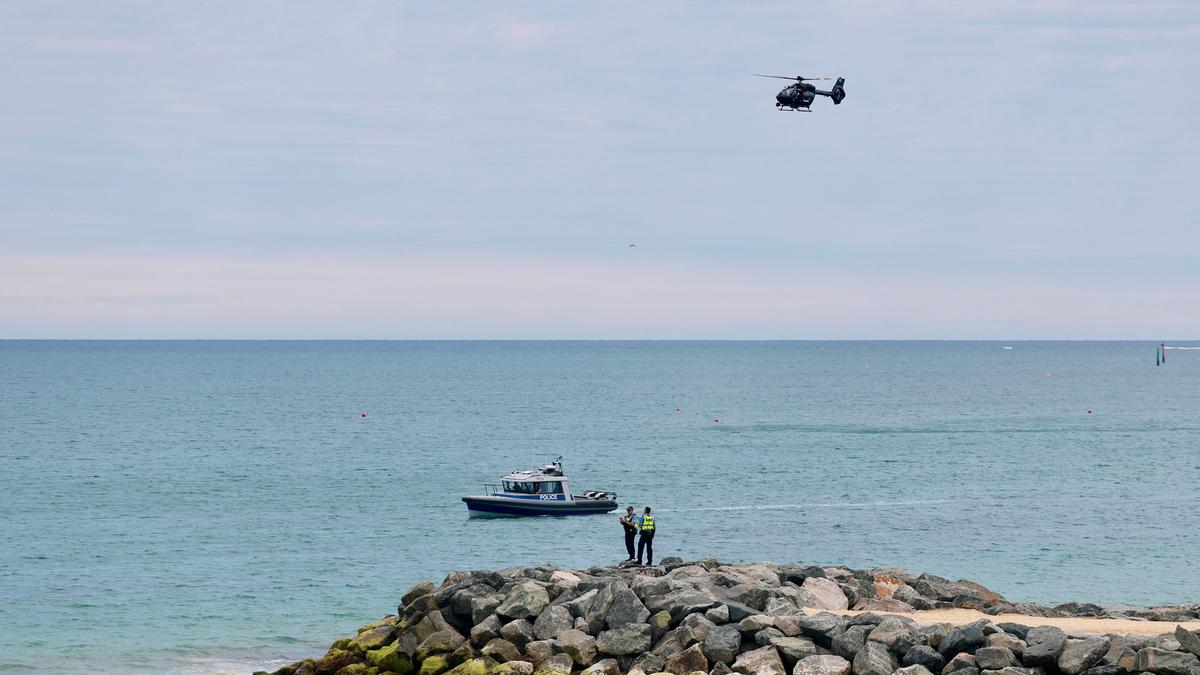
Fatal shark attacks in Australia have outnumbered deaths from lightning by four to one over the past decade, analysis of national data shows, as a deadly incident at Sorrento Beach in Western Australia intensified concern about the changing risk in coastal waters.
Six people were killed by lightning between 2015 and 2024, according to Australian Bureau of Statistics figures, while 24 died in shark attacks recorded in the same period.
Figures cited for 2025 and 2026 show two reported lightning deaths compared with nine fatal shark attacks, although official ABS data for those years has not yet been released.
The findings challenge the long-standing reassurance that Australians are more likely to be struck by lightning than killed by a shark.
Fatal shark attacks in Australia rise sharply
Research by Bond University associate professor of environmental science Dr Daryl McPhee found that Australia recorded fewer than one fatal shark bite a year on average between 1980 and 1999.
That rate rose to just over two a year between 2000 and 2019, and to more than five annually from 2020 to 2025.
The Australian Shark-Incident Database recorded 23 fatal shark attacks between 2020 and 2025, compared with 17 during the entire 1950s. Risk Frontiers, meanwhile, has reported an average of one to two lightning deaths a year since the mid-1990s.
The latest tragedy in Western Australia came at Sorrento Beach, where a man was attacked just metres from shore in front of beachgoers. It was the third fatal shark attack in the state this year.
The incident followed an attack at Glenfield Beach, about 430km north of Perth, in which surfer Mel Ismail lost his foot after a shark tore a large section from his board. He remains in intensive care facing a lengthy recovery.
Two other recent deaths involved spearfishers. Steve Mattaboni, 38, was killed off Rottnest Island on May 16, while Daniel Turpin, 35, died after being attacked by a 4.5m shark off Albany.
At Mr Mattaboni’s funeral on June 9, his wife, Shirene, walked behind his hearse carrying their four-month-old daughter.
Why sharks may be coming closer to shore
Researchers have cautioned that there is no single explanation for the apparent increase in attacks. Flinders University professor Charlie Huveneers said 40 factors had been suggested as influencing the risk of shark bites.
Those factors include population growth, changes to coastal habitats, declining water quality, climate change, unusual weather patterns and shifts in the distribution and abundance of sharks and their prey.
Dr McPhee said the availability of food for great white sharks had increased in coastal areas, including humpback whales, seals, sea lions and Australian salmon.
“Whether that directly translates into sharks spending more time in coastal waters is plausible, but long-term information is lacking,” he said.
Spearfishing may also raise the chance of an encounter, although researchers have not established that it is responsible for the recent fatalities.
“The presence of a speared fish can act as a feeding stimulus for a shark,” Dr McPhee said.
Arnold Piccoli, chairman of the Australian Underwater Federation’s spearfishing committee, rejected the suggestion that the sport was uniquely dangerous. He said divers used buddy systems and specialist equipment, while acknowledging that people could die even “when you do everything right”.
Since 2000, Western Australia has recorded 24 fatal shark attacks. Surfers and bodyboarders accounted for 10, swimmers for five, scuba divers for four and spearfishers for three.
Measures to reduce the risk at WA beaches
Western Australia has expanded shark tagging, aerial surveillance and warning systems, while Premier Roger Cook has ruled out drumlines and culls.
The Town of Cambridge is installing 10 shark-bite emergency kits at popular beaches at a cost of $10,000.
Tim Gleeson, Surf Life Saving WA’s aerial surveillance co-ordinator, said the Westpac rescue helicopter was “critically important” to the response.
Alarms are sounded when a shark more than two metres long is detected within 500 metres of shore. The helicopter then flies about a kilometre in either direction to warn people in the immediate area.
During the last summer season, the helicopter recorded 711 shark sightings and warned almost 28,300 people about nearby sharks. More than 5,500 people were cleared from the water.
The Department of Primary Industries and Regional Development has described the state’s shark hazard mitigation strategy as one of the country’s most comprehensive, while warning that tagging data cannot establish whether shark numbers are increasing.
Beachgoers are advised to check the SharkSmart app, swim between the flags at patrolled beaches, remain close to shore and avoid schools of fish or areas where the seabed drops sharply.
Despite surveillance aircraft, sirens, tagging programmes and emergency equipment, experts say the ocean can be made safer but never entirely risk-free.
