


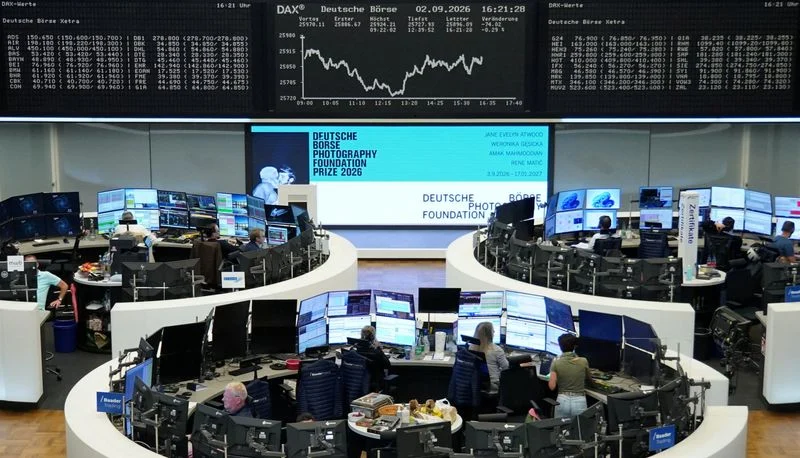
Government bond markets staged a modest recovery on Thursday, 3 September, as US and Japanese yields edged lower after a bruising sell-off, although persistent inflation risks continued to weigh on debt investors.
US Treasury yields eased overnight while Japanese government bonds found some support ahead of an auction of 30-year securities. The move offered temporary relief after benchmark 10-year Japanese yields touched 3.015% on Wednesday, their highest level in 30 years.
Markets remain unsettled by oil prices above $90 a barrel following renewed military strikes between the United States and Iran. Higher energy costs have fuelled fears that inflation could remain elevated, limiting the scope for central banks to cut interest rates.
Traders have sharply increased their expectations of a Federal Reserve rate rise this month. The implied probability of a quarter-point increase has risen to about 67%, from 37% a week earlier, according to CME Group’s FedWatch tool.
John Williams, president of the Federal Reserve Bank of New York, sought to temper those expectations on Wednesday, saying that higher long-term bond yields reflected a solid economy and that he wanted to see more data before reaching a decision.
The next major test for markets will be Friday’s US non-farm payrolls report, following weaker-than-expected private-sector employment figures released on Wednesday. Consumer price figures, due on 11 September, will provide another important indication of the direction of interest rates.
Federal Reserve governor Christopher Waller is also due to speak at a Reuters NEXT event in Washington on Thursday. His comments will be closely watched after he said in July that higher rates might be needed in the near term.
Japanese assets received some support from data showing that the country’s services sector expanded at its fastest pace in five months in August. The figures added to evidence of a resilient economy and helped the yen rise to a three-week high.
Even so, the improvement in bonds was limited. France was due to reopen sales of 10-, 14- and 20-year debt, while the UK planned to reopen a 23-year gilt, putting investor demand for long-dated government borrowing back in focus.
European and US equity futures pointed to small gains, suggesting that investors were taking some comfort from the overnight stabilisation. But the combination of higher oil prices, firmer rate expectations and strained government bond markets continued to leave the broader outlook fragile.
