


A federal judge in Maryland has temporarily blocked key parts of Donald Trump’s latest attempt to restrict birthright citizenship, ruling that the US Supreme Court has already settled the issue the president’s new executive order seeks to reopen.
Judge Deborah L Boardman’s order prevents the administration from enforcing the policy against a class of children born in the United States on or after 19 February 2025, including those born in the future. The ruling does not prevent federal agencies from continuing work on guidance for how the order would be implemented.
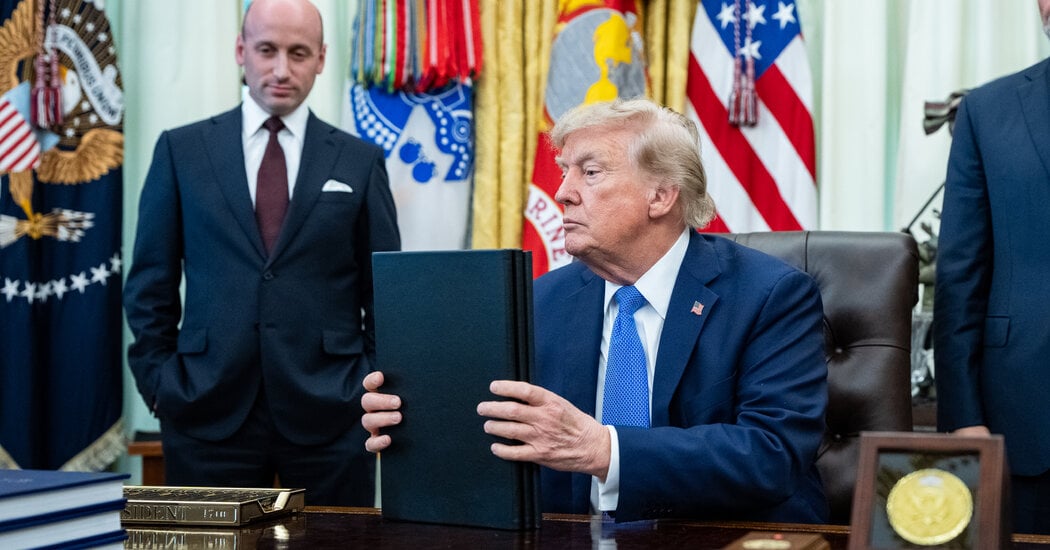
Mr Trump signed the latest directive, Executive Order 14418, on 6 August after the Supreme Court rejected his broader attempt to deny citizenship to children whose parents were not US citizens or permanent residents.
The new order seeks to exclude children from citizenship where neither parent is an American citizen and one parent is classified as an “alien enemy”, works for a foreign government or is alleged to have taken part in so-called birth tourism.
It also targets children whose parents are accused of using fraud or a commercial transaction to secure access to US birthright citizenship, including travelling to the country to give birth or entering into a surrogacy arrangement.
Judge Boardman said the administration had “completely misread” the Supreme Court’s ruling and adopted a “distorted interpretation” of its conclusions. She described the new executive order as the latest attempt to curtail a constitutional right through a route intended to withstand legal challenge.
“No presidential executive order can undo what the Supreme Court has done,” she wrote.
The Supreme Court ruled by six votes to three in June that Mr Trump’s original order violated the Citizenship Clause of the Fourteenth Amendment. In its decision, the justices held that children born in the United States to parents who were unlawfully present or in the country temporarily were entitled to citizenship.
Judge Boardman said the Supreme Court’s decision was “the law of the land” and that “the President must follow it”. She said the latest order could deprive citizenship from babies whom the high court had already determined to be citizens at birth.
The judge also warned that children could potentially lose citizenship through broad or arbitrary decisions about their parents’ status. She cited the administration’s use of allegations linking some Venezuelan nationals to the Tren de Aragua criminal organisation, often without evidence, in deportation cases.
Although she said it was too early to decide whether the new order was unconstitutional in every application, Judge Boardman concluded that it appeared unlawful as applied to the class of children covered by the earlier legal challenge.
The ruling is the latest setback for Mr Trump’s effort to end or narrow birthright citizenship, a policy he made a central issue of his second term. A separate challenge to the August order is also pending in New Hampshire.
