


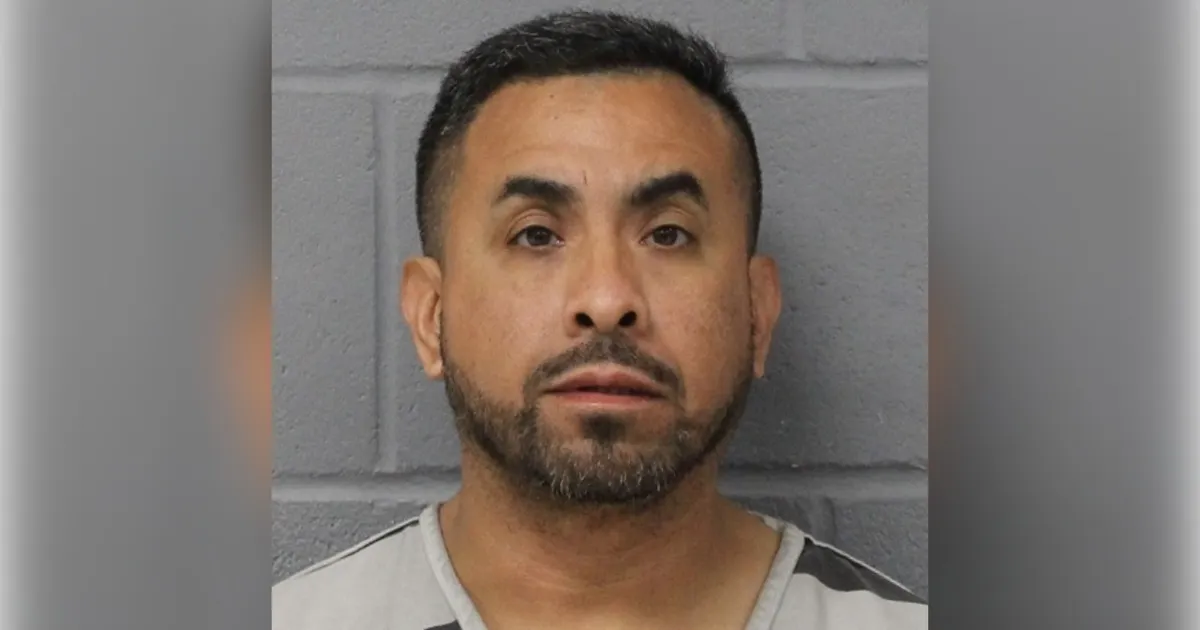
DNA evidence has led to the conviction of Michael Lance Gamez over two attempted sexual assaults in Austin, Texas, more than 25 years after the attacks took place.
Gamez, who pleaded guilty to attempted aggravated sexual assault on 20 May 2026, was sentenced to 15 years in the Texas Department of Criminal Justice on 3 August.
DNA evidence linked Austin attacks
The first incident happened on 9 September 1999 at the Capital Metro Pavilion Park and Ride on Research Boulevard, after a woman arrived on a northbound bus from Leander.
Police said an unknown man approached her as she sat on a bench. When she stood up to walk towards a nearby convenience store, he physically attacked her and attempted to sexually assault her before fleeing south when she screamed.
Less than five months later, on 8 February 2000, another woman was confronted outside her flat on Northgate Boulevard. A man asked her for help and was allowed inside, where he attacked and restrained her before attempting to sexually assault her. She fought back and he ran away.
Austin Police Department collected forensic evidence from both scenes. On 3 April 2000, the Texas Department of Public Safety told investigators that the DNA recovered from the attacks came from the same unknown male.
The suspect remained unidentified for more than two decades, despite further investigative work and new leads. On 11 October 2023, police were informed that the DNA profile had been identified as belonging to Gamez.
Detectives William Costello and Grace Wolfsbane located Gamez in February 2024. They obtained a warrant for a DNA sample and interviewed him before sending the sample to the Texas DPS crime laboratory for comparison.
The laboratory confirmed on 30 October 2024 that Gamez was the source of the DNA recovered in both cases. He was arrested on 15 November and charged with aggravated kidnapping, attempted aggravated sexual assault and attempted sexual assault.
Gamez requested sentencing by a judge after entering his guilty plea. Judge Chantal Eldridge, of the 331st District Court, imposed the 15-year prison term on 3 August 2026.
Austin police said the cases demonstrated the importance of preserving forensic evidence and continuing to pursue investigative leads, even when an investigation remains unsolved for many years.
