


Twenty-two states and the District of Columbia have sued the Trump administration in an attempt to block a rule cutting off federal Medicaid and Children’s Health Insurance Programme (CHIP) funding for gender-affirming treatment for transgender young people.
The lawsuit was filed in federal court in Massachusetts on Wednesday, ahead of the measure’s scheduled implementation on October 13. It challenges a Department of Health and Human Services rule that would prevent Medicaid funding for treatment provided to under-18s and CHIP funding for those under 19.
The states argue that HHS and the Centers for Medicare and Medicaid Services have exceeded their legal authority by imposing a nationwide restriction on care that individual states have deemed medically necessary. They also claim the administration failed to provide a proper justification for replacing decisions made by licensed clinicians with its own criteria.
Massachusetts Attorney General Andrea Joy Campbell, who helped lead the case, said the rule “unlawfully undermines states’ authority to regulate healthcare” and threatened access for low-income young people.
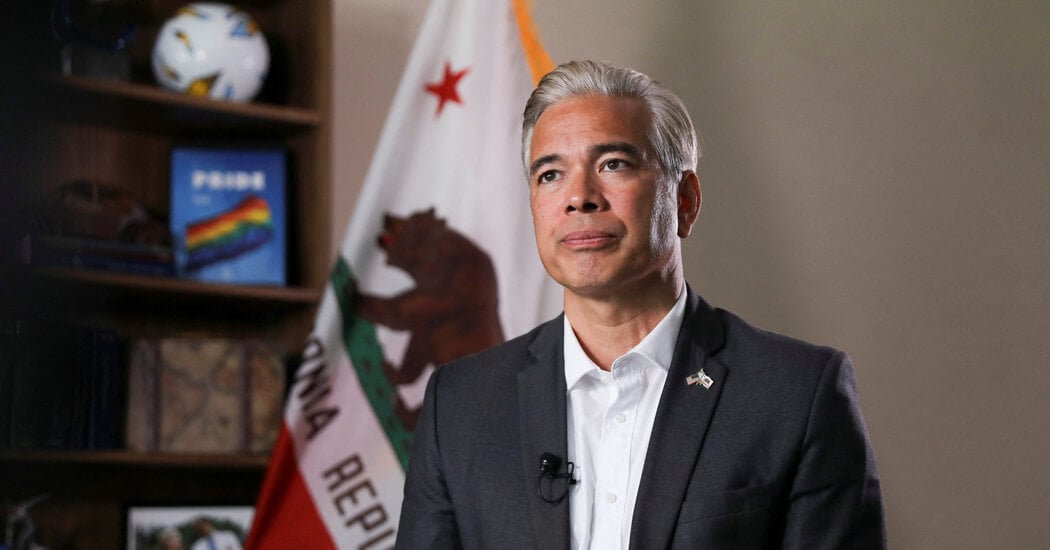
California Attorney General Rob Bonta said: “We will not stand by as the Trump administration oversteps its authority and twists the facts to justify its bad-faith agenda against transgender Americans.”
Illinois Attorney General Kwame Raoul said the policy would create an unlawful precedent by allowing the executive branch to determine which treatments states could reimburse. “No federal agency has the power to directly regulate the practice of medicine — a traditional and congressionally recognized power reserved for the states,” he said.
Medicaid rule due to take effect in October
The federal government announced the final rule on August 11. HHS Secretary Robert F Kennedy Jr said it would end taxpayer funding for what the administration calls “sex-rejecting procedures”, arguing that the treatments carried serious risks and lacked sufficient evidence of clinical benefit.
CMS administrator Dr Mehmet Oz said: “Children deserve our protection, not experimental interventions that pose serious risks and convey no proven benefits.” The department’s policy refers to puberty blockers, hormone treatment and surgery, although the rule itself applies only to federal Medicaid and CHIP payments rather than making the care unlawful.
HHS has said federal funding will remain available for mental-health services. It has also allowed a tapering-off period of up to six months from the rule’s effective date for children already receiving hormone treatment.
The administration’s position conflicts with that of many major US medical organisations, including the American Academy of Pediatrics, which continue to support gender-affirming treatment for some young people experiencing significant distress about their gender identity. Most Republican-led states have already introduced restrictions on such care.
The states’ complaint is the latest legal challenge to the administration’s efforts to restrict treatment in jurisdictions where it remains legal. In April, a federal judge ruled that HHS could not unilaterally impose a standard of care that overrode state medical rules and granted summary judgment to a coalition of states in a separate case.
A Congressional Budget Office analysis cited in the lawsuit estimated that the federal government spent about $100 million on gender-transition treatment for minors through Medicaid over the five years to 2023. It found that gender-related surgery among Medicaid-insured 15- to 17-year-olds was extremely rare, at 3.44 cases per 100,000.
HHS did not immediately respond to a request for comment on the new lawsuit.
