


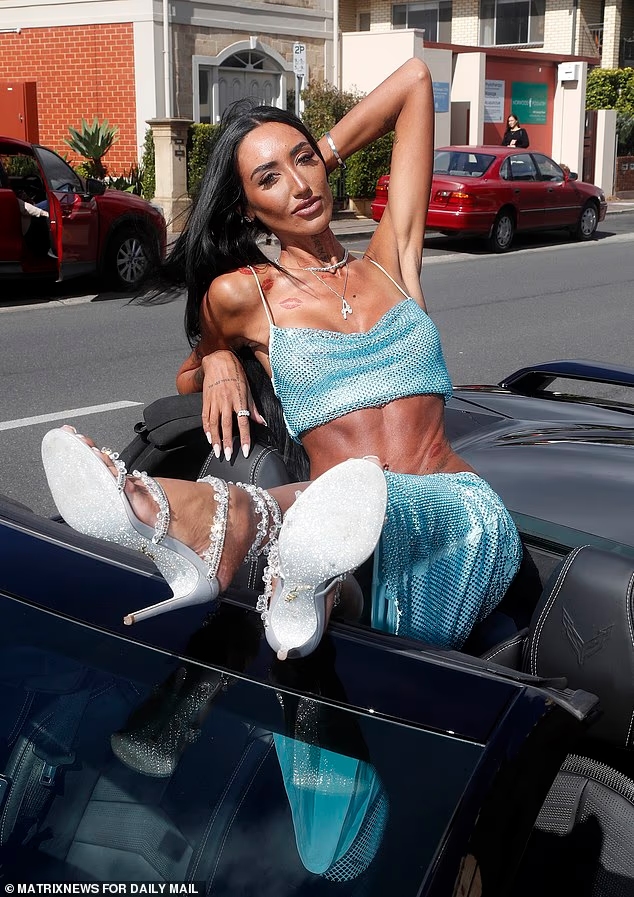
Adelaide influencer Matilda Baxter has revealed she is undergoing counselling for what she describes as an addiction to tanning, after concerns from her parents and partner about her use of a home solarium and unapproved melanotan peptides.
Baxter, 23, said she uses the $7,000 tanning bed in her garage at least four times a week. She told the Daily Mail: “I am not an advocate for using tanning beds, and I will say that I am an addict. I am seeing a therapist about it.”
The social media personality, who has more than 360,000 followers on TikTok, said her parents were worried about the effect of repeated ultraviolet exposure on her health. She also undergoes regular medical skin checks and mole mapping.
Commercial solariums were banned across Australia from January 2015, following years of campaigning linked to the death of Melbourne woman Clare Oliver, who developed melanoma in her early twenties and died aged 26 in 2007. Private ownership and use of tanning beds remains permitted in some circumstances. ([cancer.org.au](https://www.cancer.org.au/cancer-information/causes-and-prevention/sun-safety/campaigns-and-events/no-tan-is-worth-dying-for?utm_source=openai))
Cancer Council Australia says using a solarium before the age of 35 is associated with a 59 per cent greater risk of melanoma. It also warns that repeated exposure to artificial ultraviolet radiation increases the risk of skin cancer. ([cancer.org.au](https://www.cancer.org.au/about-us/policy-and-advocacy/prevention/uv-radiation/related-resources/risk-factors-epidemiology?utm_source=openai))
Baxter said her preoccupation with tanning began when she was 12 and living in Yankalilla, south of Adelaide. She recalled secretly ordering fake-tanning products and collecting them from the post office before her father could find out.
She now combines use of the solarium with tanning peptides containing melanotan, which may be injected, swallowed or taken as a nasal spray. The products are not approved by Australia’s Therapeutic Goods Administration as tanning agents.
The TGA says melanotan products have not been assessed for their quality, safety or effectiveness and may contain toxic, poor-quality or counterfeit ingredients. Reported side effects include headaches, nausea, vomiting, facial redness, changes to moles and freckles, kidney problems and swelling of the brain. ([tga.gov.au](https://www.tga.gov.au/news/blog/dont-risk-using-tanning-products-containing-melanotan?utm_source=openai))
The regulator also warns that melanotan does not protect the skin from ultraviolet radiation or prevent sunburn in the way sunscreen does. It says advertising prescription-only melanotan products to the public, including through social media, is unlawful. ([tga.gov.au](https://www.tga.gov.au/news/blog/dont-risk-using-tanning-products-containing-melanotan?utm_source=openai))
Baxter’s partner of seven months, Alessandro Della-Verde, said he could not stop her making her own decisions. He has encouraged her use of peptides to alter her skin pigmentation, believing they reduce the risk of burning, although there is no evidence that unapproved tanning peptides prevent sunburn or ultraviolet damage.
Baxter said she did not encourage her followers to copy her choices, adding that she urged younger viewers to wear sunscreen and learn about their skin. “I do use my platform to be honest and say I do use peptides and I do use a tanning bed,” she said.
Her tanning habits have emerged alongside controversy over a cosmetic procedure she recently underwent in Bali to create what has been described as a “Barbie waist”. The operation reshapes the lower floating ribs to make the waist appear narrower and is not available in Australia.
Medical experts have warned that rib-remodelling procedures can carry serious risks, including collapsed lungs, damage to internal organs, chronic pain and infection. Baxter has also spoken publicly about previous cosmetic procedures, including liposuction, breast surgery and hip surgery.
She said she had spent about $50,000 on her face and that maintaining her appearance cost between $80,000 and $100,000 a year. Despite criticism of her appearance and concerns that her image could promote unrealistic beauty standards, Baxter said her priority was her own happiness.
