


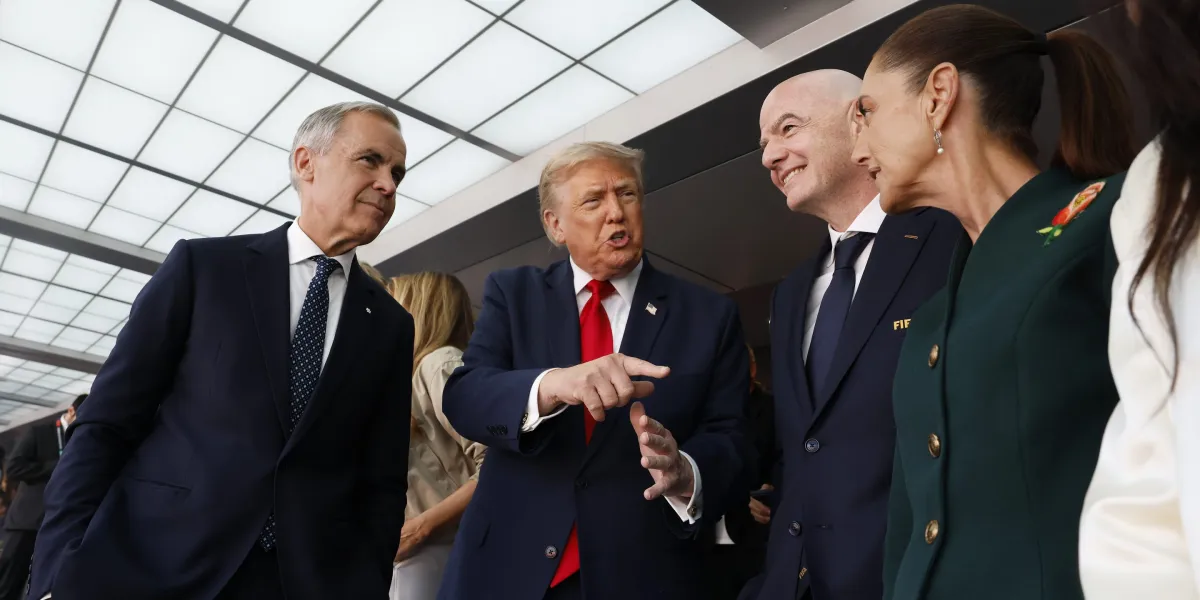
The United States and Canada are heading into a deeper trade war, with Ottawa preparing to impose matching tariffs on American goods from Tuesday after negotiations between the two long-standing allies collapsed.
Canadian counter-tariffs worth C$27.6 billion will take effect at 12.01am on September 8, covering products including steel, dairy goods, appliances, agricultural equipment, pulp and paper, plastics and electronics. Rates range from 15% to 50%, with some existing duties on US steel and aluminium doubling.
The measures follow President Donald Trump’s decision to impose additional 50% tariffs on roughly C$27.6 billion of Canadian exports. The duties, introduced under Section 338 of the Tariff Act of 1930, came into force on August 22 after talks failed to produce an agreement.
Prime Minister Mark Carney has said Canada will match the American measures “dollar for dollar”, while insisting that Ottawa will not accept terms that compromise the country’s economic independence or sovereignty.
Trade talks collapse after last-minute demands
The breakdown came after weeks of negotiations in which both sides had appeared close to a deal. Canada had been seeking relief from US tariffs on steel, aluminium, vehicles and vehicle parts, while Washington pressed Ottawa to make concessions on trade barriers affecting American cars, alcohol and dairy products.
Canadian officials said late changes to the proposed agreement made it unacceptable. Mr Carney has also objected to demands that would have constrained Canada’s ability to set its own trade policy and negotiate agreements with other countries.
The Canadian government had considered offering concessions including reopening discussions around the Keystone oil pipeline, cancelled by President Joe Biden in 2021. But those proposals fell away as progress on metals and automotive tariffs stalled.
US Commerce Secretary Howard Lutnick was reported to have faced pressure from American steel and aluminium producers to maintain the duties. The administration also resisted demands for reductions affecting the automotive industry, helping to unravel the wider package of concessions.
Mr Trump has since described Canada as “one of the worst countries in the world to deal with”. He has repeatedly suggested that Canada should become the 51st US state, remarks that have helped unite Canadian opinion against Washington’s approach.
In a statement issued on August 21, Mr Carney said the proposed US terms were “unfair, uneconomic” and called into question the reliability of any agreement. He said Canada would not accept “a deal at any price or on any deadline”.
Canadian tariffs target US industrial and consumer goods
The Canadian tariff list includes American appliances, farm machinery, dairy products, steel and aluminium, as well as paper goods, plastics and electronic equipment. Other retaliatory duties, including those on US vehicles, will remain in place.
The choice of goods is likely to increase pressure on American producers in states where Canada is an important export market. Wisconsin cheese, Maine seafood and appliances made in Kentucky are among the products affected by the dispute.
Canada is the second-largest supplier of goods to the United States, after Mexico. Its exports to the US were worth about US$451 billion in 2025, creating extensive cross-border supply chains in manufacturing, farming, energy and food production.
That interdependence means the dispute could be felt particularly sharply in border states such as Maine, New York, Pennsylvania, Ohio and Wisconsin. Michigan, whose car industry is closely linked to factories and suppliers in Ontario, is also heavily exposed.
Maine Senator Susan Collins, a Republican, has called the tariffs a mistake and urged both countries to return to negotiations. Independent Senator Angus King has warned that duties on Canadian lobster could cause particular damage because much of the state’s catch is sent across the border for processing.
Vermont Governor Phil Scott, another Republican critic of the policy, has said tariffs are effectively taxes that raise costs for families, farmers and employers. In Michigan, Governor Gretchen Whitmer has warned that the measures could raise prices for households and businesses while putting jobs linked to the automotive sector at risk.
Pressure builds ahead of US midterm elections
Tariffs are paid by importers rather than foreign governments, meaning American companies will initially face the higher costs. Businesses may absorb some of the increase, switch suppliers or pass the expense on to consumers through higher prices.
The overall effect on US inflation may be limited, but products moving repeatedly across the border could be hit more than once. Auto parts, seafood, paper products and machinery are particularly vulnerable because their supply chains span both countries.
American farmers and manufacturers could also lose sales in Canada if the retaliatory duties make their goods less competitive. That creates a political risk for Republicans in several swing states before the 2026 midterm elections, particularly where exporters depend heavily on Canadian customers.
The dispute has revived concerns about the use of Section 338, a dormant provision of the Smoot-Hawley Tariff Act of 1930 that allows the president to impose tariffs of up to 50% when another country is judged to have discriminated against American commerce.
Economists have long associated the wider Smoot-Hawley tariff increases with the spread of retaliatory trade barriers during the Great Depression. The present dispute is narrower, but the escalating measures between Washington and Ottawa have raised fears of a prolonged confrontation with no clear route back to free trade.
Mr Carney has left open the possibility of renewed talks, but said Washington would need to return to serious negotiations. For now, the two countries appear set to impose further costs on businesses and consumers on both sides of the border.
