


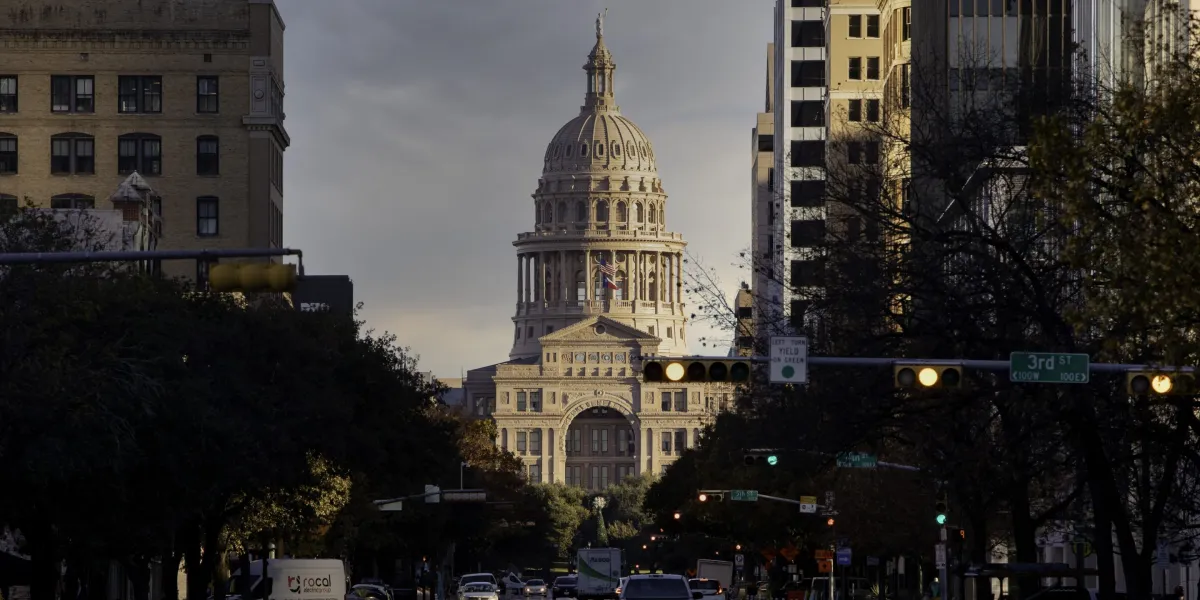
Austin’s affordable housing shortage has left thousands of homes empty while people on the lowest incomes struggle to find somewhere to live, exposing a widening gap between the homes being built and those most in need.
More than 4,500 units classified as affordable are vacant in the Texas city, representing almost 16 per cent of its affordable housing stock. Yet Austin has delivered only 543 homes aimed at its poorest residents since setting a target of 20,000.
The figures illustrate a problem spreading across the United States: much of the housing funded as “affordable” is priced for households earning 50 per cent or more of local median income, rather than those at the bottom of the scale.
Mathew Davis, 49, lives in a homeless shelter in Austin and earns a few hundred dollars a month by donating blood plasma. Even a tiny home costing $450 a month, without running water and with a shared bathroom, would be difficult for him to afford.
“I don’t make enough money really to afford anything,” he said. “I just keep trying to swim uphill.”
Austin affordable housing shortage leaves poorest residents behind
Austin officials set a goal of creating 20,000 homes for households classed as extremely low-income, representing about 17 per cent of the city’s households. By 2024, only 543 had been built, according to city documents.
By contrast, the city’s target of 15,000 homes for people earning between 60 and 80 per cent of area median income had been met. The city’s 2024 housing scorecard said 15,819 homes had been produced in that income band.
The same scorecard showed that Austin would need to build 6,486 homes a year for households earning 30 per cent or less of the local median income to meet its lowest-income target by the end of the planning period. If construction continued at the existing rate, the city would produce only 776 such homes over ten years.
Austin Housing said it recognised the need to do more for the poorest residents and was giving preference to funding proposals that included homes priced for people earning 30 per cent of area median income.
The city’s wider Strategic Housing Blueprint seeks to create 60,000 affordable homes for households earning less than 80 per cent of the median family income. Austin has estimated that meeting the full target would require an additional $6 billion to $11 billion in resources.
The problem is not confined to Austin. The National Low Income Housing Coalition’s 2026 report found that the US has just 3.8 million affordable and available rental homes for 11 million extremely low-income renter households.
That leaves a shortfall of 7.2 million homes. Only 35 affordable and available properties exist for every 100 households in the lowest-income group, while 74 per cent of those households spend more than half their income on rent and utilities.
Extremely low-income households are defined as those earning no more than the federal poverty threshold or 30 per cent of area median income, whichever is higher. They include many low-paid workers, older people and those living with disabilities.
Tax credits favour higher income bands
Despite the scale of the shortage, homes for extremely low-income renters accounted for only about 12 per cent of the units financed in 2024 through the Low-Income Housing Tax Credit programme.
The federal scheme gives tax credits to developers who agree to keep rents below market levels for at least 30 years. Most units supported through the programme are aimed at households earning at least 50 per cent of area median income.
In Austin, that represents an annual income of roughly $47,000 for a single person, compared with less than $28,000 for someone in the extremely low-income category.
Chris Edwards, an economist at the Cato Institute, said the tax-credit system was too complicated and expensive to administer. He argued that public money would be more effective if it were given directly to tenants through housing vouchers.
Other housing specialists say the two systems complement one another because properties built using tax credits must accept vouchers, while private landlords in many states are not required to do so.
However, only about one in four eligible families receives a housing voucher, according to estimates cited by housing experts. Waiting lists can last for years.
Developers say the shortage of vouchers makes it difficult to build homes for the poorest households. Carmen Romero, president and chief executive of True Ground Housing Partners in the Washington DC area, said a home for someone earning 60 per cent of area median income could generate $1,715 a month in rent, leaving $140 after mortgage and operating costs.
An extremely low-income tenant would pay about half that rent, she said.
“Our expenses don’t make it really possible to create a 30% AMI unit, unless there was this extraordinary amount of subsidy that just doesn’t exist,” Ms Romero said.
Affordable homes increasingly compete with market rents
In Austin and other cities, homes aimed at households earning 60 per cent of area median income are becoming only marginally cheaper than ordinary private rentals. That has left some tenants willing to pay more to avoid lengthy checks and complicated applications.
Rebekah Fischer, chief portfolio officer at affordable housing developer LDG Development, said the company faced a 12 per cent vacancy rate among its 60 per cent AMI homes in Austin.
“I have to have every bank statement, every pay check, every bill, every Venmo transaction that you had with your friends,” she said of the application process.
“When we’re almost going after the same renter, you can be approved within two minutes at a market-rate deal, where unfortunately in affordable housing … it takes time.”
Similar pressures are visible in Denver, where vacancy rates have reached 13 per cent among homes for households earning 60 per cent of area median income and 21 per cent among those aimed at households on 80 per cent.
In Portland, Oregon, more than 1,700 affordable homes are vacant, giving an overall vacancy rate of 7.5 per cent. Most are intended for households earning 60 per cent of area median income, with rents capped at $1,444 a month.
That is close to the average rent of $1,581 for a market-rate one-bedroom flat. Jaiden Barbee, a Portland resident earning about 55 per cent of the local median income, said he would pay more for a private rental if it meant avoiding the lengthy affordable-housing application process.
“I’d rather spend the $200 extra just to get into a place easier that’s wherever I want” and doesn’t have “all these hoops,” he said.
For Davis, who spent a year living in his car before securing a bed at the Austin shelter, the mismatch between the homes available and the people needing them is stark.
“I want to shut the door at night and be able to sleep,” he said. “I really just want to find the right place.”
