


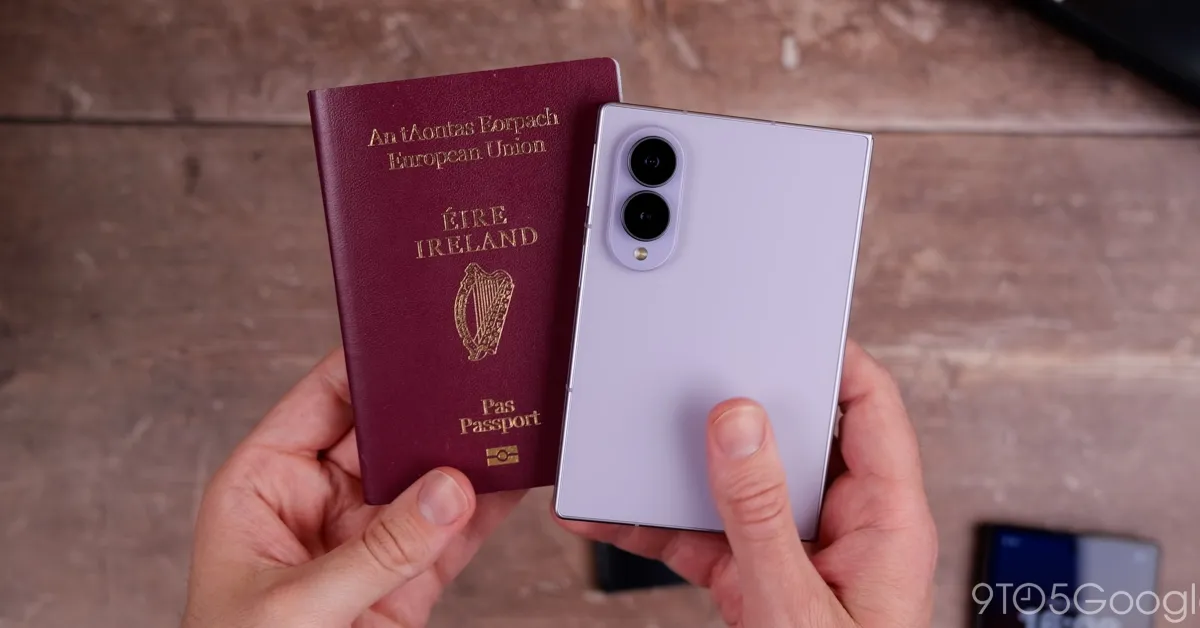
Samsung’s Galaxy Z Fold 8 may be the strongest evidence yet that foldable phones are ready for the mainstream – but its success could ultimately benefit Apple more than its Android rival.
The latest model has moved away from the narrow, almost remote-control-like proportions associated with earlier Galaxy Z Fold handsets. Its wider outer display and tablet-sized inner screen make it more practical for browsing, reading, gaming and watching video, while retaining the ability to function as a conventional smartphone when closed.
That represents a significant step for Samsung, which has spent years refining foldable hardware and establishing itself as the leading name in the category. The irony is that the company’s efforts to make the format more appealing may persuade customers to wait for the long-rumoured iPhone Fold instead.
The Galaxy Z Fold 8 makes the case for wider foldables
Foldable phones have traditionally involved compromises. Their tall external screens can be awkward for everyday typing and browsing, while the squarer internal displays do not always work well with apps designed for standard smartphones.
The Galaxy Z Fold 8 addresses some of those frustrations with a broader design that makes the closed phone feel less restrictive. It also makes better use of the large internal screen, which is suited to entertainment and productivity rather than simply offering a larger version of the same phone experience.
Samsung is not the first manufacturer to explore this approach. Oppo and Google have already produced wider foldable designs, while Samsung has also entered the premium tri-fold market. However, the latest Galaxy model appears to have brought the concept together in a more polished and convincing package.
That progress creates a problem for Samsung. The company has had to develop the category in public, improving durability, dimensions and software while competing with increasingly ambitious Chinese manufacturers. Apple, by contrast, can observe what works and enter the market only when the technology and consumer demand are sufficiently mature.
For iPhone owners, the Galaxy Z Fold 8 is likely to be viewed as proof that the hardware has finally become viable, rather than as a reason to abandon Apple’s ecosystem. One UI and the Android app environment may be unfamiliar to them, even if the device itself is impressive.
Apple would also have an important advantage if it eventually launches a folding phone. Developers have generally been quick to support major Apple hardware changes, potentially giving an iPhone Fold more consistent software and app optimisation across its inner and outer screens from the outset.
Apple’s experience with compact tablets may also have helped prepare the ground. The iPad Mini demonstrated the appeal of a small device that could offer more screen space and multitasking than a phone, while the company’s recent focus on thinner hardware has reinforced expectations that it is working towards a new form factor.
There is no confirmed launch timetable for an iPhone Fold, and Apple has not publicly committed to the product. But the Galaxy Z Fold 8 has made the concept easier to understand for people who have so far regarded foldables as expensive, fragile or awkward.
Samsung may therefore have built one of the most compelling foldable phones yet, only to make Apple’s eventual arrival more attractive. The better the Galaxy Z Fold 8 demonstrates what the format can do, the easier it may be for iPhone users to imagine waiting for Apple’s version.
