


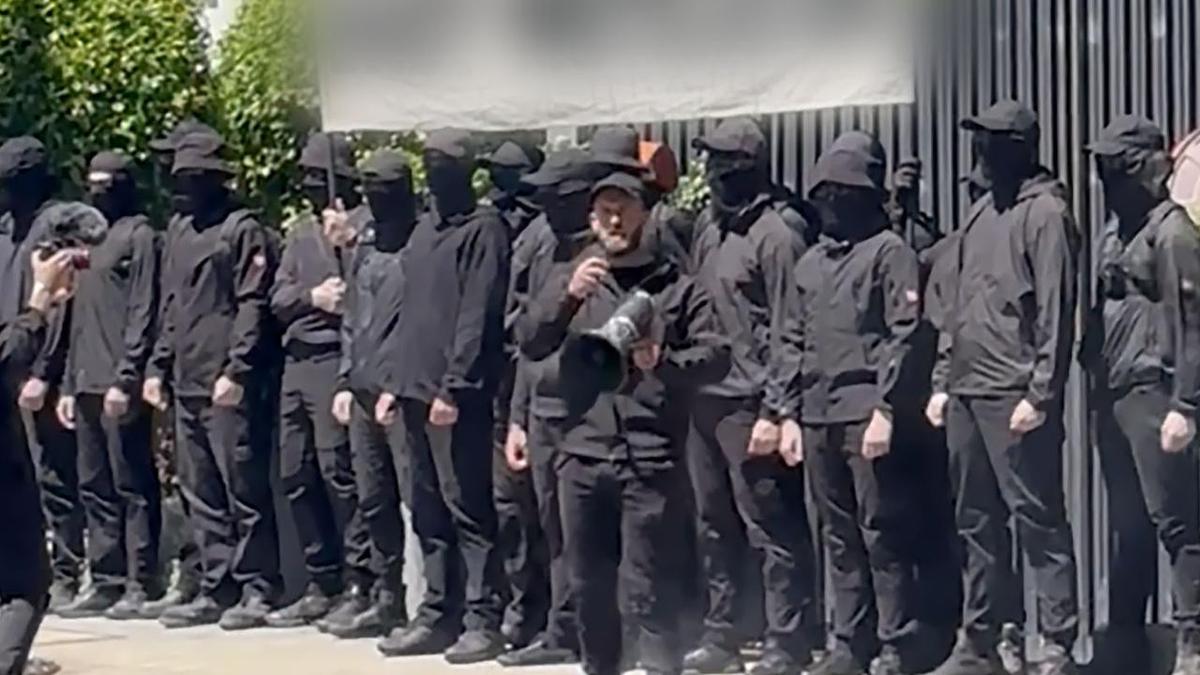
Thomas Sewell and the fledgling White Australia Party have a credible chance of overturning their proscription in a landmark High Court challenge, according to constitutional law expert Anne Twomey.
The case, which begins in Canberra on Tuesday, centres on whether the Commonwealth had the power to ban the organisation as a “prohibited hate group” and criminalise membership or involvement in it.
White Australia Party Inc was incorporated in Victoria on December 20, 2025, and applied to the Australian Electoral Commission for registration as a political party on April 25 this year. Its members include Sewell, who is described in court documents as the organisation’s national president.
The Governor-General made regulations on May 15 designating “White Australia”, including the party, as a prohibited hate group. The regulations took effect on May 16 under legislation passed in the wake of the Bondi terrorist attack.
Lawyers for Sewell and the party will argue that the legislation impermissibly restricts the implied freedom of political communication protected by the Australian Constitution. They will also contend that allowing a minister to play a decisive role in proscribing organisations breaches the separation of powers.
A further argument is that the Commonwealth lacks a general constitutional power to dissolve or ban political parties. The plaintiffs rely heavily on the High Court’s 1951 decision striking down Robert Menzies’ attempt to dissolve the Communist Party of Australia.
High Court to test hate-group laws
The Commonwealth disputes the party’s characterisation of itself as an ordinary political organisation. In written submissions, it argues that White Australia is an arm of the neo-Nazi National Socialist Network and that creating a political party was a deliberate attempt to obtain legal protection for racist and antisemitic speech.
The court’s official case summary says the challenge will examine whether the new provisions are beyond Commonwealth legislative power, unlawfully burden political communication or infringe Chapter III of the Constitution.
Professor Twomey said both sides had substantial arguments and that the dispute occupied a constitutional “grey zone”.
“All the arguments are difficult,” she told AAP. “It’s a really fine decision for the High Court to make.”
She said the government’s legislation had been drafted quickly to address organisations regarded as dangerous before they necessarily committed an offence. But she warned that broadly framed laws could potentially be misused by a future government to obstruct political opposition.
A successful challenge would raise questions about the durability of the hate-speech and vilification measures passed by parliament in January. Prime Minister Anthony Albanese said in May that the laws had been designed to withstand a legal challenge.
The Commonwealth’s case follows advice from the Australian Security Intelligence Organisation’s director-general, who recommended that White Australia be considered for proscription on May 11.
The two-day hearing is scheduled to begin on September 8 and conclude on September 9. The High Court is not expected to deliver its decision for several weeks.
