


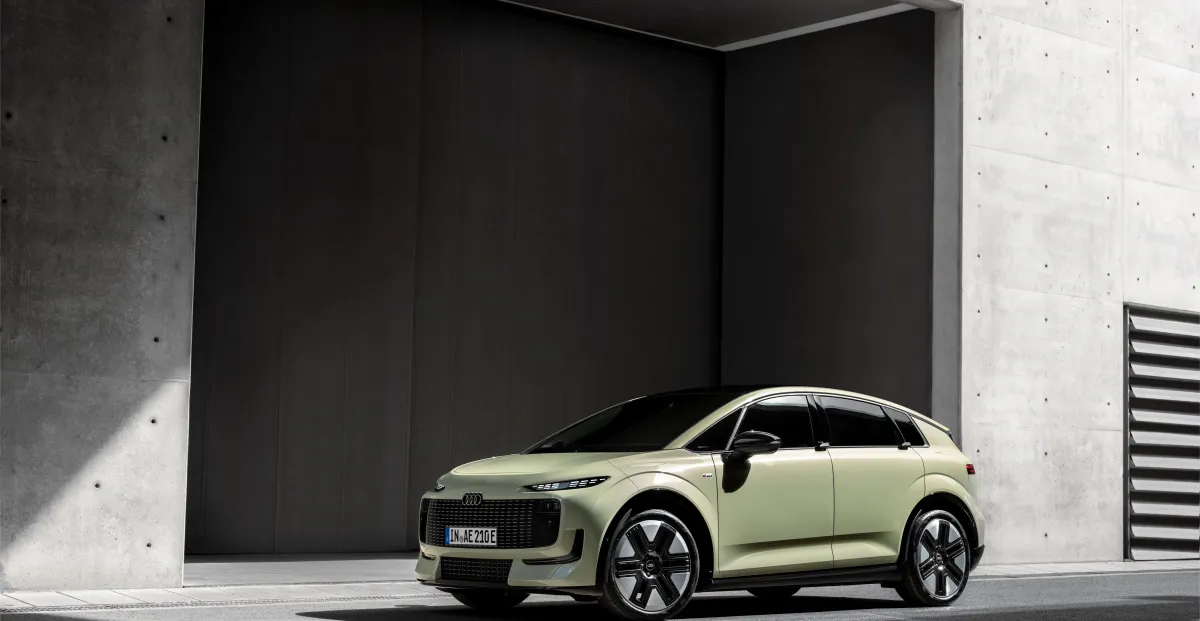
Audi has unveiled the A2 e-tron, a compact electric crossover aimed at combining a relatively accessible price with long-distance efficiency. The European-market model will start at around £32,200, while selected battery and motor configurations are claimed to offer up to 401 miles of range under the WLTP testing cycle.
The rear-wheel-drive A2 e-tron has been designed to minimise energy consumption rather than simply increase battery size. Audi says its most efficient version uses 12.8kWh per 100km, helped by an aerodynamic body with a drag coefficient of 0.24 – the lowest yet recorded by the German manufacturer.
Flush door handles, enclosed underbody panels, shaped air intakes and measures to reduce turbulence around the wheel arches all contribute to the car’s efficiency. The result is intended to address one of the main compromises in the electric-car market: models with lower prices often provide less range, while long-range vehicles tend to command a premium.
Depending on the chosen drivetrain and battery, the A2 e-tron’s official range can reach 645km, or about 401 miles. Audi stresses that the figure is based on the European WLTP procedure and will vary according to equipment, driving conditions and configuration.
The car will also introduce bidirectional charging to Audi’s range. With compatible equipment, its battery can supply power to external devices through vehicle-to-load charging or feed electricity back into a home through a suitable direct-current wall box.
Inside, the A2 e-tron is fitted with a curved MMI display combining an 11.9-inch digital instrument panel with a 12.8-inch central touchscreen. A magnetic Fidlock system provides additional attachment points for items such as cupholders and charging-cable bags, including in the boot.
Fidlock technology is more commonly associated with cycling accessories, where it is used to secure items such as water bottles without a conventional cage. Audi says the A2 e-tron is the first production car to use the system in this way.
The model is currently intended for European customers, with no confirmed plan for a launch in the United States. Audi abandoned its previous commitment to move exclusively towards electric vehicles, leaving room in its future line-up for petrol, hybrid and battery-powered models.
