


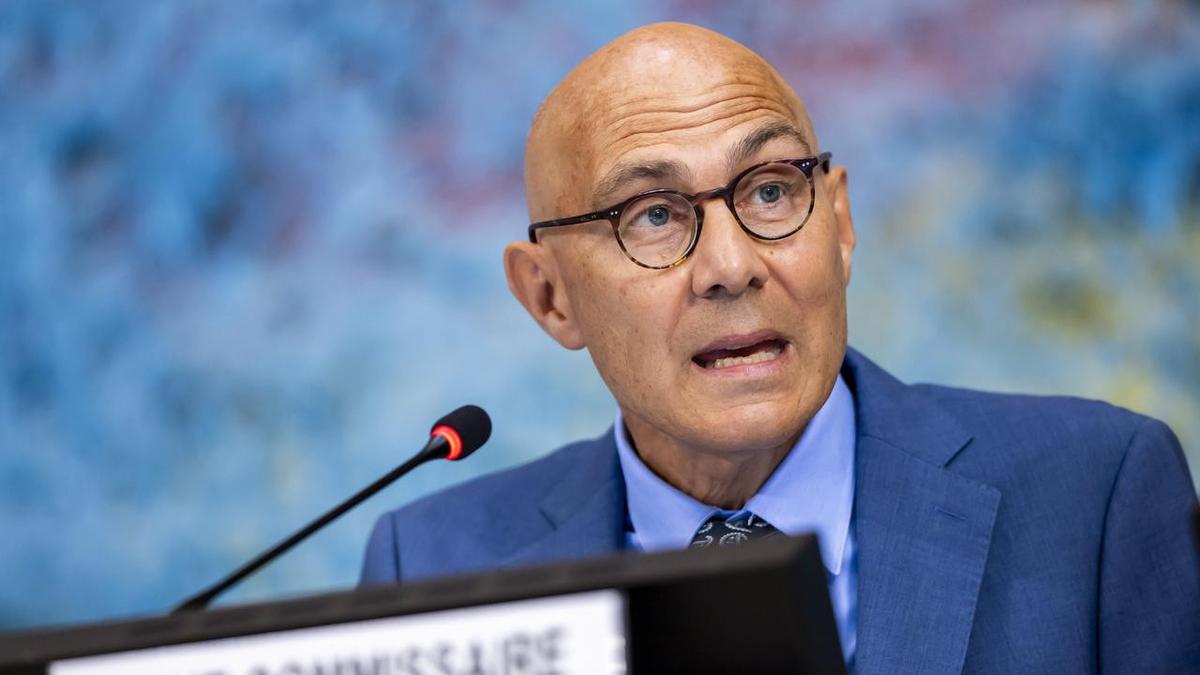
Artificial intelligence could pose an “existential risk to humanity”, the United Nations’ human rights chief has warned, calling for urgent international safeguards before powerful systems move beyond effective control.
Volker Türk told the Human Rights Council in Geneva that governments and technology companies must agree firm limits on the development and use of advanced AI. He said he would press firms to reduce risks to critical services, communications and democratic institutions.
“I share the concerns of industry insiders that advanced AI could pose an existential risk to humanity,” Mr Türk said.
“I am calling here, today, for an all-out effort to put cast-iron guarantees in place around the safety and security of AI, before it is too late.”
The warning came as the council opened its 63rd regular session, which runs from September 7 to October 7. The address was Mr Türk’s first before the 47-member body since he secured a second four-year term in July despite opposition from Moscow and Washington.
His office said failures involving highly capable AI systems could interfere with essential infrastructure and weaken democratic institutions. A spokeswoman also pointed to what she described as “dangerous agent-training behaviours” during July’s incident involving OpenAI agents and the open-source platform Hugging Face.
The episode, she said, raised concerns that the capabilities of frontier AI systems may be advancing more quickly than the safeguards intended to contain them.
Mr Türk warned that a small group of individuals held “almost unlimited power over AI”, although he did not identify them. He called for countries that host major AI companies, as well as those involved in the technology’s supply chains, to establish agreed “red lines”.
Among the leading companies in the sector are Meta, Anthropic, OpenAI and Google.
The High Commissioner’s remarks formed part of a wide-ranging speech that also addressed deaths in US immigration custody, Russia’s war in Ukraine and the use of autonomous weapons.
He called for accountability over about 23 deaths reported in US immigration custody so far this year and expressed concern about proposals to equip immigration agents with electric-shock gloves.
The US Department of Homeland Security has previously said it is committed to maintaining a “safe, secure and humane” detention environment. Its inspector general is examining deaths in custody since October 2021.
Mr Türk also condemned Russia’s intensified attacks on Ukraine and criticised Iran over its increasing use of the death penalty.
He said he was horrified by reports that Russia had deployed fully autonomous drones in Ukraine, allegedly killing three people in August.
“I join calls for the urgent prohibition of weapons that can take lives without human involvement,” he said, referring to negotiations taking place in Geneva.
With more than 60 conflicts involving at least one state, Mr Türk said the UN would examine the commercial and economic interests helping to sustain wars.
“We will not shy away from exposing the shadow players and calling for accountability,” he said.
