


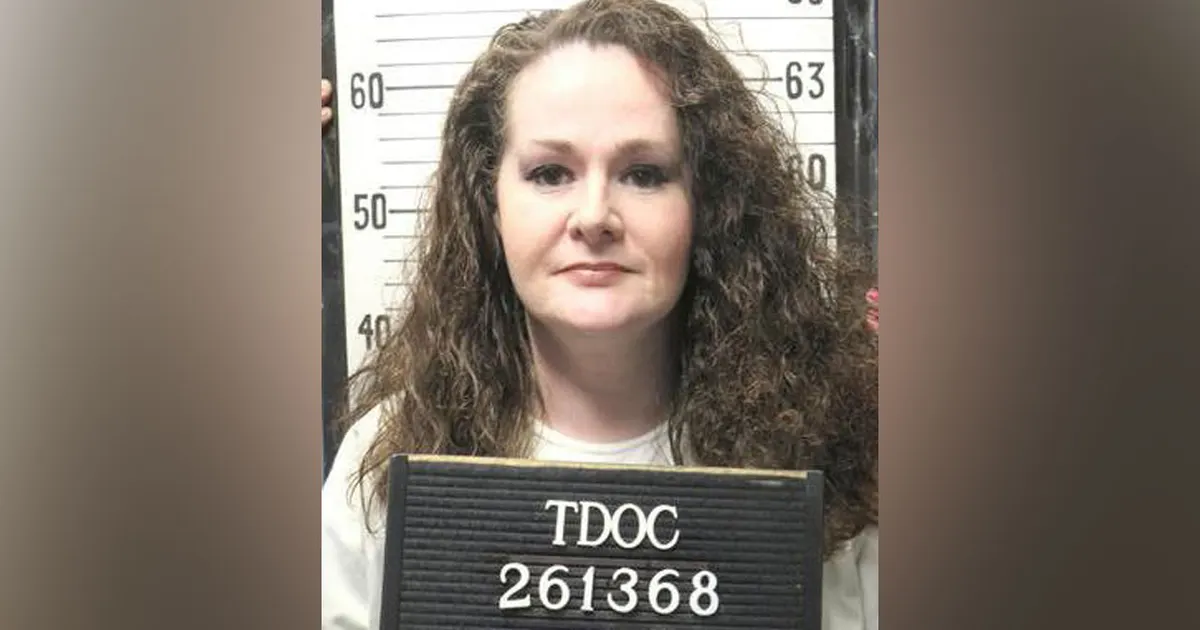
New court filings have revealed how Tennessee execution staff struggled for nearly an hour to establish an intravenous line before Christa Pike was given two doses of pentobarbital on 30 September.
Attorney Randy Spivey said the team used about 10 needles and tried several sites on both arms at Riverbend Maximum Security Institution in Nashville. The filing forms part of a legal challenge to Tennessee’s lethal-injection procedures.
According to the account, Pike was wincing as staff moved needles inside her left arm, while members of the team repeatedly questioned whether they had found a usable vein. At one point, a team member reportedly said a vein “might be blowing”.
After further attempts, an IV was declared operational at 7.13pm. Pike’s hands were strapped down and she was connected to a heart monitor before the execution drugs were administered.
The Tennessee Department of Correction has said staff followed the state’s approved execution protocol and that the procedure did not allow for any additional steps beyond those carried out that evening. The department confirmed that Pike was taken to an off-site medical facility.
Christa Pike’s failed execution
At 7.34pm, Pike reportedly complained that her arm was hurting. “I feel like my arm is about to bust. It burns,” she said, according to Spivey’s court declaration.
About ten minutes later, she began making what her lawyer described as an “agitated snoring sound”. Witnesses said she strained, flinched, moved her head and appeared to struggle to breathe for roughly 30 minutes.
Spivey said he was not allowed to use a telephone in the execution witness room and had to walk for seven minutes through the prison to reach another phone. At 8.22pm, he contacted fellow lawyers to ask that the procedure be stopped, arguing that Tennessee’s protocol did not authorise a third dose of pentobarbital.
He was told an ambulance was on its way at 8.50pm. Medical staff were later said to be carrying out life-saving measures, and an ambulance was seen arriving at hospital at 9.14pm.
Pike remained unconscious and on life support for several days. Doctors initially believed she might be brain-dead, but she later regained consciousness and was returned to prison, where her lawyer said she continued to receive medical care.
The 50-year-old is the only woman on Tennessee’s death row. She was sentenced to death for the 1995 murder of Colleen Slemmer, a fellow Jobs Corps worker, and had been due to become the first woman executed in Tennessee in two centuries.
Tennessee Governor Bill Lee halted the state’s remaining executions for 2026 and ordered a comprehensive review of what happened. It remains unclear whether officials will seek to set another execution date for Pike.
