


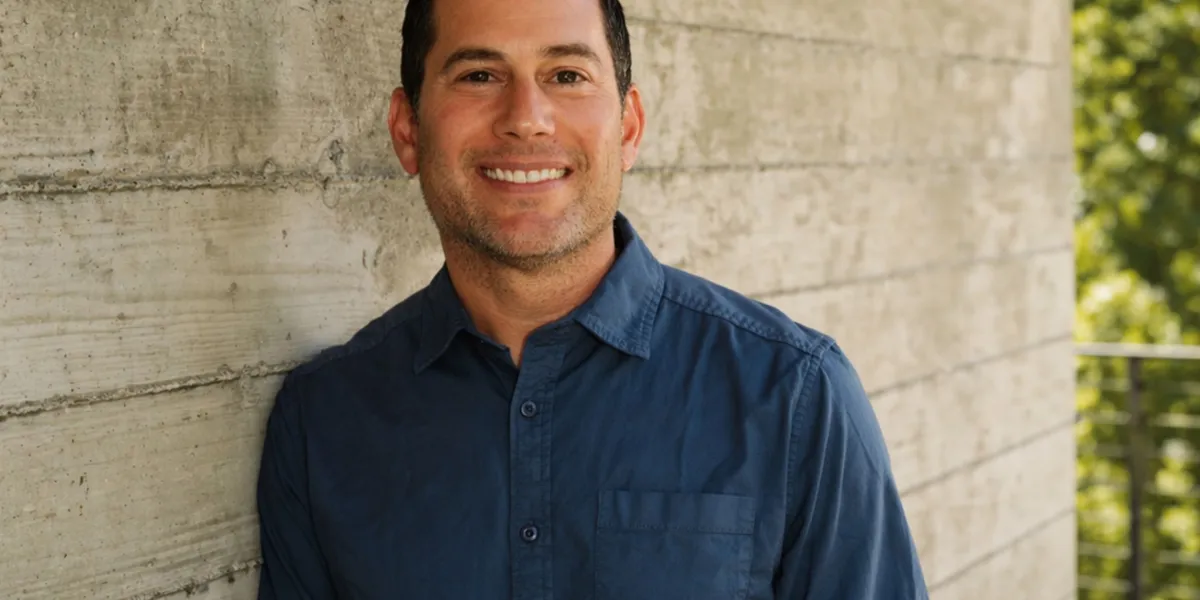
Acely chief executive Ron Schneidermann has turned the mistakes of his early startup career into a blueprint for better work-life balance, after spending years working long hours, living on canned soup and taking almost no time off for the birth of his children.
Schneidermann, now in his late 40s, built ski-resort marketplace Liftopia into a business generating more than $60 million in annual revenue before becoming chief executive of hiking app AllTrails. He now leads test-preparation startup Acely, where he is applying lessons learnt from the personal cost of his earlier ambition.
While building Liftopia, Schneidermann worked from a cramped San Francisco flat, kept his spending below $15 a day and went two years without drawing a salary. He said he survived largely on canned soup.
When his first daughter was born, four years after Liftopia was founded, he took only two days away from work. Three years later, he took a week for the birth of his son, believing it represented progress.
“I look back, I was just able to justify it as ‘that’s just part of the grind’… but you never get that time back,” Schneidermann said. “That was a mistake.”
He said the experience had ultimately helped him reassess his approach to leadership. “For everything that was frustrating, that went wrong, that I regretted about Liftopia, I was able to take the inverse and turn it into a strength,” he said.
Ron Schneidermann brings work-life lessons to Acely
At AllTrails, where he became chief executive in 2019 after joining in 2015, Schneidermann introduced a company-wide day away from normal work. On the first Friday of each month, the business shut down and employees were encouraged to spend time outdoors.
Since becoming Acely’s chief executive in August 2025, he has introduced a different monthly initiative. The startup’s fewer than 12 employees stop routine work for a day-long “hackathon” focused on experimenting with artificial intelligence tools and new ideas, without meetings, key performance indicators or deliverables.
Schneidermann’s own career choices were shaped by an early decision not to prioritise salary over satisfaction. As a student at UCLA in the late 1990s, he worked at Abercrombie & Fitch but was fired three times because he said he never liked the job enough to maintain the expected decorum.
After graduating in 2000, he joined Accenture as a business process consultant. Although the role was well paid, he left because it did not fit the life he wanted.
“It was a great experience. I’m grateful for it, but I hated it,” he said. “I hated it, and I told myself, I am never going to take a job for money again. Life is too short.”
He later joined travel startup Hotwire through a personal connection, beginning his career in technology. The company was subsequently acquired by Expedia.
Acely chief executive urges young workers to build relationships
Schneidermann said young workers should invest in relationships rather than rely solely on qualifications or formal recruitment routes, particularly as traditional entry-level opportunities narrow.
“Really invest in your network,” he said. “There’s a small pond at the end of the day. If you stay in it long enough, you are going to know everyone, and everyone you know are going to be leaders somewhere.”
He said networking should not be treated as a series of one-off transactions. “There’s a human on the other end. Don’t ghost people and just show up,” he said.
Schneidermann also advised young employees to remain curious instead of focusing too narrowly on finding the perfect role or collecting credentials.
“Just approach everything with a curious mindset,” he said. “Just constantly try to be learning and exploring.”
His move to Acely reflected that approach. He was contacted by an executive search firm about the role, and his high-school-aged daughter had recently used the company’s SAT preparation product. She was one of more than 50,000 active users.
Schneidermann said he did not need to arrive as an expert in the sector, provided he was prepared to learn it.
