


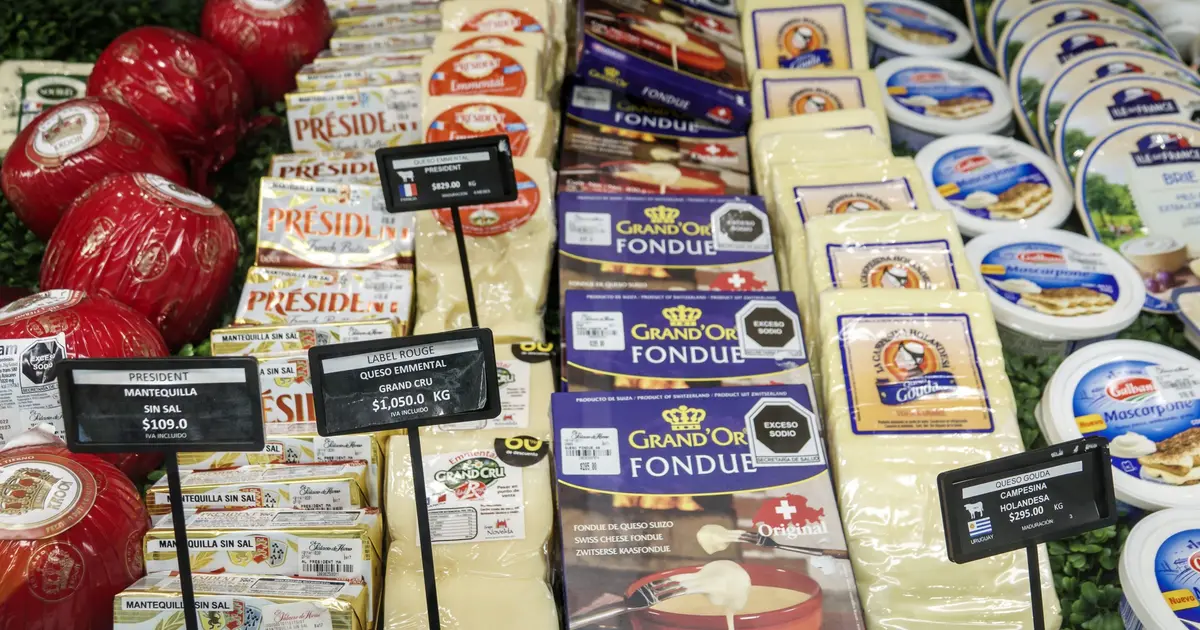
A dispute over whether American producers can continue using names such as parmesan and feta has become a sticking point in US-Mexico trade negotiations, with Washington objecting to Mexico’s new agreement with the European Union.
The deal, signed in May, would extend legal protection in Mexico to hundreds of European products linked to particular regions, including Parmigiano Reggiano, feta and manchego. It would also give the EU legal avenues to challenge alleged infringements. ([investing.com](https://www.investing.com/news/commodities-news/dispute-over-cheese-names-causes-stumbling-block-in-usmexico-trade-negotiations-4880866?utm_source=openai))
US officials and industry representatives argue that terms such as parmesan and feta are generic descriptions rather than names that should be reserved for products made in specific parts of Europe. The European position is that parmesan should refer only to Parmigiano Reggiano from northern Italy, while feta should come from designated areas of Greece.
Jaime Castaneda, executive vice-president of the US Dairy Export Council, told Reuters: “It’s absolutely wrong what Mexico did.” He said the Mexican government must ensure that American producers and Mexican manufacturers using common cheese names could remain in the market.
US-Mexico trade talks under pressure
The disagreement is being raised during high-level discussions on an interim trade arrangement between the United States and Mexico, as well as negotiations surrounding the renewal of the US-Mexico-Canada Agreement.
Two Mexican government sources told Reuters that Washington was using the wider negotiations as leverage. Mexico has not yet completed the domestic process needed for the EU agreement to take effect, with approval by its lawmakers still required. ([investing.com](https://www.investing.com/news/commodities-news/dispute-over-cheese-names-causes-stumbling-block-in-usmexico-trade-negotiations-4880866?utm_source=openai))
The issue matters greatly to American dairy exporters. The United States sends roughly $1 billion (£750 million) worth of cheese to Mexico each year, making it the country’s largest overseas market and accounting for about a third of US cheese exports.
Under the modernised EU-Mexico agreement, 336 European food and agricultural geographical indications would receive protection in Mexico, alongside 232 European spirit names. The European Commission says the agreement is intended to prevent imitation and reduce tariffs on a range of European food products, including cheese. ([policy.trade.ec.europa.eu](https://policy.trade.ec.europa.eu/eu-trade-relationships-country-and-region/countries-and-regions/mexico/eu-mexico-agreement/factsheet-eu-mexico-modernised-global-agreement-agreement-european-farmers_en?prefLang=et&utm_source=openai))
The European Commission has said the deal cannot be altered in response to the American objections, adding that it had “taken note of the US actions”.
Georgina Yescas Trujano, co-founder of Mexican cheesemonger Lactography, welcomed lower tariffs on European cheese, saying Mexican consumers could gain access to better products. But she also accused the United States of flooding the Mexican market with inexpensive cheese.
The dispute reflects a long-running clash between the American view that many cheese names have become widely used generic terms and the European system of geographical indications, which links product names to a specific origin, traditional methods and legal protection.
